





















UC Santa Barbara researchers develop liquid battery material that stores solar energy as heat for years
By
ndr42

Toasted to a respectable shade. No regrets, no crumbs left.
Summary
Researchers at UC Santa Barbara, led by Associate Professor Grace Han, have developed a novel material that absorbs sunlight, stores the energy in chemical bonds, and releases it as heat on demand. Published in the journal Science, this "rechargeable solar battery" uses molecular changes inspired by DNA and photochromic sunglasses to store solar energy without bulky batteries or grid reliance. The material can hold energy for years and packs more energy per kilogram than lithium-ion batteries, offering a potential solution to solar power's intermittency challenge.
Key quotes
· 3 pulledResearchers at UC Santa Barbara believe they may have found an answer that avoids the need for massive battery systems or reliance on the electrical grid.
Writing in the journal Science, Associate Professor Grace Han and her research team describe a new material capable of absorbing sunlight, storing that energy in chemical bonds, and later releasing it as heat whenever needed.
The molecule can hold energy for years and packs more energy per kilogram than lithium-ion batteries.
You might also wanna read


Gallium phosphide-titanium solar cell shows potential for 60% energy conversion efficiency
Researchers have developed a solar cell using gallium phosphide (GaP) and titanium (Ti) that could theoretically achieve 60% energy conversi
 interestingengineering.com·1d ago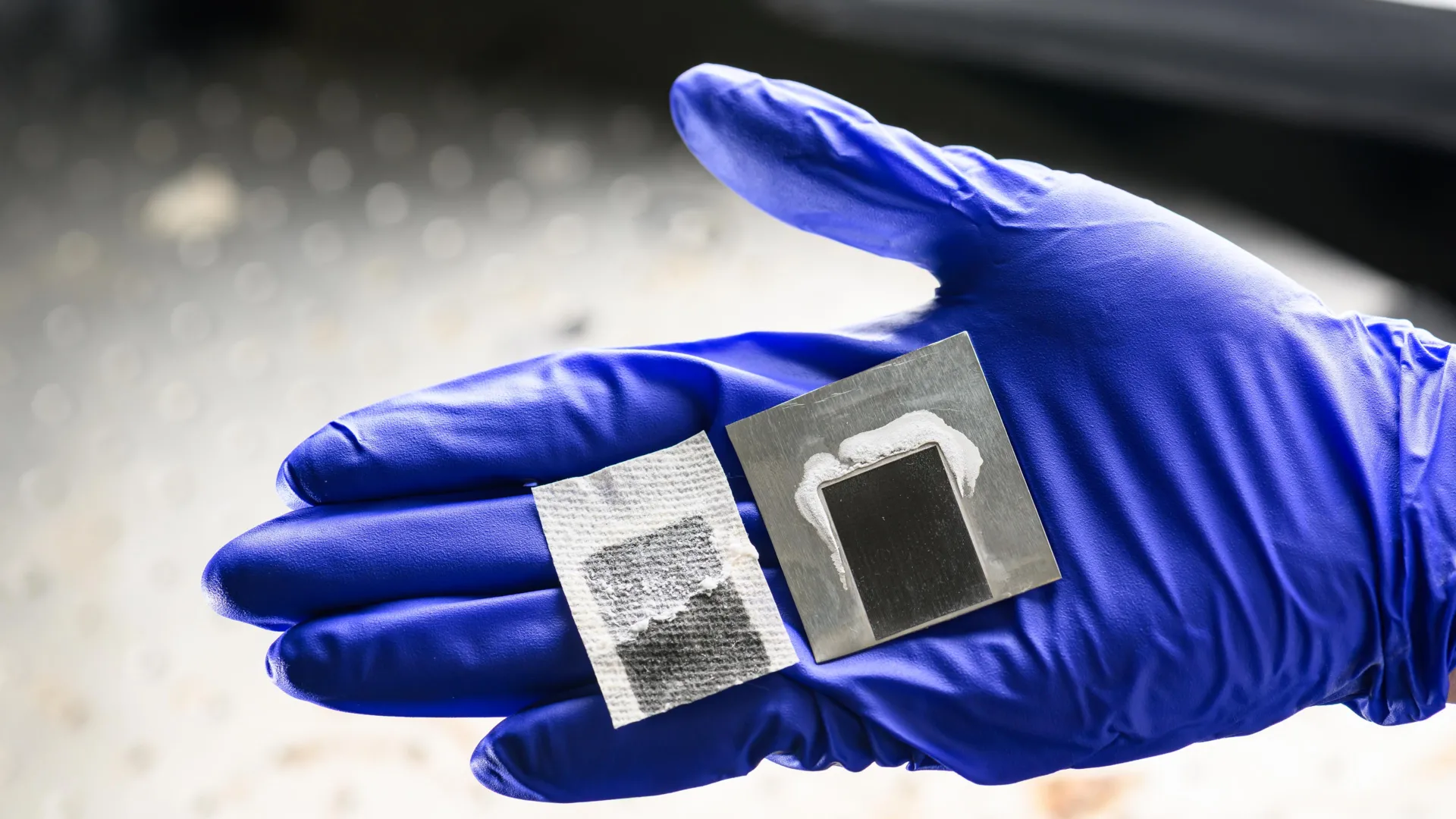
Solar desalination system eliminates toxic brine while producing fresh water
Scientists have developed a solar-powered desalination system that converts seawater into fresh water without producing toxic brine, a major

Scientists stabilize elusive crystal phase using silver nanoparticles, unlocking room-temperature quantum properties
Researchers from Brown University and the University of Michigan have created and stabilized a previously theoretical state of matter by arr

University of Illinois researchers develop 3D chip stacking technique to extend Moore's Law
Researchers at the University of Illinois Grainger College of Engineering have developed a breakthrough in 3D chip manufacturing that could

Kyushu University achieves 130% quantum yield in solar cells using molybdenum spin-flip emitter and singlet fission
Researchers at Kyushu University, in collaboration with German scientists, have achieved a 130% quantum yield in solar energy conversion usi
 energiesmedia.com·1d ago
Solar Farms on Degraded Land Boost Local Wildlife and Ecosystem Health
Solar farms built on degraded or previously unusable land are providing unexpected benefits for local wildlife and ecosystems. When properly
 bgr.com·3d ago