





















Gallium phosphide-titanium solar cell shows potential for 60% energy conversion efficiency
By
Ameya Paleja

Crusty in the right places. Worth the chew.
Summary
Researchers have developed a solar cell using gallium phosphide (GaP) and titanium (Ti) that could theoretically achieve 60% energy conversion efficiency, far surpassing the 33% Shockley-Queisser limit of conventional silicon solar cells. The team built a 1 cm² solar cell with a GaP:Ti absorber layer only 50 nm thick, using gold and germanium contacts. Through transmittance and reflectance measurements, they demonstrated the potential for this novel material combination to dramatically improve solar energy conversion.
Key quotes
· 3 pulledReaching 60 percent efficiency
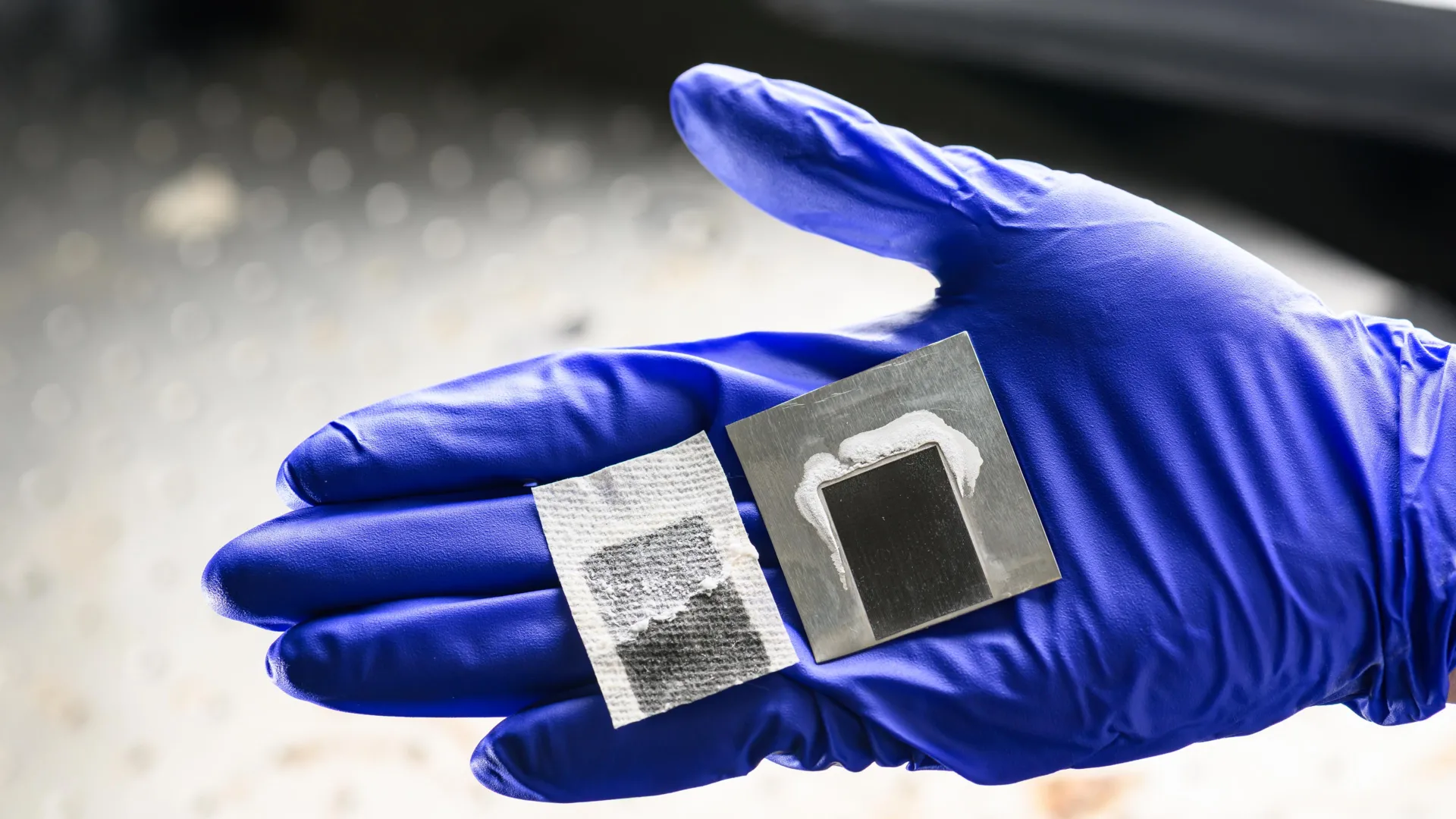
The team built a one cm2-sized solar cell with a Gap: Ti absorber no thicker than 50 nm and metal contacts using gold and germanium.
Since the SQ limit is dependent on the bandgap of the semiconductor material, Ariza and his team chose Gap, which has a bandgap of 2.26 eV.
You might also wanna read


UC Santa Barbara researchers develop liquid battery material that stores solar energy as heat for years
Researchers at UC Santa Barbara, led by Associate Professor Grace Han, have developed a novel material that absorbs sunlight, stores the ene
Solar desalination system eliminates toxic brine while producing fresh water
Scientists have developed a solar-powered desalination system that converts seawater into fresh water without producing toxic brine, a major

Scientists stabilize elusive crystal phase using silver nanoparticles, unlocking room-temperature quantum properties
Researchers from Brown University and the University of Michigan have created and stabilized a previously theoretical state of matter by arr

University of Illinois researchers develop 3D chip stacking technique to extend Moore's Law
Researchers at the University of Illinois Grainger College of Engineering have developed a breakthrough in 3D chip manufacturing that could

Kyushu University achieves 130% quantum yield in solar cells using molybdenum spin-flip emitter and singlet fission
Researchers at Kyushu University, in collaboration with German scientists, have achieved a 130% quantum yield in solar energy conversion usi
 energiesmedia.com·1d ago
Solar Farms on Degraded Land Boost Local Wildlife and Ecosystem Health
Solar farms built on degraded or previously unusable land are providing unexpected benefits for local wildlife and ecosystems. When properly
 bgr.com·3d ago