
























Sunlight-powered chemistry reduces hazardous oxidant risk
6h agoen
Source
PhysSunlight-powered chemistry reduces hazardous oxidant riskphys.orgResearchers at the University of Osaka developed a light-driven method for synthesizing Davis reagents that generates the hazardous oxidant mCPBA only on demand and consumes it immediately. Kinetic analysis showed no detectable accumulation of the oxidant, improving process safety. The reaction proceeds at room temperature in non-halogenated solvents and can use sunlight or LEDs, offering a safer, greener and scalable alternative for pharmaceutical-related synthesis. The work is published in the journal Green Chemistry.
You might also wanna read

Intense UV Light Triggers New Chemical Pathway to Break Down Persistent PFAS Pollutants
Scientists have discovered a new mechanism using intense UV light to trigger a chemical pathway that can break down highly persistent PFAS c
scitechdaily.com·24d ago

Photoinduced disproportionation enables oxidative addition of aryl iodides at a gallium(I) center
This scientific article reports a breakthrough in main-group chemistry: the first oxidative addition of aryl iodides at a gallium(I) center,
 pubs.acs.org·5d ago
Científicos de Cambridge logran producir hidrógeno verde a partir de residuos y luz solar
Infobae·1d ago
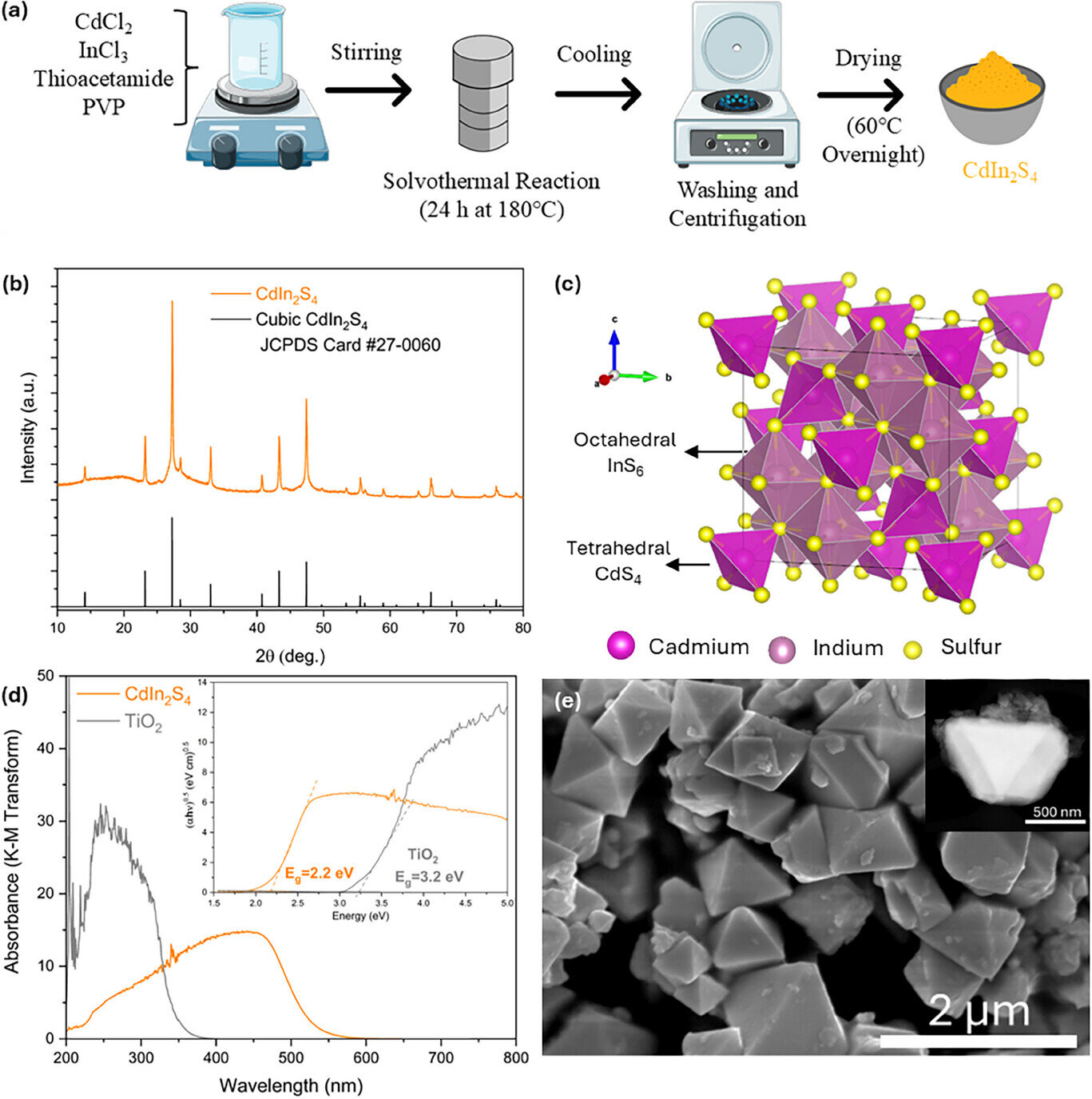
Sunlight-Activated Material Breaks Down PFAS in Water into Harmless Fluoride
Researchers at the University of Adelaide have developed a sunlight-activated material capable of degrading PFAS in water into harmless comp
 phys.org·11mo ago
Cambridge Researchers Develop Solar Reactor Using Car Battery Acid to Turn Plastic Waste into Clean Hydrogen
University of Cambridge researchers have developed a solar-powered reactor that uses acid recovered from old car batteries to break down har
 goodnewsnetwork.org·28d ago
Inorganic Chemistry
pubs.acs.org·11d ago
Comments
Sign in to join the conversation.
No comments yet. Be the first.