
























JWST reveals Kamo`oalewa asteroid is enstatite-rich, not lunar-like, with 18-meter diameter
By
[Submitted on 22 Jun 2026 (v1), last revised 29 Jun 2026 (this version, v2)]
Summary
JWST observations of near-Earth asteroid (469219) Kamo`oalewa — a stable quasi-satellite of Earth and target of China's Tianwen-2 mission — reveal a less red (more neutral) reflectance spectrum than previously thought. The infrared colors resemble S, V, or E-type silicate asteroids rather than space-weathered lunar-like silicates. A faint silicate absorption at 0.93 μm is detected, but no 2.0 μm absorption. Thermal emission modeling gives a mean diameter of 18±2 meters and a best-fit visible albedo of 0.59, suggesting an oldhamite-bearing enstatite-rich composition. Brightness variations confirm a 27.9-minute rotation period with an axis ratio of ~1.4.
Source

 Twitter / XJWST reveals Kamo`oalewa asteroid is enstatite-rich, not lunar-like, with 18-meter diameterarxiv.org
Key quotes
· 5 pulledThe JWST reflectance spectrum is notably less red (more neutral) from $1.0-2.5$ $\mu m$ than previous ground-based spectrophotometric observations.
Kamo`oalewa's infrared colors appear more similar to S, V, or E-type silicate asteroids and unlike the reddened, space-weathered lunar-like silicates suggested by previous observations.
Models of Kamo`oalewa's faint thermal emission (beginning near 4.5 $\mu m$) find a mean diameter of $D=18\pm2\mathrm{m}$ and best-fit visible albedo $p_V = 0.59^{+0.25}_{-0.17}$
This combination of color, albedo, and absorption bands is similar to oldhamite-bearing enstatite-rich compositions.
Kamo`oalewa's brightness variations over the course of the JWST program provides independent confirmation of its rotation period of 27.9 minutes, with an axis ratio $\sim1.4$ ($D\sim15-21$ m).
You might also wanna read

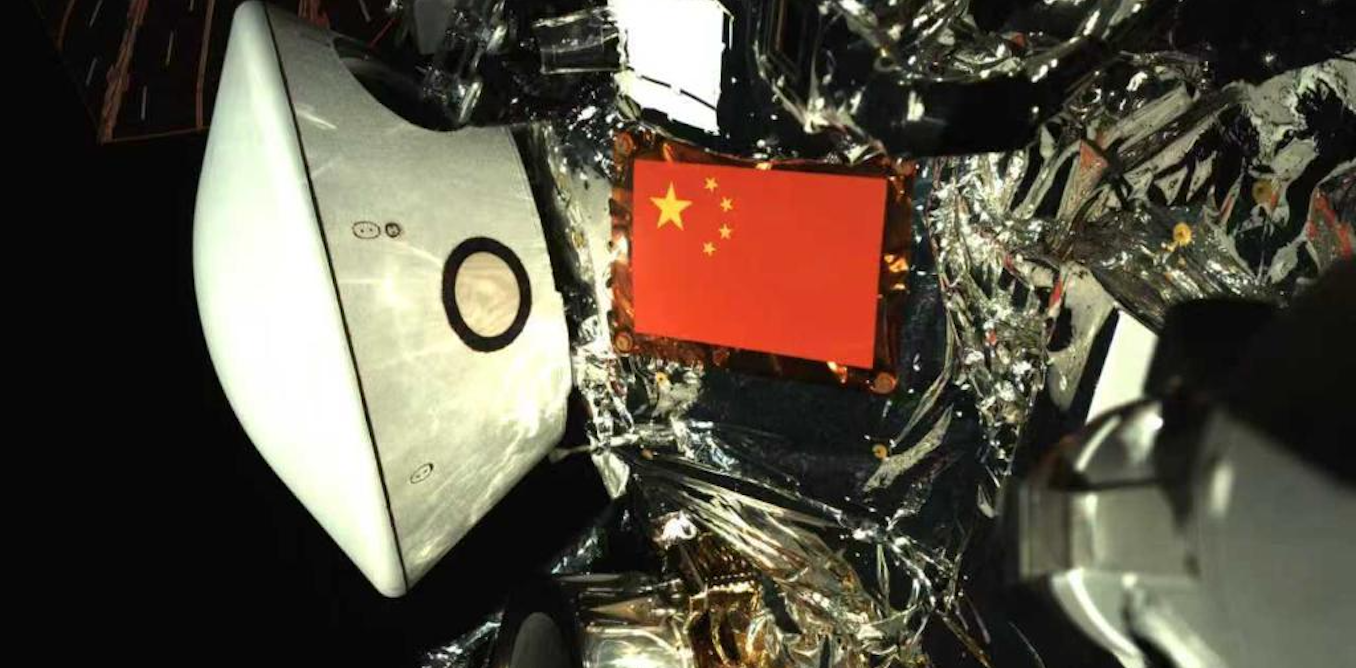
Chinese spacecraft to investigate whether asteroid Kamo'oalewa is a fragment of the Moon
A Chinese spacecraft is set to investigate asteroid 469219 Kamo'oalewa, a quasi-satellite of Earth that may be a fragment of the Moon. Measu
 theconversation.com·13h ago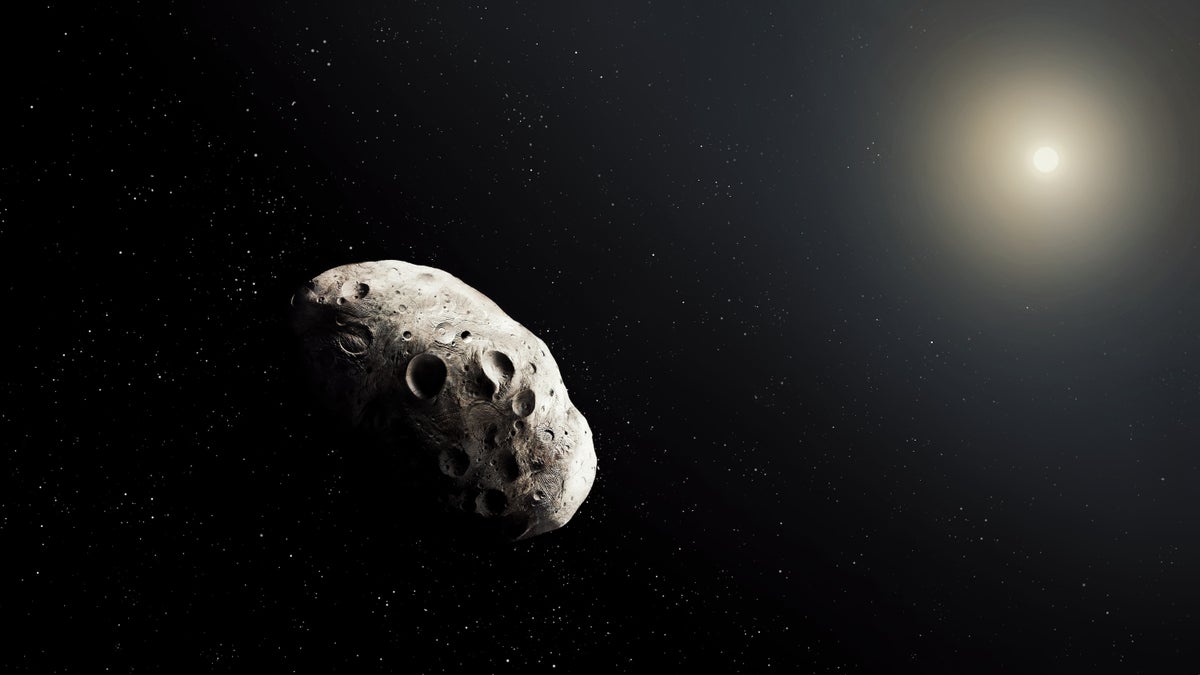
China's Tianwen-2 spacecraft reaches near-Earth asteroid Kamoʻoalewa for sampling mission
China's Tianwen-2 spacecraft has performed a critical engine burn to rendezvous with the near-Earth asteroid Kamoʻoalewa, a mysterious quasi
 scientificamerican.com·20d ago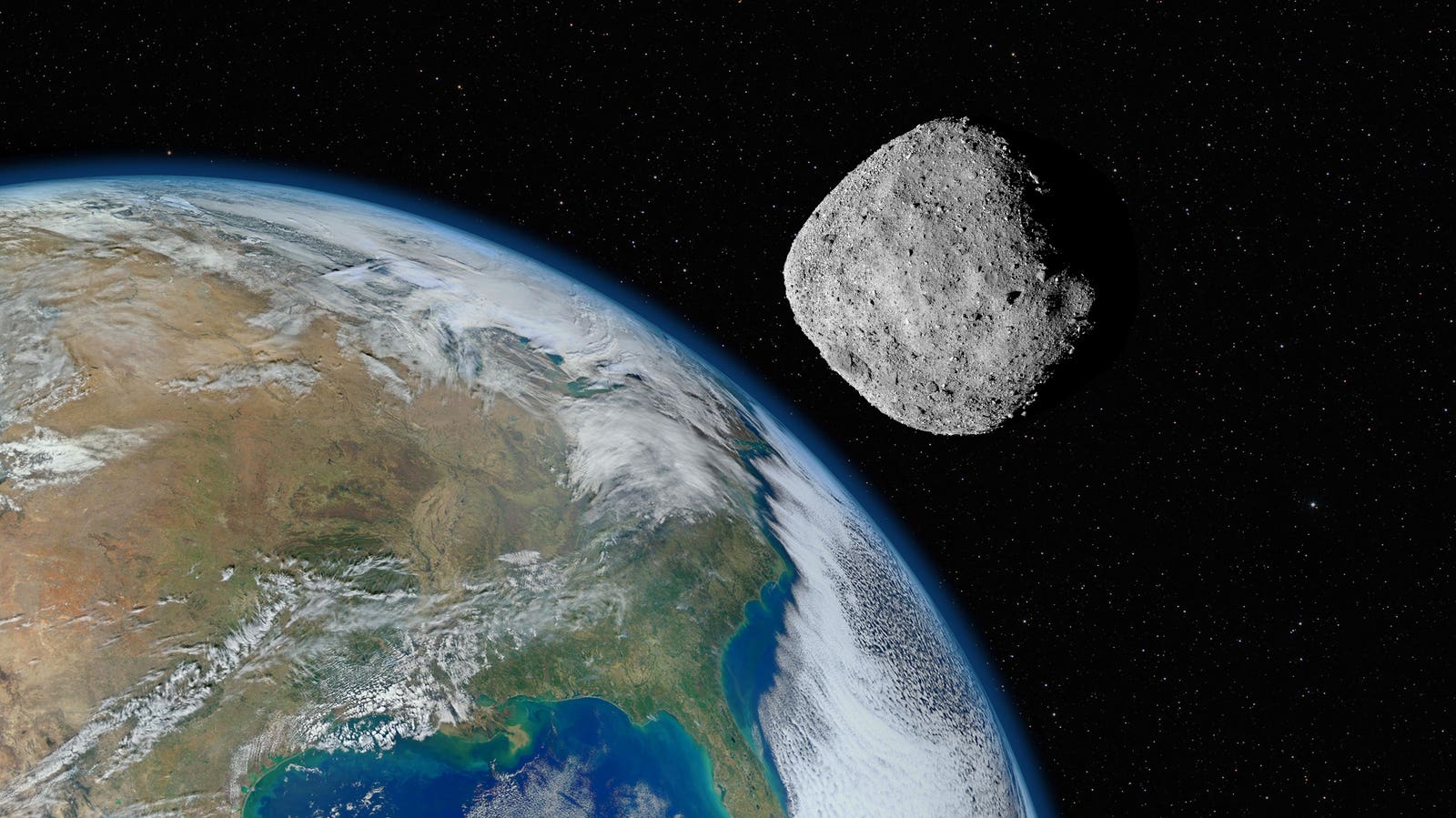
China's Tianwen-2 spacecraft to sample Earth's 'mini-moon' asteroid Kamoʻoalewa, which may be a lunar fragment
China's Tianwen-2 spacecraft is set to arrive at Kamoʻoalewa, a near-Earth asteroid roughly the size of the Statue of Liberty that is often
 forbes.com·4d ago
VLT Study Reveals Dramatic Nickel Emission and CN Outgassing in Interstellar Comet 3I/ATLAS
Astronomers using the Very Large Telescope (VLT) have conducted spectroscopic observations of interstellar comet 3I/ATLAS (C/2025 N1) as it
arxiv.org·10mo ago
JWST Observations Reveal Sun-like Starspot Properties on Young Solar Analog V1298 Tau
This scientific paper analyzes JWST NIRISS/SOSS transit observations of the young (20-30 Myr) solar analog star V1298 Tau and its exoplanets
arxiv.org·17d ago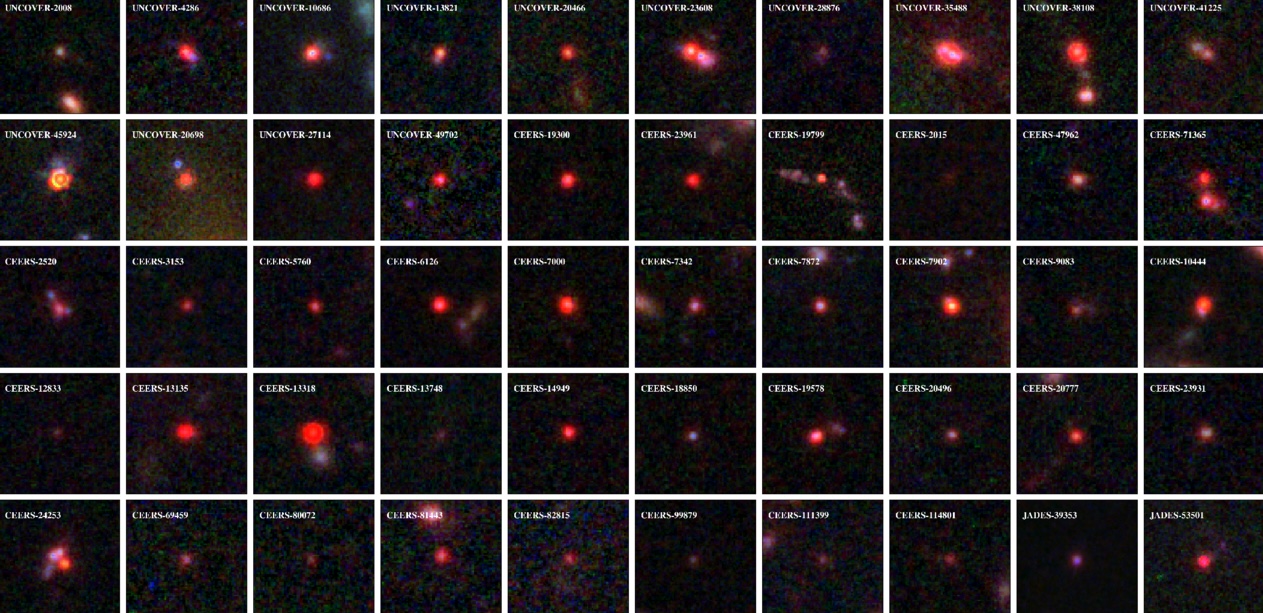
JWST's Little Red Dots: New Research Explores Whether They Are Young Globular Clusters or Objects with Blue Companions
JWST's discovery of compact reddish objects called "little red dots" has sparked scientific debate about their nature. This article examines
 aasnova.org·3d ago
Comments
Sign in to join the conversation.
No comments yet. Be the first.