
























Two-decade analysis of Tox-Prot database reveals growth patterns in animal venomics research
By
Kirchhoff, Kim N, Senoner, Tobias, Tuerkoglu, Selin, Koludarov, Ivan, von Reumont, Björn M, Holford, Mandë
Summary
This study analyzes venom tissue-related data from the Tox-Prot database across three time points (2005, 2015, 2025) to understand the growth and diversification of animal venomics research. The researchers assessed taxonomic distribution, sequence length patterns, protein family abundances, and habitat-specific venom characteristics over two decades of database curation.
Source

 bskyTwo-decade analysis of Tox-Prot database reveals growth patterns in animal venomics researchacademic.oup.com
Key quotes
· 3 pulledAnimal venomics is a growing field of research with evolutionary and biotechnological significance.
Yet, fundamental questions regarding the origin, diversification, and bioactivity of venoms remain unresolved.
We assessed the taxonomic landscape related to Tox-Prot entries, sequence length distribution, protein family abundances, and habitat-specific venom patterns.
You might also wanna read
The emergence and diversification of dog morphology


Evolutionary Research Reveals Species Diversify Through Sudden Bursts Rather Than Gradual Change
New evolutionary research reveals that species evolution occurs through sudden bursts of rapid change immediately after lineage splits, rath
 quantamagazine.org·9mo ago
Pan-cancer AI atlas reveals diversity and spatial organization of tertiary lymphoid structures in tumors
Researchers built a pan-cancer atlas of tertiary lymphoid structures (TLSs) in human tumors, developing an AI-based framework to detect and
 scim.ag·7d ago
Otters as Bioindicators of Estuarine Health: Research Gaps and Future Framework
This scientific synthesis article examines otters as bioindicators for estuarine health monitoring. It highlights how otters serve as integr
 emt.pensoft.net·4mo ago
Journal of Proteome Research Opens Call for Papers: Fifth Biennial Special Issue on Software Tools and Resources
The Journal of Proteome Research is calling for submissions for its Fifth Biennial Special Issue on Software Tools and Resources, focusing o
 go.acs.org·5d ago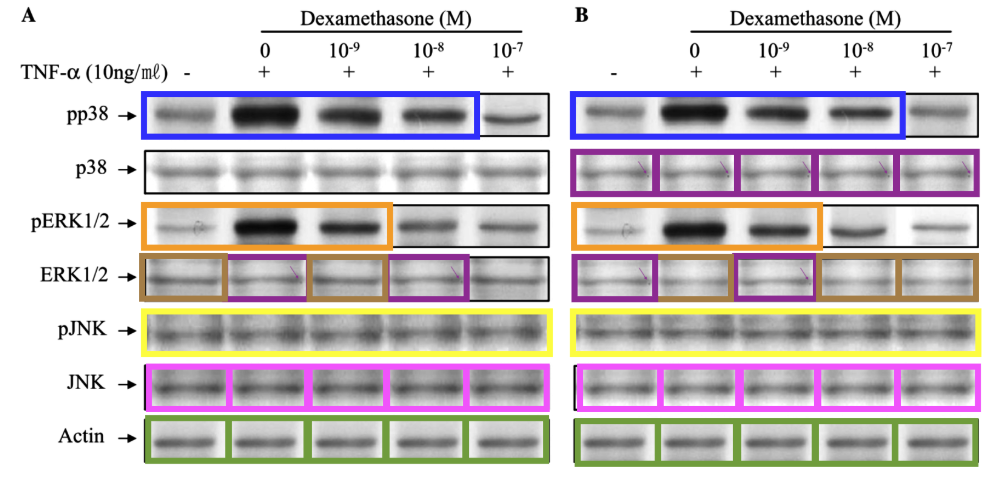
Decade-old image duplication concerns remain unaddressed in Elsevier's Cytokine journal
The author describes screening 20,000 biomedical articles for image duplication around 2014-2015, finding 782 papers (about 4%) with inappro
 scienceintegritydigest.com·3d ago
Comments
Sign in to join the conversation.
No comments yet. Be the first.