

























Plasma proteomic signatures enable risk prediction of early retinal neurodegeneration in type 2 diabetes
By
Huangdong Li ,
Summary
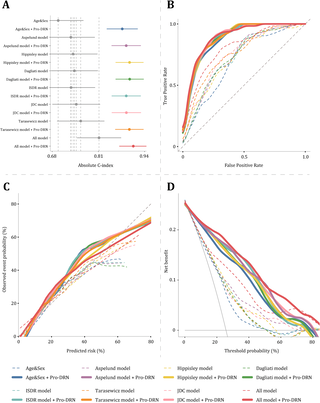
This multi-cohort prospective observational study by Wei Wang and colleagues investigates circulating plasma protein signatures associated with diabetic retinal neurodegeneration (DRN) in type 2 diabetes mellitus. The researchers integrated high-throughput plasma proteomics with longitudinal optical coherence tomography (OCT) in two independent populations to identify protein biomarkers and translate them into a risk prediction system for early retinal neurodegeneration in diabetic patients.
Source
 bskyPlasma proteomic signatures enable risk prediction of early retinal neurodegeneration in type 2 diabetesplos.io
Key quotes
· 2 pulledIn this multi-cohort prospective observational study, we integrated high-throughput plasma proteomics with longitudinal optical coherence tomography (OCT) in two independent populations.
Wei Wang and colleagues identify circulating plasma protein signatures of diabetic retinal neurodegeneration (DRN) and translate them into a risk prediction system.
You might also wanna read


New plasma proteomics model improves thrombosis risk prediction in cancer patients and identifies IL-17-driven endothelial activation as therapeutic target
This article presents research by Karagkouni and colleagues who developed a new cancer-associated venous thromboembolism (VTE) prediction mo
 scim.ag·2d ago
Skin inflammation as a sentinel marker for neurodegeneration: Chronic skin disorders may signal dementia risk in older adults
This article discusses the emerging link between chronic inflammatory skin conditions and dementia risk in older adults. It highlights that
 pubmed.ncbi.nlm.nih.gov·1d ago
New MRI-Based Biomarker Predicts Aging and Disease Risks
Researchers from Duke University, Harvard University, and the University of Otago have developed DunedinPACNI, a noninvasive MRI-based bioma
 insideprecisionmedicine.com·10mo ago
Study Identifies AMPA Receptors as Potential Biomarker for Long COVID Brain Fog
Researchers from Yokohama City University used a novel brain imaging technique to visualize AMPA receptors in living brains of Long COVID pa
 yokohama-cu.ac.jp·8mo ago
Scientists Engineer Proteins to Act as Qubits for Cellular Disease Monitoring
Scientists are exploring the intersection of quantum computing and biology by genetically engineering proteins to function like qubits. This
 popularmechanics.com·9mo ago