





















New plasma proteomics model improves thrombosis risk prediction in cancer patients and identifies IL-17-driven endothelial activation as therapeutic target
By
Jeffrey I. Zwicker
Summary
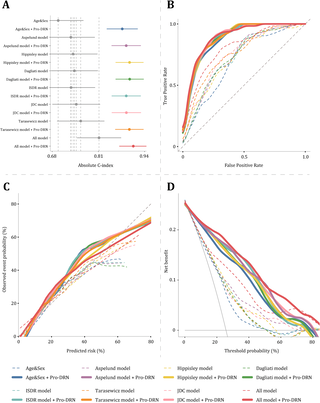
This article presents research by Karagkouni and colleagues who developed a new cancer-associated venous thromboembolism (VTE) prediction model called "TOP" using Bayesian probabilistic machine learning on data from the HYPERCAN trial. The model incorporates 11 protein markers and five clinical parameters, outperforming the commonly used Khorana score in a validation cohort from the AVERT clinical trial. Approximately 75% of patients were reclassified into higher or lower risk groups by this new approach. The study identifies IL-17-driven endothelial activation as a targetable mechanism, offering potential for improved thrombosis prediction and prevention in cancer patients.
Source

 Twitter / XNew plasma proteomics model improves thrombosis risk prediction in cancer patients and identifies IL-17-driven endothelial activation as therapeutic targetscim.ag
Key quotes
· 4 pulledThe 'TOP' model outperformed the commonly used Khorana score in a validation cohort drawn from the AVERT clinical trial
About 75% of patients being reclassified into higher or lower risk groups by the newly reported approach
Thrombosis remains a major cause of morbidity and mortality in patients with cancer
Existing risk models fail to reliably predict venous thromboembolism (VTE), underscoring the need for more accurate...
You might also wanna read


14-protein plasma signature predicts lung cancer risk years before diagnosis and identifies candidates for preventive therapy
This article presents a scientific study identifying a 14-protein plasma signature that can predict lung cancer risk more than 5 years befor
Plasma proteomic signatures enable risk prediction of early retinal neurodegeneration in type 2 diabetes
This multi-cohort prospective observational study by Wei Wang and colleagues investigates circulating plasma protein signatures associated w
 plos.io·13d ago
Gemma-Based AI Model Identifies Potential Cancer Therapy Pathway Through Conditional Immune Amplification
Researchers used a new 27 billion parameter foundation model called C2S-Scale 27B, built on Google's Gemma family of open models, to discove
 blog.google·8mo ago
TRISH seeks research proposals to address blood clot risks during spaceflight
The Translational Research Institute for Space Health (TRISH) at Baylor College of Medicine has issued a new solicitation for proposals to a
 bcm.edu·4d ago
Hallmarks of Cancer: A 25-Year Retrospective and Future Directions in Tumor Biology
This review by Douglas Hanahan revisits the "hallmarks of cancer" framework originally conceived with Bob Weinberg 25 years ago. It synthesi
UC San Diego AI Model Predicts Cancer Treatment Response from Tumor Genetics
UC San Diego researchers have developed an AI tool called iAtlas that can predict how a tumor will respond to treatment based solely on its