
























Pigeon study challenges century-old psychology law about reward-based learning
By
K. R. Callaway
Summary
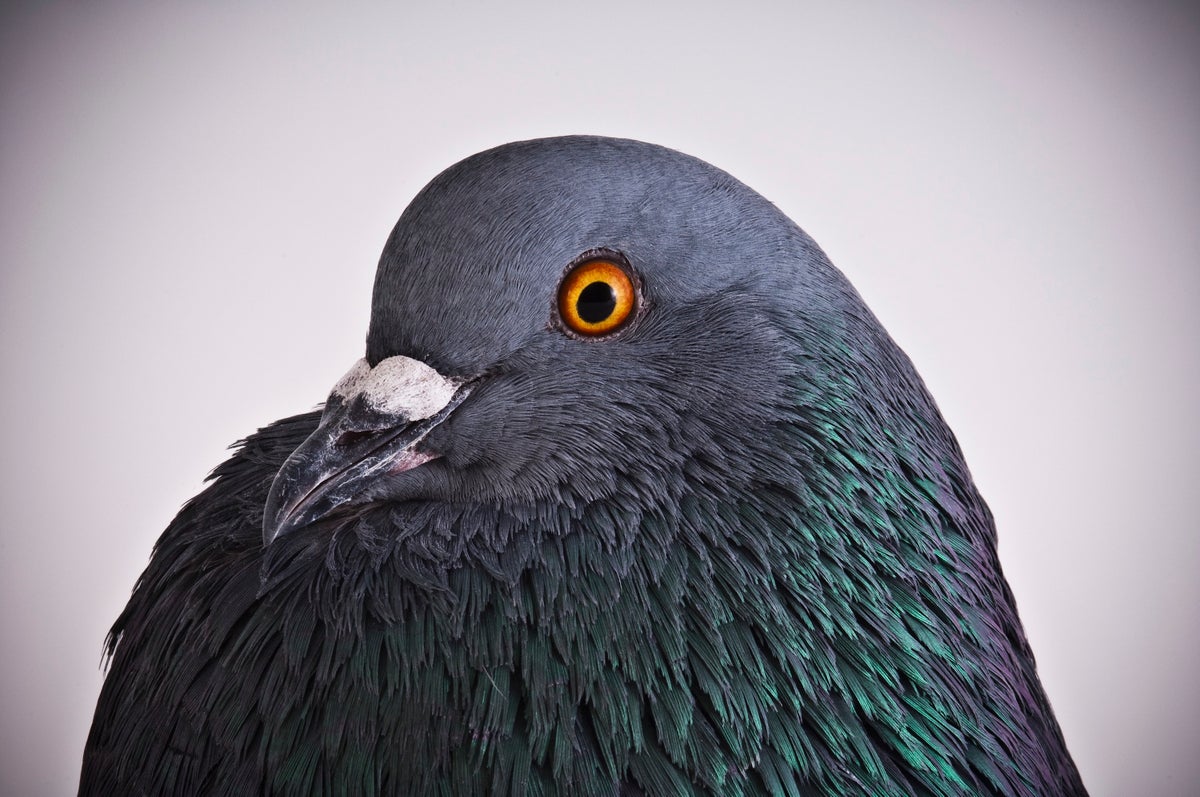
New research on pigeon decision-making challenges a century-old psychology law about how rewards and consequences shape learning. The study suggests pigeons actively avoid stability and live "at the edge of chaos," making unpredictable choices that may actually be an adaptive learning strategy. This work tests and potentially refines long-held assumptions about reinforcement learning in both animals and humans.
Source
 bskyPigeon study challenges century-old psychology law about reward-based learningscientificamerican.com
Key quotes
· 3 pulledNew research suggests the birds themselves avoid stability in their decision-making, instead choosing to live 'at the edge of chaos.'
As model species for learning and behavior, these birds are helping researchers test a century-old law about how humans and other creatures learn.
Pigeons seem to defy a century-old psychology law about how rewards and consequences help us learn
You might also wanna read


Study finds wisdom of crowds emerges in large flocks of migrating songbirds
This article examines the phenomenon of collective intelligence (the "wisdom of crowds") in large groups of wild animals, specifically focus
 science.org·9d ago
A Cognitive Science-Inspired Framework for Autonomous AI Learning
This article examines the limitations of current AI models in achieving autonomous learning and proposes a new learning architecture inspire
 arxiv.org·3mo ago
Brain 'Flight Simulator' Model Reveals Learning Mechanisms and Mental Processing Errors
Researchers have developed a 'flight simulator' computer model for the brain that reveals how learning occurs and why mental processes somet
 now.tufts.edu·8mo ago
Emerging Evidence Challenges Traditional Views on Inheritance and Evolutionary Theory
The article examines emerging evidence challenging traditional evolutionary theory, particularly the long-held belief that acquired characte
 aeon.co·5mo ago
AI Evolution in 2025: From Stochastic Parrots to Chain of Thought Reasoning
The article reflects on the evolution of AI understanding by the end of 2025, noting that the 'stochastic parrots' criticism of LLMs has lar
antirez.com·6mo ago
Why neuroscience is not ready to guide brain-based policymaking
This article critically examines the growing trend of policymakers turning to neuroscience to inform laws and policies, arguing that the sci
 newscientist.com·5d ago
Why neuroscience is not ready to guide brain-based policymaking
This article critically examines the growing trend of policymakers turning to neuroscience to inform laws and policies, arguing that the sci
newscientist.com·5d ago
Comments
Sign in to join the conversation.
No comments yet. Be the first.