
























Optimal Prediction-Correction Algorithm Using Sparse Linear Extrapolation for Time-Varying Optimization
Source
IEEEOptimal Prediction-Correction Algorithm Using Sparse Linear Extrapolation for Time-Varying Optimizationieee.orgYou might also wanna read

Reflecting on Optimisation: A Personal Take on Theory vs. Modern Practice
Magnus Ross reflects on his lack of deep study in optimisation, admitting he knows the basics (Adam, AdaGrad, L-BFGS) but zones out when dis

Computing Hessian Inverse Products for Deep Neural Networks to Speed Up Gradient Descent
This article presents a GitHub repository that demonstrates how to compute the inverse of the Hessian matrix for deep neural networks and mu
 github.com·5mo ago
BIFE: A New Framework for Stable Minute-Long Video Generation Using Semantic Sparse KV Cache and Block Forcing
This paper introduces BIFE (Better Interaction, Fewer Errors), a framework for minute-long video generation that addresses two key challenge
 arxiv.org·14d ago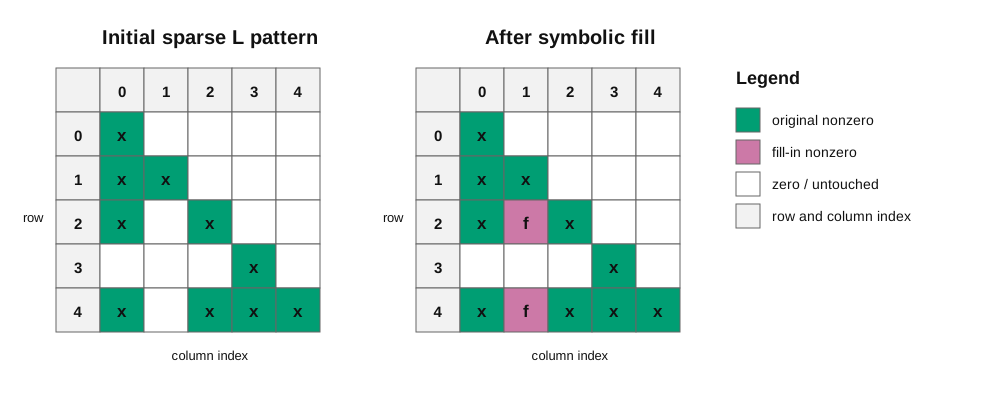
Deriving the Sparse Cholesky Elimination Tree for Matrix Factorization
This article provides a technical derivation of the elimination tree for the right-looking sparse Cholesky algorithm (A = LL^T) for sparse m

Unified Framework for Black-Box Optimization Reveals Hybrid Methods Outperform Constituent Algorithms
This paper presents a unified theoretical framework connecting several black-box optimization (BBO) methods — Evolution Strategies (ES), Con
arxiv.org·5d agoUnified Framework for Black-Box Optimization Reveals Hybrid Methods Outperform Constituent Algorithms
This paper presents a unified theoretical framework connecting several black-box optimization (BBO) methods — Evolution Strategies (ES), Con
arxiv.org·5d ago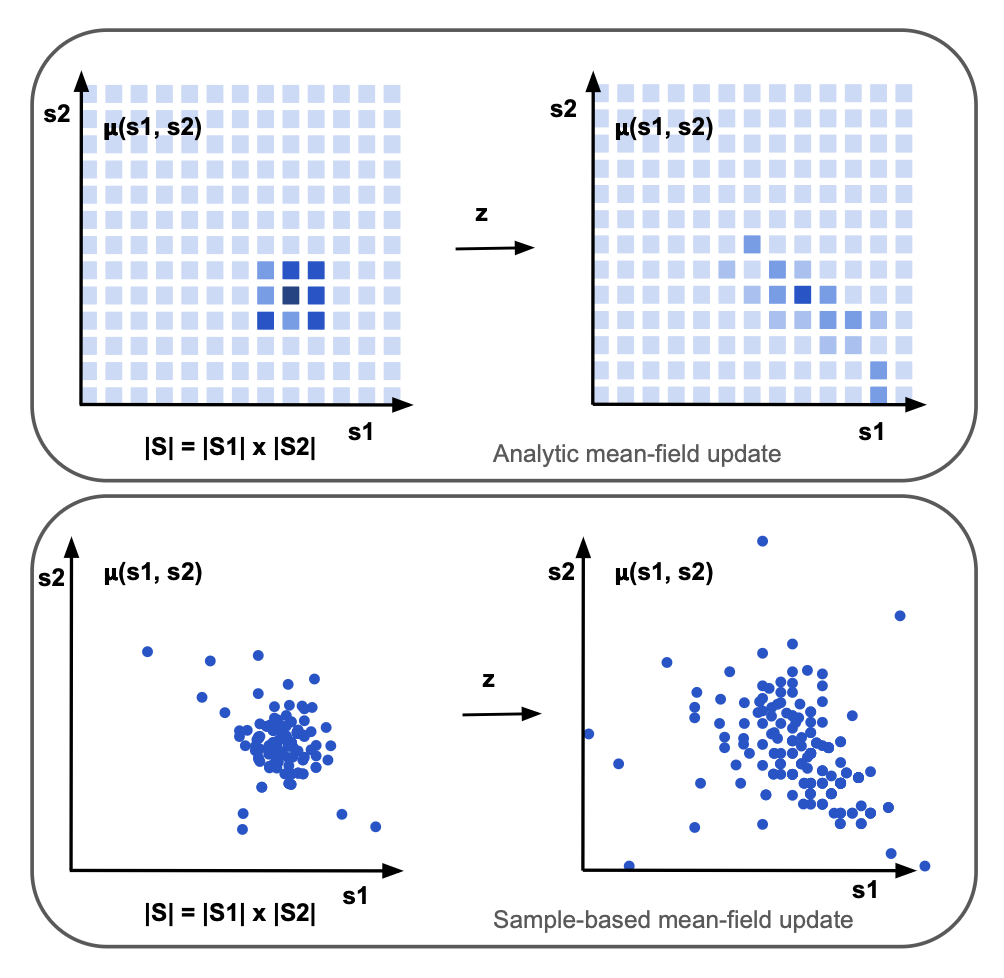
Recurrent Structural Policy Gradient: A Method for Partially Observable Mean Field Games
This article introduces Recurrent Structural Policy Gradient (RSPG), a hybrid structural method for learning history-dependent policies in P
Comments
Sign in to join the conversation.
No comments yet. Be the first.