
























One of the strangest planets is pink and has clouds filled with metallic salt
By
Dainet Sierra
1d agoen
Source
Theweather.comOne of the strangest planets is pink and has clouds filled with metallic salttheweather.comLocated 57 light-years from Earth, the planet GJ504b has an atmosphere with possible metallic salt clouds and has reignited the debate over its true nature and mass. The astronomical object GJ504b, known as the "pink planet," has once again become the focus of scientific attention following observations by the James Webb Space Telescope and renewed doubts about its classification. Image: NASA. Located 57 light-years from our planet is GJ504b, an astronomical object discovered in 2013 that continues to raise many questions. Its nickname, the "Pink Planet," emerged because of the hue observed around its atmosphere in the first images obtained. Since then, researchers have tried to determine whether it is a giant planet or an object that lies on the boundary of another astronomical category. The arrival of new data obtained by the James Webb Space Telescope has allowed significant progress in that investigation. A study published in The Astronomical Journal presents evidence of clouds composed of metallic salts in its atmosphere. This is an unprecedented observation in such a cool object and provides valuable information for studying bodies that can barely be detected through direct observation. GJ504b, a cool and difficult-to-observe object The astronomical object GJ504b has a size comparable to Jupiter's, although its mass is several times greater. One of the aspects that generated the most interest after its discovery was its temperature, estimated at around 290°C (554°F). Compared with other directly imaged exoplanets, which can exceed 1,000°C (1,832°F), this value is highly unusual. GJ 504b, the magenta-hued exoplanet! This captivating world, composed of pink gas, resembles Jupiter but boasts four times the mass. At a scorching 460°F, it's a celestial oven, radiating its mesmerizing glow. #GJ504b #ExoplanetBeauty #MagentaWorld #CosmicWonders pic.twitter.com/SRW5ekFZHb — Cosmology (@Cosmology0) October 12, 2023 Specialists attribute this temperature to its age. Estimates place the object's age between 2.5 and 4 billion years. During that time, gas giants gradually lose the heat accumulated during their early stages of formation, reducing their temperatures over time. The study of GJ504b has been especially challenging for two reasons. On one hand, it emits very little light. On the other, it lies close to a much brighter star that complicates observations. In fact, several ground-based telescopes spent years trying to obtain more detailed data until the James Webb telescope gathered high-quality information in just two hours. Metallic salt clouds in the atmosphere of the pink planet The research was based on the spectroscopic analysis of light coming from GJ504b. This method makes it possible to identify the substances present in an atmosphere from the signatures left by certain molecules as they interact with radiation. Metallic salt clouds place the pink planet, GJ504b, among the most difficult objects to analyze beyond the Solar System. Image: NASA. Thanks to this technique, scientists detected water vapor, methane, carbon dioxide, ammonia, and other compounds. However, the first models used to interpret the results failed to properly explain all of the observations. Related article U.S. Astronomers Investigate the Possible Existence of a Planet That Disappeared From the Solar System The situation changed when the team led by Aneesh Baburaj incorporated the presence of clouds made up of metallic salts. With that hypothesis, the calculations began to match the observed data. These structures would act as a layer that alters the observed light and hides part of the deeper regions of the atmosphere. The mass of GJ504b reopens the debate about its nature The new findings have also raised another important question: its true mass. Although some previous estimates suggested it had about four times Jupiter's mass, the most recent study proposes much higher figures. The authors place the object in a range of between 25 and 30 Jupiter masses. Such a large difference significantly changes the interpretation of its nature and origin within its planetary system. Related article Astronomical Discovery: A NASA Telescope Discovers More Than 10,000 New Exoplanets With these values, GJ504b approaches the boundary that separates giant planets from brown dwarfs. For this reason, many researchers prefer to define it as a "planetary-mass companion." Besides helping refine observation techniques, this object continues to raise several questions about how to classify some of the most complex bodies detected beyond the Solar System. Article reference Aneesh Baburaj, Jean-Baptiste Ruffio, Marshall Perrin, Jerry W. Xuan, William O. Balmer, Yayaati Chachan, Quinn M. Konopacky, Travis S. Barman, Mathilde Mâlin, Kielan K. W. Hoch. JWST-TST High Contrast: First Direct Spectroscopy of GJ 504 b Reveals Clouds and Possible Metal Enrichment .
You might also wanna read

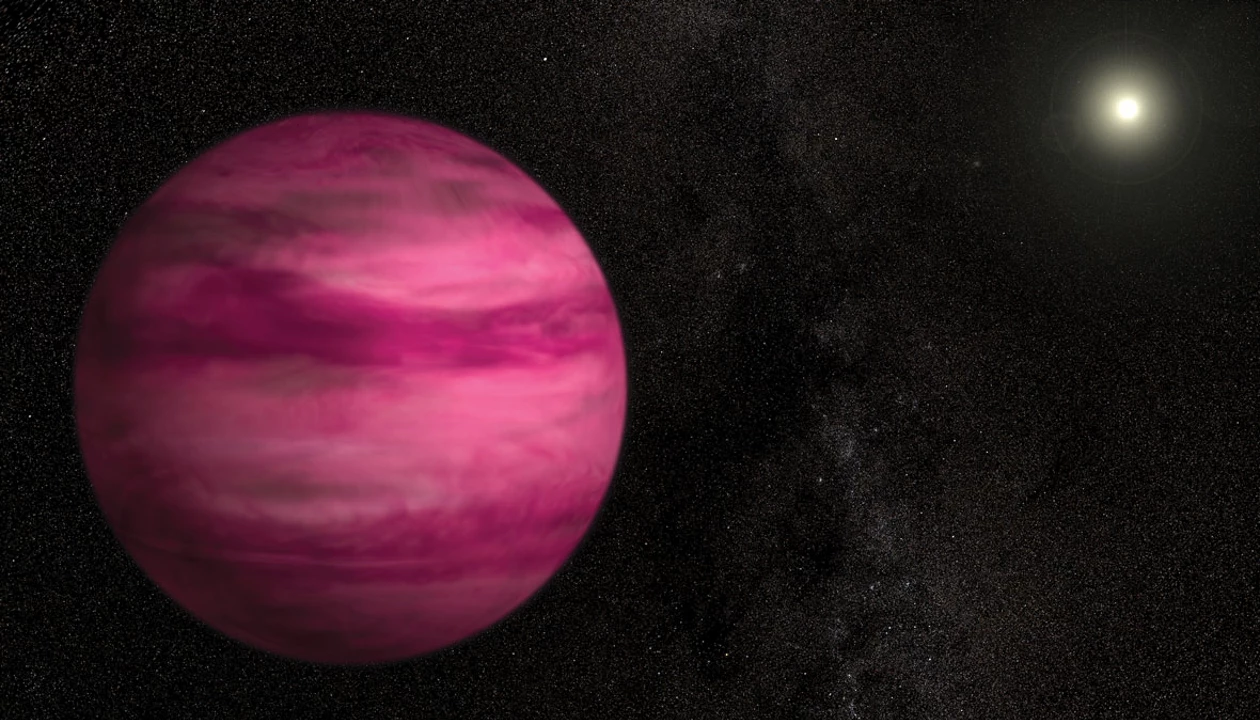
Astronomers analyze the atmospheric composition of exoplanet GJ 504 b, the Pink Planet
Researchers have analyzed the atmosphere of GJ 504 b, known as the Pink Planet, over a decade after its discovery. They found evidence of sa
 cen.acs.org·11d ago
James Webb uncovers exotic salt clouds on a mysterious pink world
ScienceDaily·9d ago
Two Planets Lighter Than Cotton Candy
lottery.meet·6d ago
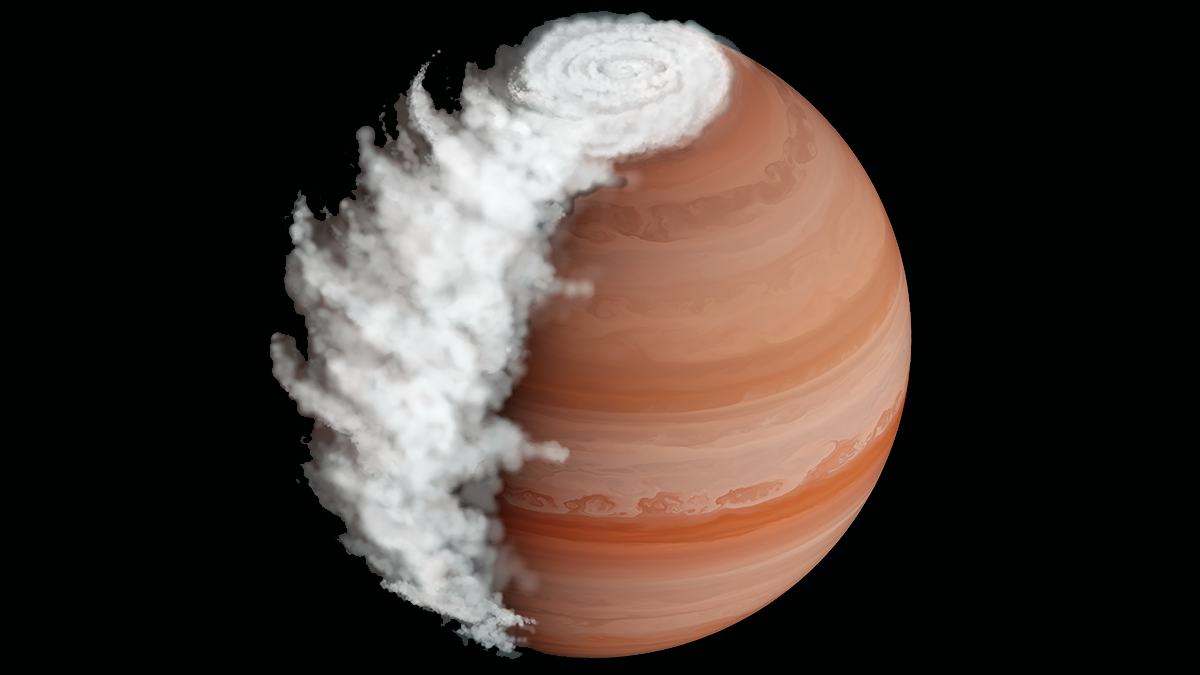
JWST Reveals WASP-39b Has Cloudy Mornings and Clear Evenings, Solving Longstanding Exoplanet Mystery
Astronomers using the James Webb Space Telescope (JWST) have developed a novel observation technique to study the exoplanet WASP-39b, a hot
 eos.org·21d ago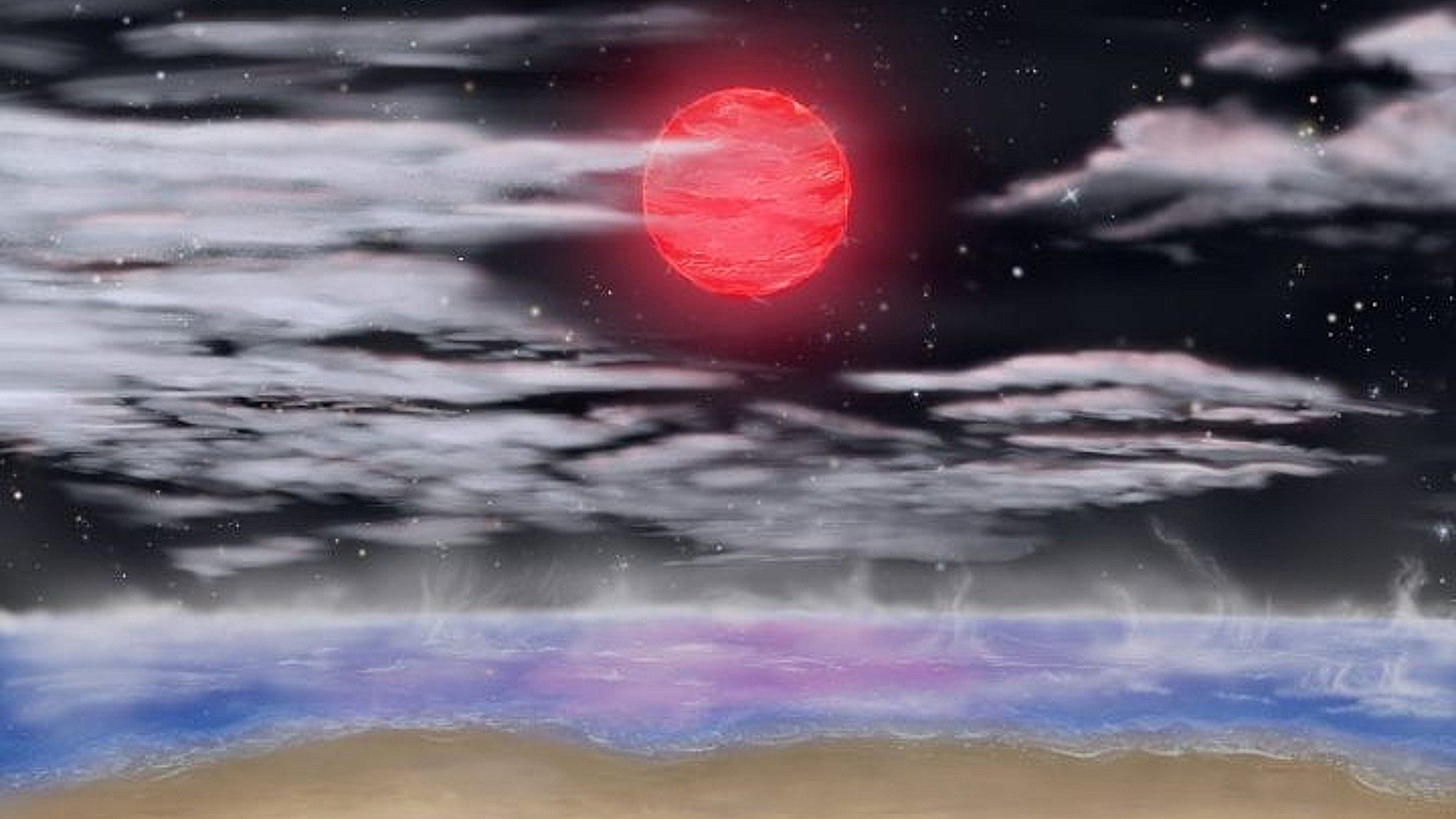
Potentially habitable rocky exoplanet GJ 3378b discovered 25 light-years away in red dwarf's habitable zone
Astronomers have discovered GJ 3378b, a potentially habitable rocky super-Earth exoplanet located just 25 light-years away in the habitable
 space.com·5d ago
Potentially habitable rocky exoplanet GJ 3378b discovered 25 light-years away in red dwarf's habitable zone
Astronomers have discovered GJ 3378b, a potentially habitable rocky super-Earth exoplanet located just 25 light-years away in the habitable
Space·5d ago
JWST Study Reveals Exoplanet GJ 3929b as Likely Bare Rock Without Atmosphere
The James Webb Space Telescope's Rocky Worlds program has revealed that exoplanet GJ 3929b is likely a bare rock with no significant atmosph
 arxiv.org·10mo ago
Comments
Sign in to join the conversation.
No comments yet. Be the first.