
























One GPU, Two Bottlenecks: Serving Vision-Language Models Without Wasting Silicon
From the article
You shipped a vision-language model on the same GPU stack that served your text LLM. Same vLLM config, similar parameter count, no red alarms in monitoring – yet throughput fell anyway. Inter-token latency crept up. Batch-size tuning helped a little; quantisation helped a little; neither explained the gap. The issue is not a bad deploy.... The post One GPU, Two Bottlenecks: Serving Vision-Language Models Without Wasting Silicon appeared first on SudoAll .
Continue reading on sudoall.comYou might also wanna read
Why WSL2 Falls Short for Local AI Development
zenvanriel.com
Why Real-Time LLM Performance Still Hits a Wall Despite Faster GPUs
EE Times Asia·19h ago

Unsloth and NVIDIA Partner to Accelerate LLM Fine-Tuning by 20%
Unsloth has partnered with NVIDIA to optimize fine-tuning of large language models, achieving 20% faster training speeds. The collaboration
 Unsloth - Train and Run Models Locally·2mo ago
A Practical Guide to Scaling Language Models: From Single Accelerators to Thousands
This article/book excerpt demystifies the science of scaling language models, explaining how TPUs and GPUs work, how they communicate, how L
 jax-ml.github.io·13d ago
A Practical Guide to Scaling Language Models: From Single Accelerators to Thousands
This article/book excerpt demystifies the science of scaling language models, explaining how TPUs and GPUs work, how they communicate, how L
jax-ml.github.io·13d ago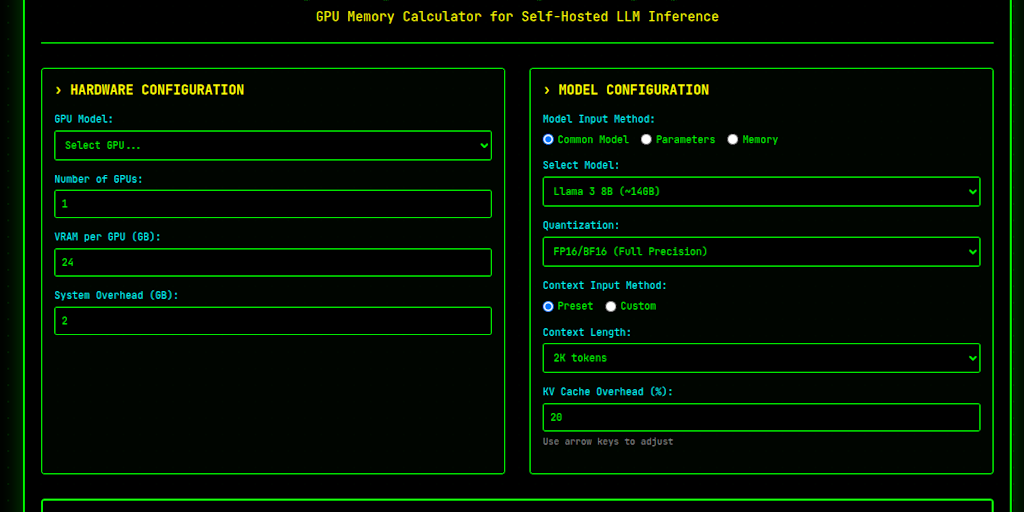
Guide to Calculating GPU Memory for Self-Hosted LLM Inference
The article provides a guide on calculating GPU memory requirements and managing concurrent requests for self-hosted large language model (L
 Product Hunt·11mo ago
LLMs on Intel Macs with AMD GPUs in MacOS is here
MacRumors·4d ago
Comments
Sign in to join the conversation.
No comments yet. Be the first.