
























Omen AI raises $31M to tackle bacterial contamination in data center liquid cooling systems
By
Tim Fernholz
Summary
Omen AI has raised a $31 million Series A to address a growing problem in AI data centers: bacterial contamination in liquid cooling systems. As data centers push GPUs harder to meet AI compute demands, they run liquid cooling loops hotter by increasing the water-to-biocide ratio. This creates conditions for bacterial outbreaks that clog the cooling flow, forcing costly rack shutdowns of 5-6 hours that can cost millions. Omen AI's solution involves tiny sensors that monitor coolant quality in real-time, detecting contamination early to prevent shutdowns and optimize cooling efficiency.
Source
 bskyOmen AI raises $31M to tackle bacterial contamination in data center liquid cooling systemstechcrunch.com
Key quotes
· 3 pulledThe liquid for liquid-cooled chips is a mixture of water and a substance that inhibits bacteria growth.
To run the chips hotter, data center managers can change the mix to include more water, which absorbs heat better, but leads to nasty contamination that clogs the flow.
To solve that, they flush the system, which can mean shutting down a rack for five or six hours at a potential cost of millions of dollars.
You might also wanna read

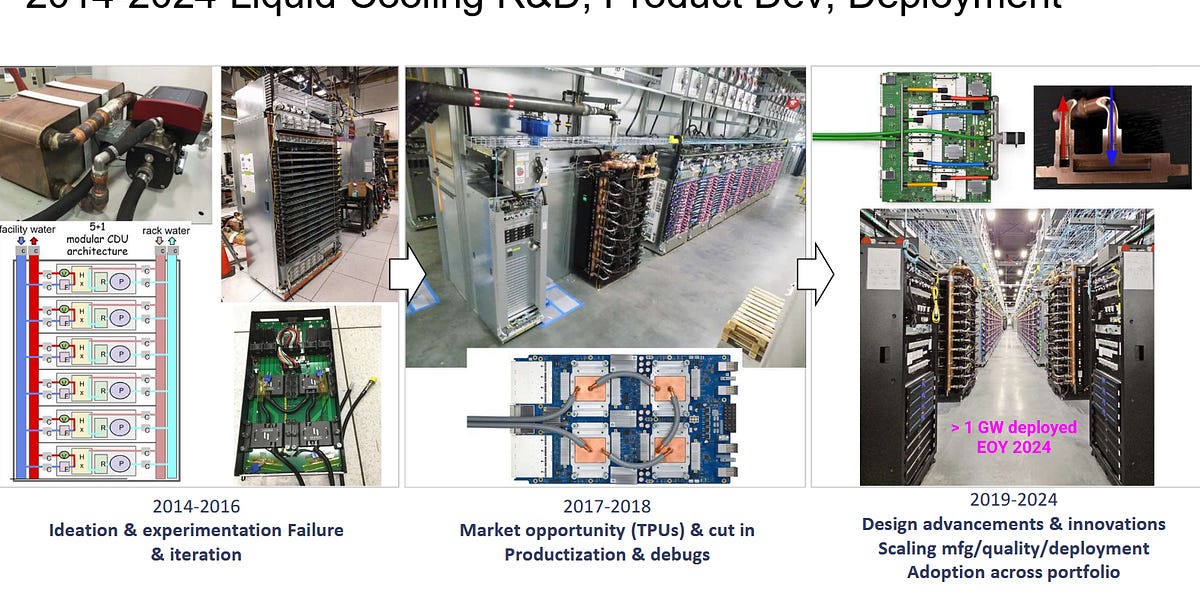
Google Presents Liquid Cooling Solutions for AI Datacenters at Hot Chips 2025
Google presented on liquid cooling technology for datacenters at Hot Chips 2025, highlighting how water's superior thermal conductivity (400
 chipsandcheese.com·10mo ago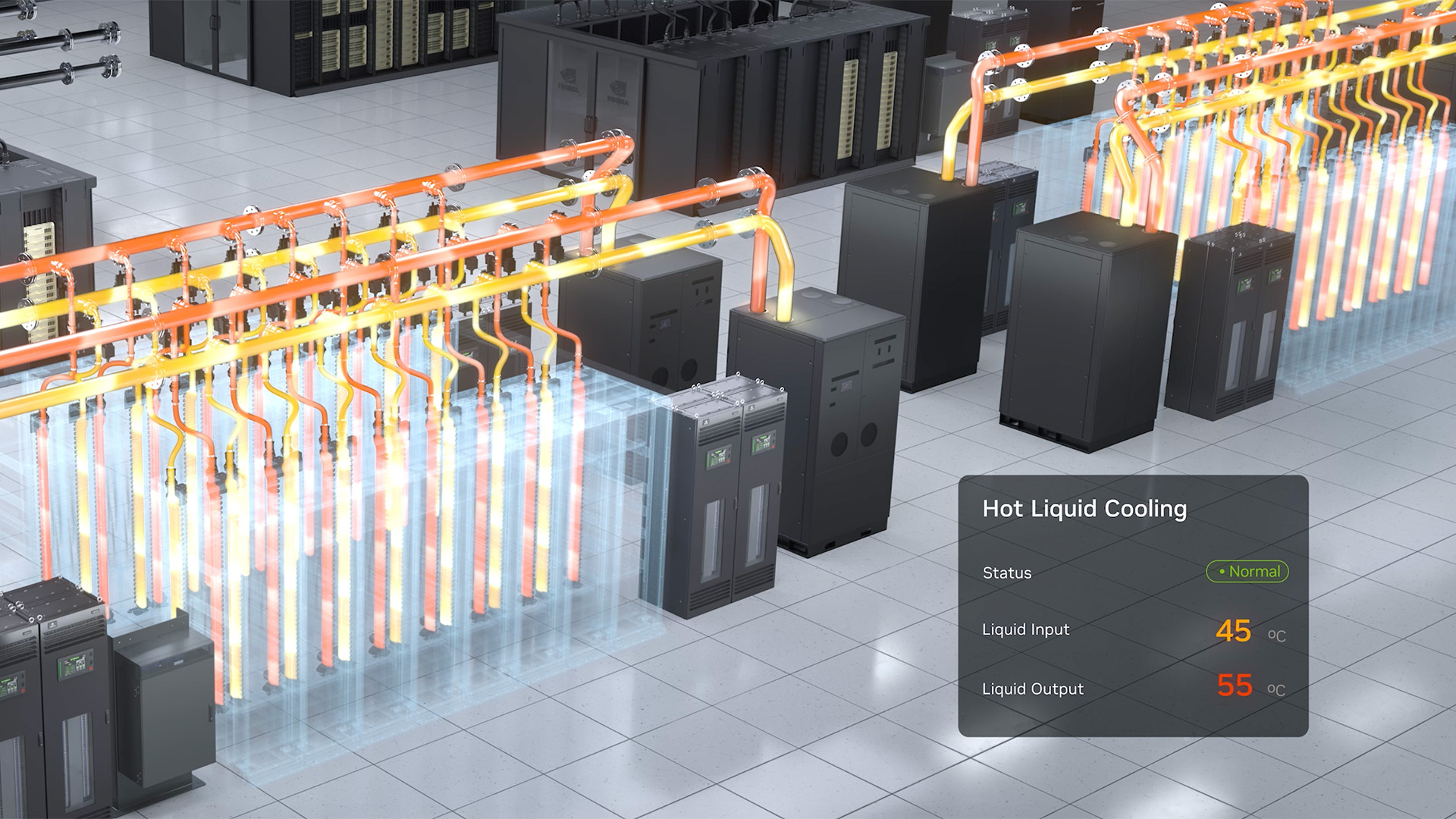
NVIDIA's Rubin AI Servers Use 45°C Liquid Cooling for Greater Energy Efficiency
NVIDIA's new Rubin generation AI servers achieve 100% liquid cooling with coolant running at up to 45°C (113°F) — hotter than a typical hot
NVIDIA's Rubin AI Servers Use 45°C Liquid Cooling for Greater Energy Efficiency
NVIDIA's new Rubin generation AI servers achieve 100% liquid cooling with coolant running at up to 45°C (113°F) — hotter than a typical hot
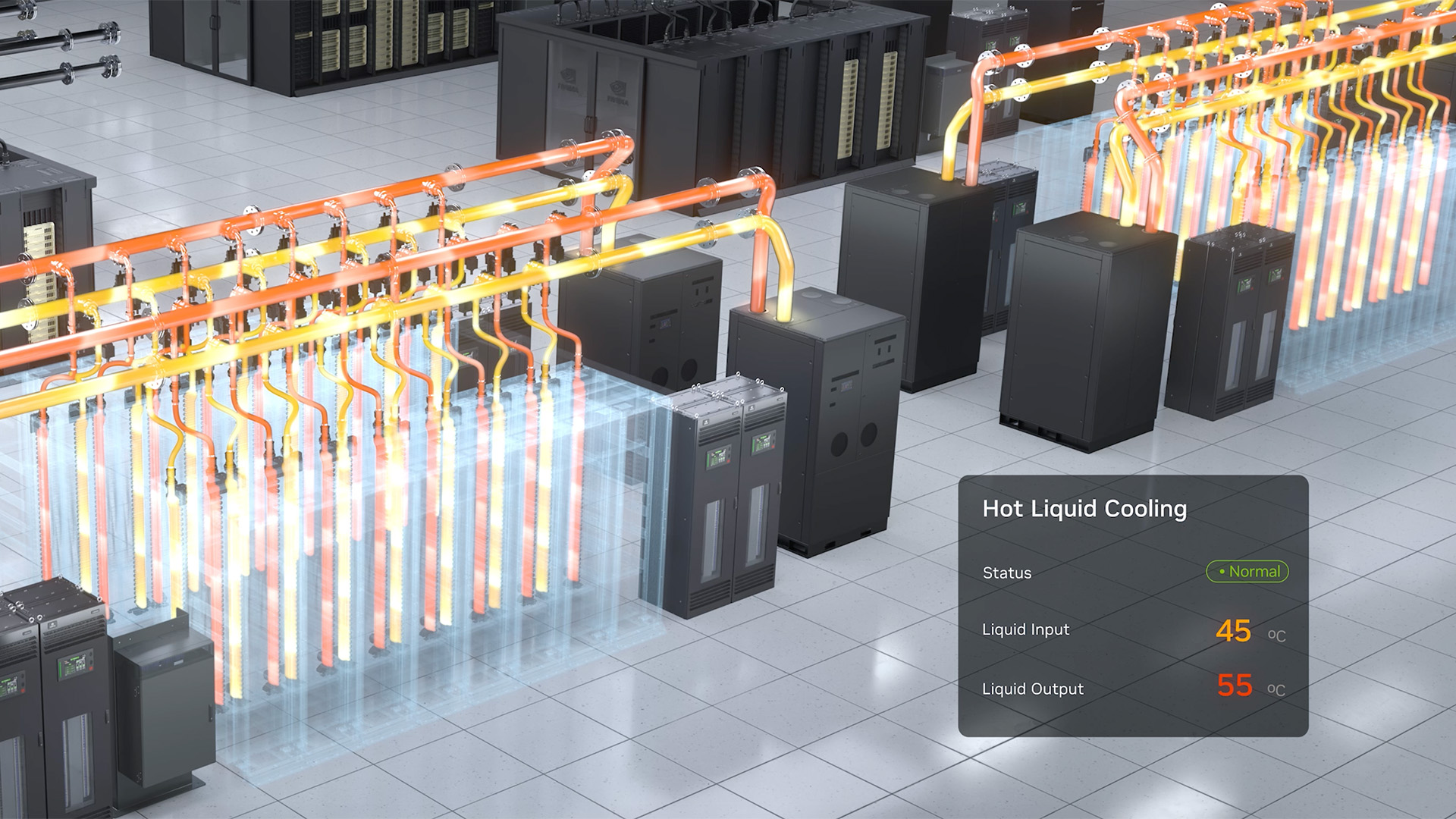
NVIDIA's Rubin AI servers run 100% liquid cooling at 45°C for greater energy efficiency
NVIDIA's upcoming Rubin generation of AI servers achieves 100% liquid cooling with coolant temperatures up to 45°C (113°F) — hotter than a t

Microsoft Develops Microfluidic Cooling Technology for More Efficient Data Centers
Microsoft is developing a microfluidic cooling technology that uses liquid coolant flowing directly into silicon chips to improve heat dissi
 The Verge·9mo ago
Nvidia claims liquid-cooled Rubin data center design cuts energy use and nearly eliminates water consumption
Nvidia is promoting its Rubin generation reference design for fully liquid-cooled AI data centers, claiming it significantly reduces power u
The Verge·12d ago
Data center backlash reveals deeper American anxiety over unregulated AI expansion
The article explores the growing grassroots opposition to data centers across the United States, arguing that while the surface-level compla
 vox.com·1mo ago
Comments
Sign in to join the conversation.
No comments yet. Be the first.