
























Meta's Brain2Qwerty v2 decodes brain signals into text in real-time without surgery
By
alok-g
Summary
Meta has released Brain2Qwerty v2, an AI-powered system that decodes brain activity into text in real-time using non-invasive recordings, achieving accuracy levels previously only possible with surgical implants. The system uses MEG and EEG to translate brain signals into text without requiring surgery. Meta is releasing the full training code for both v1 and v2 to accelerate neuroscience research, in partnership with the Basque Center on Cognition, Brain, and Language (BCBL).
Source

 Hacker NewsMeta's Brain2Qwerty v2 decodes brain signals into text in real-time without surgeryai.meta.com
Key quotes
· 3 pulledLast year, we introduced Brain2Qwerty v1, research that uses AI to decode brain activity into text without any surgical implant.
Now we're sharing the next step: Brain2Qwerty v2, the highest-performing end-to-end pipeline capable of real-time sentence decoding from non-invasive brain recordings, approaching levels of accuracy previously exclusive to techniques that require brain surgery.
To help accelerate neuroscience breakthroughs, we're releasing the full training code for Brain2Qwerty v1 and v2
You might also wanna read


Meta releases non-invasive brain-computer interface that reads thoughts through magnetic fields
Meta has released version two of its Brain2Qwerty brain-computer interface, which uses a non-invasive magnetoencephalography (MEG) scanner t
 tomshardware.com·8h ago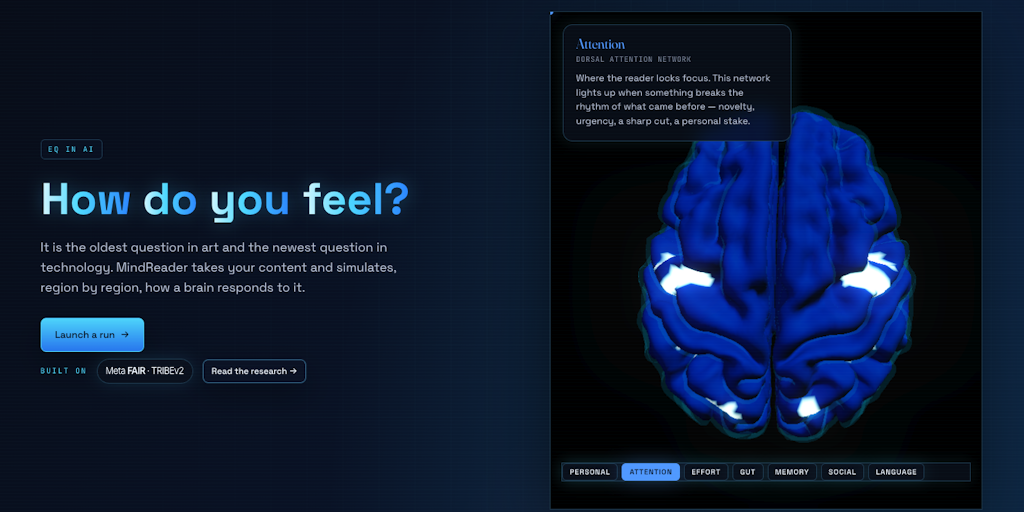
MindReader: Open-source tool simulates brain responses to content using Meta's TRIBE v2 fMRI model
MindReader is an open-source tool that uses Meta FAIR's TRIBE v2 model (trained on ~1,000 hours of real fMRI scans across 720 subjects) to s
 Product Hunt·18d ago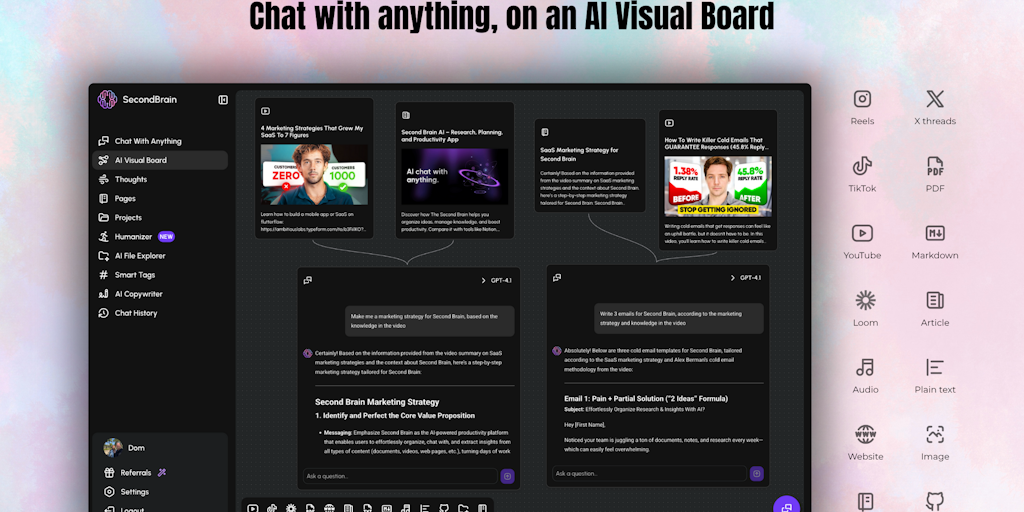
Second Brain: AI-Powered Visual Board and Knowledge Base Platform
Second Brain is an AI-powered visual board and knowledge base tool that allows users to chat with any content on a visual interface. Users c
Product Hunt·1y ago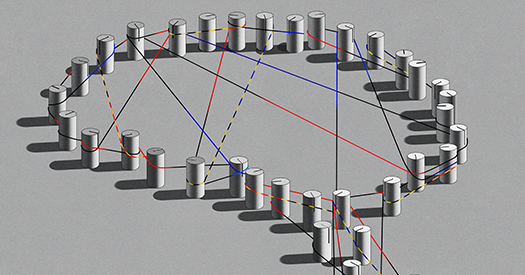
How AI models are being repurposed as tools to study the human brain
The article discusses how pretrained AI models, originally designed as engineering tools for practical tasks like predicting text, are incre
 thetransmitter.org·8d ago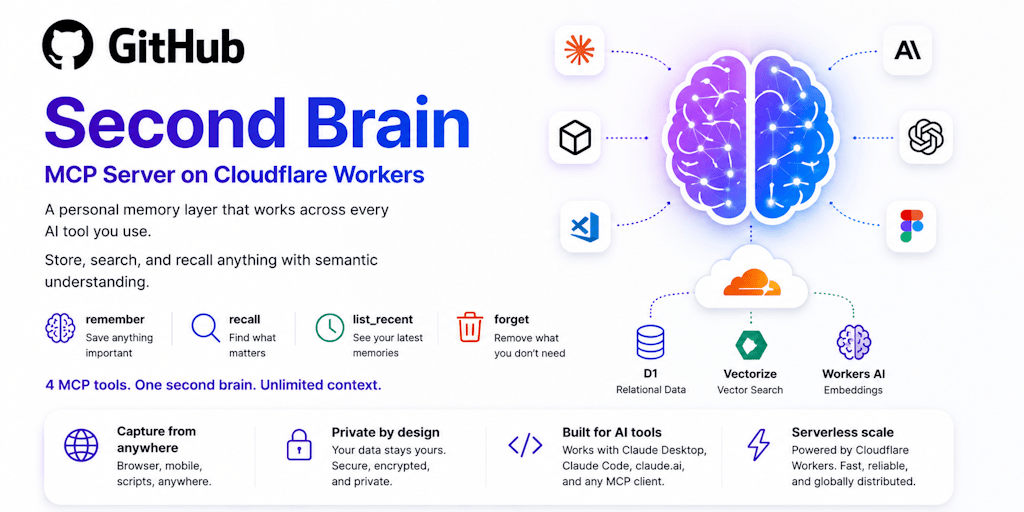
Second Brain: A Self-Hosted Persistent Memory Layer for AI Chat Tools
Second Brain is a self-hosted, open-source memory layer for AI tools like Claude, ChatGPT, and Cursor. It solves the problem of AI sessions
Product Hunt·1mo ago
Yale researchers develop brain-computer interface that aligns with natural neural pathways for rapid learning
Yale researchers developed a brain-computer interface (BCI) that works with the brain's natural activity patterns rather than against them.
 news.yale.edu·17d ago
Comments
Sign in to join the conversation.
No comments yet. Be the first.