
























Matrix Orthogonalization Technique Boosts Associative Recall in Recurrent Neural Networks
By
at2005
Summary
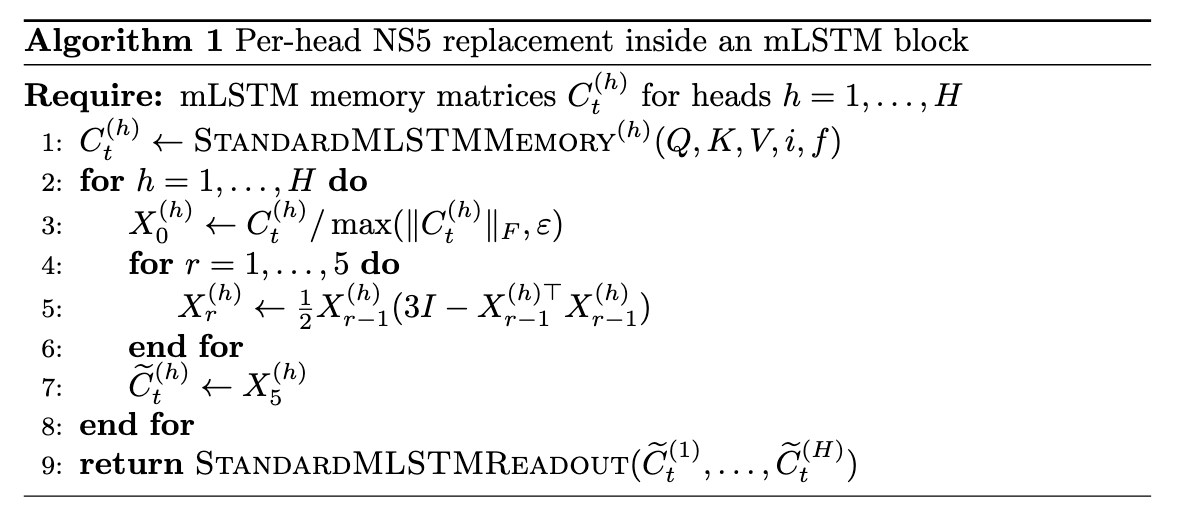
This article discusses a technique called Matrix Orthogonalization to improve associative recall (AR) in recurrent neural networks (RNNs), aiming to close the gap with transformers on this capability. The work is motivated by domains like long-horizon reinforcement learning where transformers' quadratic attention overhead is prohibitive. The approach focuses on making RNNs competitive for tasks requiring associative recall without sacrificing the efficiency benefits of recurrence.
Source
 Hacker NewsMatrix Orthogonalization Technique Boosts Associative Recall in Recurrent Neural Networksayushtambde.com
Key quotes
· 3 pulledTransformers exhibit remarkable associative recall (AR) abilities: attention provides each token direct access to those preceding it, a mechanism that has been hard for other architectures, like recurrent neural networks (RNNs), to match.
But for some domains, we can't afford the quadratic-attention overhead of transformers.
For these kinds of applications, we need to make recurrent neural networks work, but don't want to give up on associative recall.
You might also wanna read


Theoretical Analysis Reveals Why Linear RNNs Are More Parallelizable Than Nonlinear RNNs
This paper establishes a theoretical connection between types of RNNs and standard complexity classes to explain why linear RNNs (LRNNs) are
 arxiv.org·27d ago
Parametric Memory Law: A Quantitative Framework for Understanding LoRA Memory Capacity in LLMs
This research paper introduces the Parametric Memory Law, a quantitative framework for understanding how Low-Rank Adaptation (LoRA) enables
arxiv.org·1mo ago
Researchers Work to Decode the "Black Box" of Reservoir Computing and Brain-Inspired AI
This article explores Reservoir Computing (RC), a specialized form of recurrent neural networks (RNNs) that mimics biological brain processe
 akmaier.substack.com·1mo ago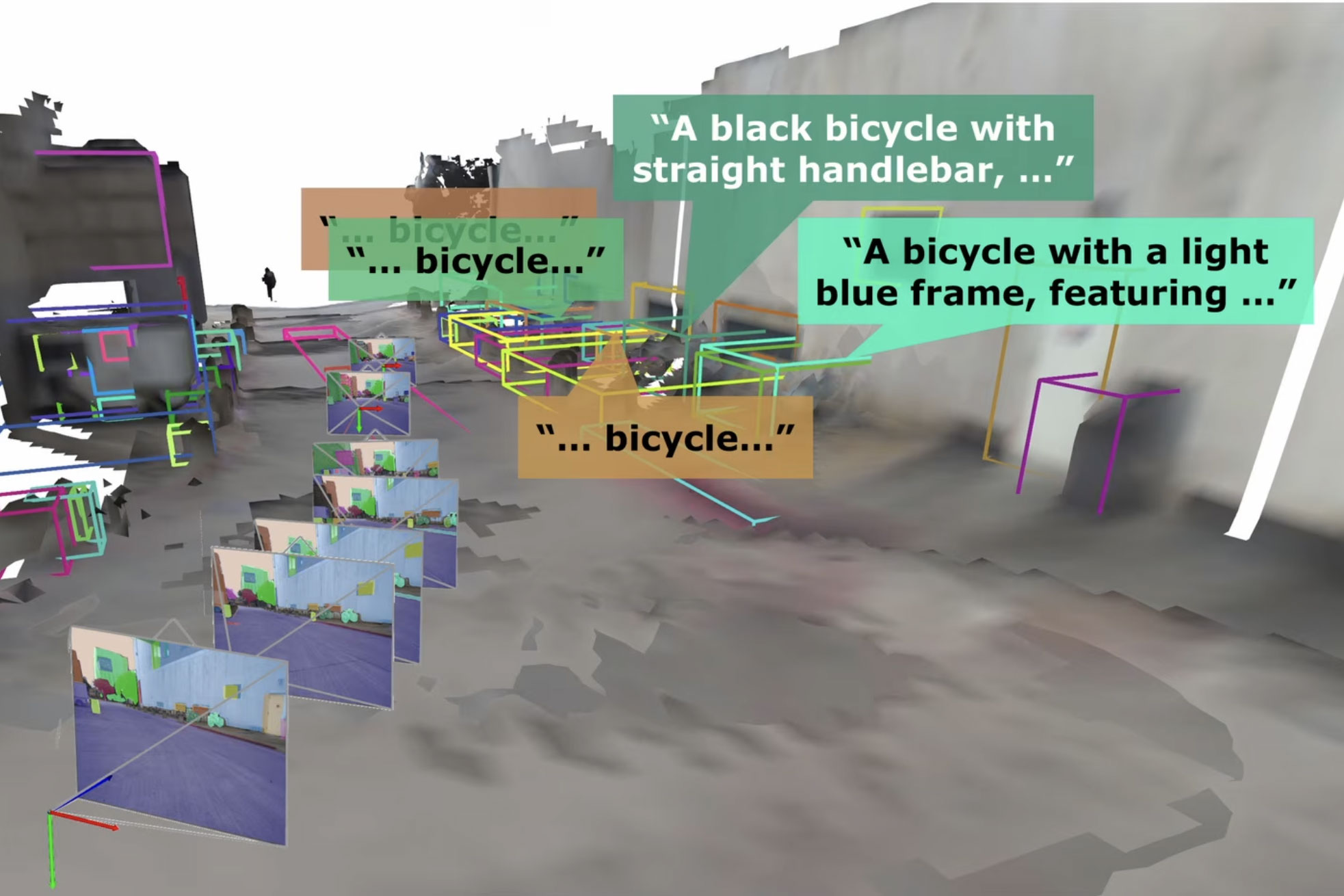
MIT develops DAAAM memory framework to give robots long-term spatiotemporal recall
MIT researchers have developed a long-term memory framework called DAAAM that enables robots to rapidly form and recall detailed mental mode
 news.mit.edu·6d ago
Emergent Hebbian Dynamics in Regularized Learning: A Theoretical Analysis
This research paper investigates whether observed Hebbian/anti-Hebbian plasticity in synaptic updates necessarily implies an underlying Hebb
arxiv.org·29d ago
Study Reveals How RL and SFT Differently Teach Transformers Chain-of-Thought Reasoning on Sparse Boolean Functions
This research paper analyzes how transformers learn Chain-of-Thought (CoT) reasoning capabilities through Reinforcement Learning (RL) with p
arxiv.org·1mo ago
Comments
Sign in to join the conversation.
No comments yet. Be the first.