
























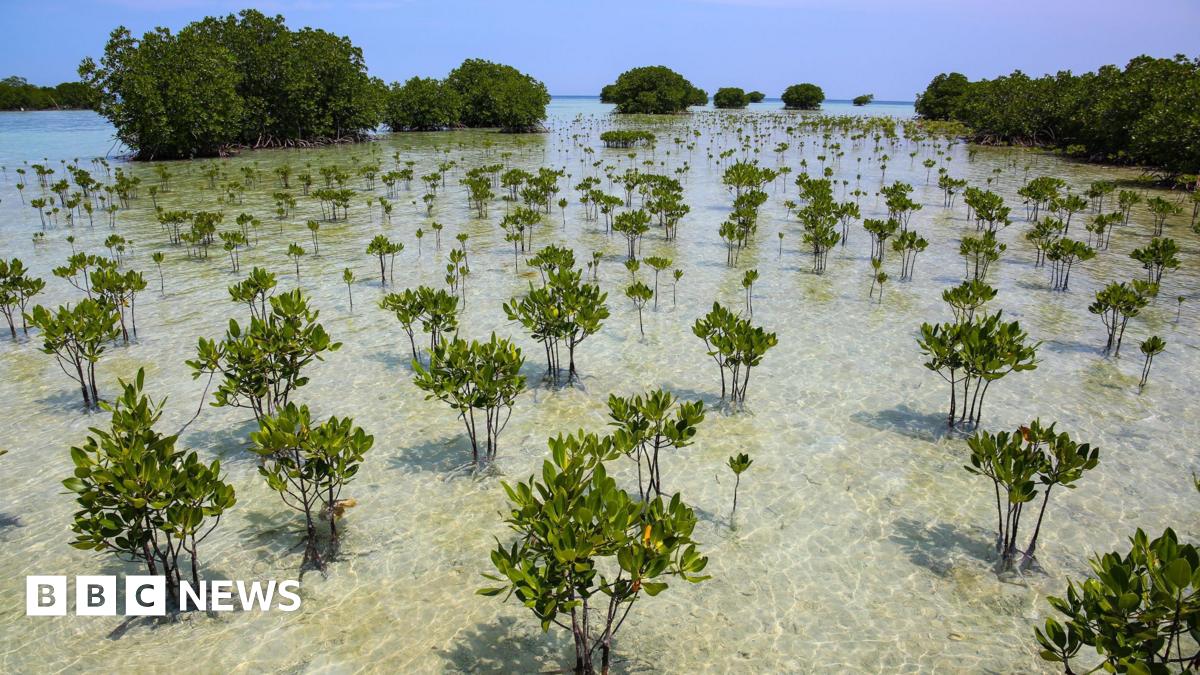
Mangrove forests are recovering after decades of destruction, benefiting coastal communities and climate
By
Matt McGrath, Esme Stallard
Summary
Mangrove forests, which store up to five times more carbon dioxide than land-based forests and protect coastal communities from storm surges and tsunamis, are making a surprising comeback after decades of human destruction. Their tangled roots also serve as nurseries for fish and marine life. The recovery is attributed to increased awareness of their importance following extreme weather events, offering positive implications for both coastal protection and climate change mitigation.
Source
 bskyMangrove forests are recovering after decades of destruction, benefiting coastal communities and climatebbc.co.uk
Key quotes
· 3 pulledMangroves are one of the world's unsung environmental heroes.
Not only do they store up to five times more carbon dioxide than land-based forests, but their tangled roots can also slow down waves and protect coastal communities from storm surges and tsunamis.
These same roots provide a perfect nursery for many species of fish and other marine life - protecting them from predators.
You might also wanna read


A benchmark for how different disturbances influence the loss and recovery of carbon and CO₂ in tropical forests

The Impact of Forest Restoration on Global Cooling
Replanting forests can help cool the planet, especially in the tropics, but it won't fully offset human-generated warming. A study suggests
news.ucr.edu·1y agoEfforts to Save Kelp Forests from Ocean Warming Are Ramping Up

Reforestation in Eastern US Provided Cooling Effect During 20th Century Warming
A new study published in Earth's Future reveals that a century of reforestation in the eastern United States likely helped keep the region c
 news.agu.org·8mo ago
Seaweed-based carbon removal technique may increase CO2 due to ocean nutrient disruption
Seaweed cultivation, touted as a promising carbon dioxide removal technique with tens of millions in investment, may backfire due to uninten
 newscientist.com·7d ago
Comments
Sign in to join the conversation.
No comments yet. Be the first.