
























Interview with Prof. Mark Z. Jacobson: How jet fuel sulfur aerosols in the upper troposphere contribute to global warming
By
mittdolcino
Summary
This article investigates the role of sulfur contained in jet fuel as a climate-warming agent. When jet fuel is combusted, sulfur is injected into the upper troposphere as aerosols, which the author argues acts as a significant anthropogenic contributor to global warming. The piece details the author's process of conducting independent analyses, verifying sources, and reviewing scientific papers on the topic. It culminates in an interview with Prof. Mark Z. Jacobson of Stanford University, a leading expert, to explore how jet fuel sulfur byproducts contribute to global warming — a factor the author claims has been overlooked in mainstream climate discussions.
Source

 bskyInterview with Prof. Mark Z. Jacobson: How jet fuel sulfur aerosols in the upper troposphere contribute to global warmingmittdolcino.com
Key quotes
· 3 pulledFor years, we've been highlighting the existence of a hidden guest in the Green world: the sulfur contained in jet fuel, a climate-altering agent, or, in short, a global warming agent.
Over the years, we've conducted our own analyses, verified sources, and conducted repeated analyses on scientific papers to investigate how sulfur, injected as jet fuel combustion into the upper troposphere, can act as a climate-warming agent.
Following this learning and verification process, having explored various fields, we decided to contact leading experts
You might also wanna read

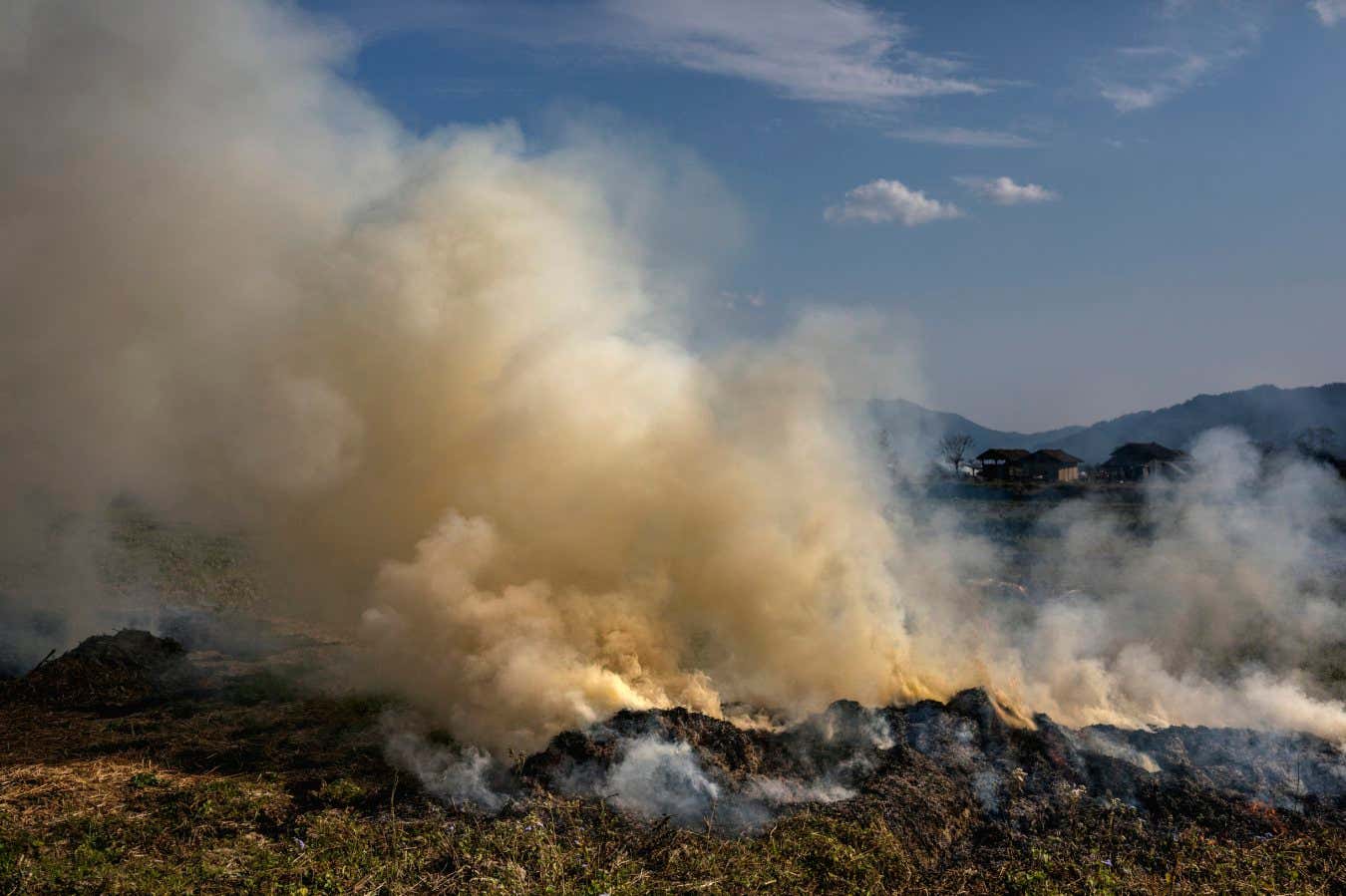
Indirect greenhouse gases like carbon monoxide and VOCs account for 15% of global warming but remain largely unregulated
A new analysis reveals that so-called "forgotten" pollutants — carbon monoxide and volatile organic compounds (VOCs) — are responsible for a
 newscientist.com·3d ago
Aviation's Climate Impact: Contrails Contribute Half of Global Warming Effect
The article discusses the significant climate impact of aviation, noting that while CO2 emissions contribute to about half of aviation's glo

Impact of East Asian Aerosol Cleanup on Global Warming Acceleration
The reduction of East Asian aerosol emissions has likely contributed to the recent acceleration in global warming, unmasking the impact of g
nature.com·11mo ago
Scientific consensus confirms human activity as the primary driver of global warming
The article presents the overwhelming scientific consensus on human-caused climate change, detailing that global warming since the Industria
 en.wikipedia.org·4d ago
Volcanic Eruptions Triggered Hydrogen Sulfide Buildup and Permian Mass Extinction
Research suggests that volcanic eruptions in Siberia 251 million years ago triggered a cascade of events that led to the Permian mass extinc
 psu.edu·7mo ago
Understanding How Life Contributes to Cloud Formation for Climate Science Improvement
Scientists are beginning to understand how life contributes to cloud formation, potentially improving climate science. Plants, plankton, and
smithsonianmag.com·1y ago
Comments
Sign in to join the conversation.
No comments yet. Be the first.