
























Impact of East Asian Aerosol Cleanup on Global Warming Acceleration
Global surface warming has accelerated since around 2010, relative to the preceding half century1–3. This has coincided with East Asian efforts to reduce air pollution through restricted atmospheric…
Read the full articleYou might also wanna read
Europe warming faster as cleaner air removes cooling pollution effect
A surprising factor is accelerating Europe’s warming: cleaner air. Decades of pollution control have stripped away the cooling effect of ind


A popular climate fix could accidentally trigger massive changes to global weather
A new study found that not all geoengineering ideas are created equal. Brightening marine clouds over the eastern Pacific could dramatically
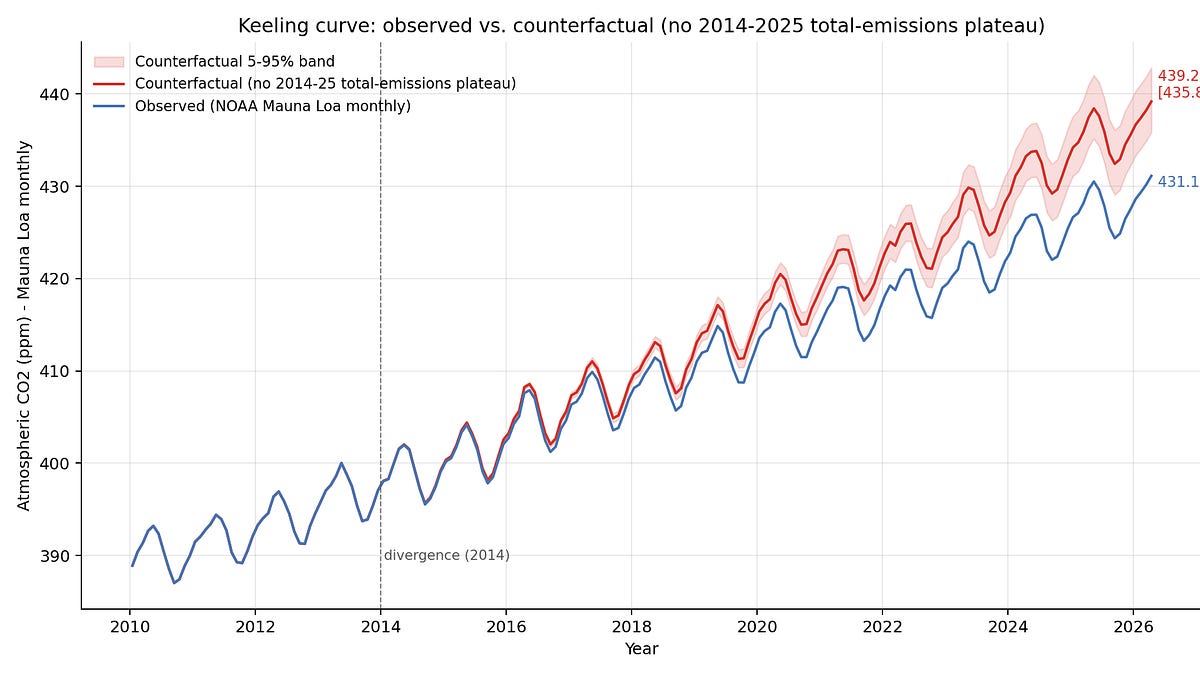
Global CO2 emissions plateau slows atmospheric concentration growth, analysis finds
CO2 concentrations have continued to increase – but more slowly than it otherwise would have
 theclimatebrink.com·1mo ago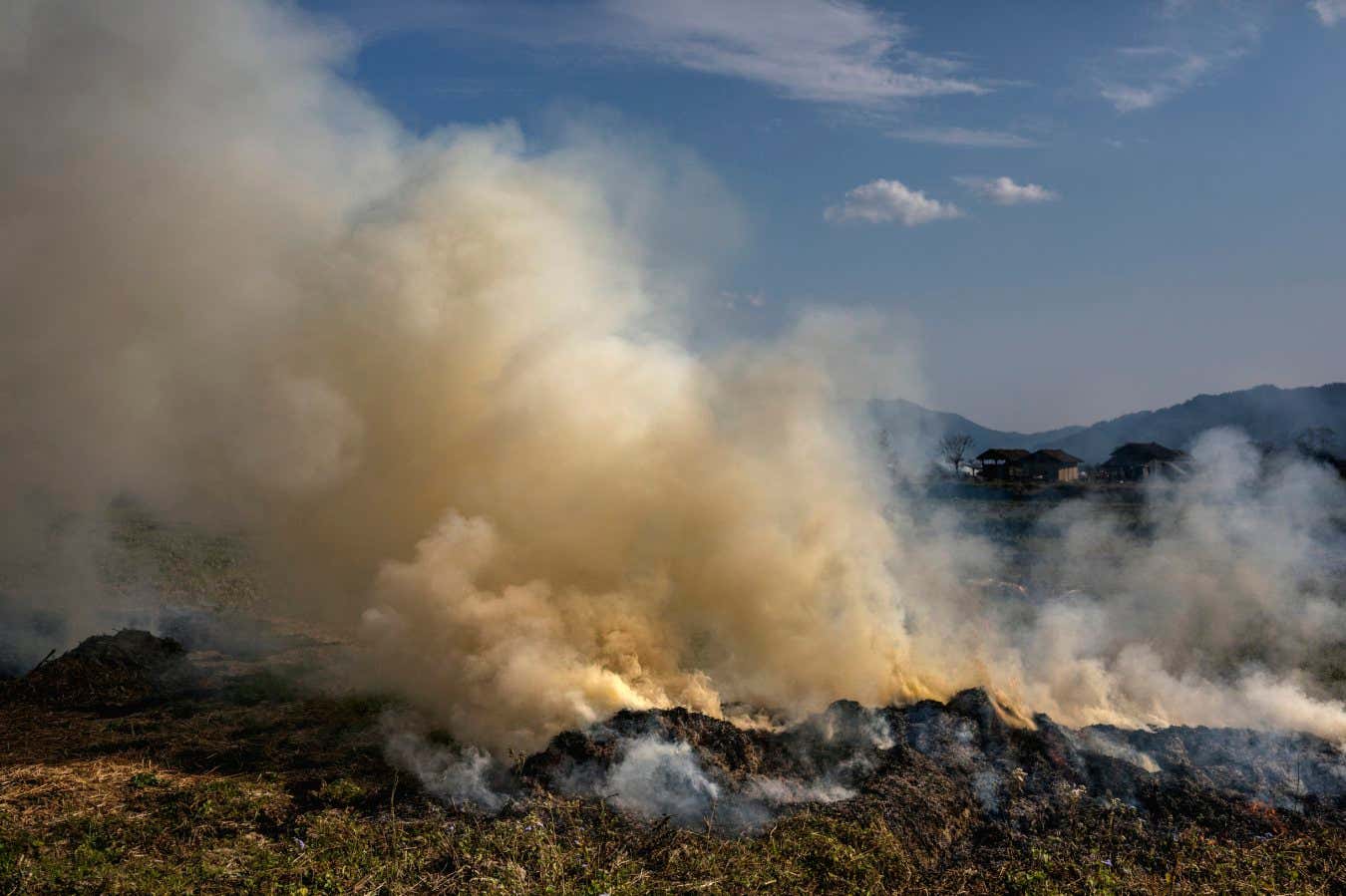
Indirect greenhouse gases like carbon monoxide and VOCs account for 15% of global warming but remain largely unregulated
So-called indirect greenhouse gases, including carbon monoxide and volatile organic compounds, aren’t covered by climate policies even thoug
 newscientist.com·23d ago
Interview with Prof. Mark Z. Jacobson: How jet fuel sulfur aerosols in the upper troposphere contribute to global warming
Sulfur aerosols blown into the upper troposphere as jet fuel byproducts: a significant contributory cause of global warming
 mittdolcino.com·19d ago
Microplastics in the atmosphere may contribute to global warming, research suggests
Bits of plastic floating in the atmosphere largely act as warming agents
 cenm.ag·1mo ago
Comments
Sign in to join the conversation.
No comments yet. Be the first.