
























Cosmic expansion will erase all evidence of the Big Bang from future astronomers' view
By
By Space Daily Editorial Team · Editorial process
Summary
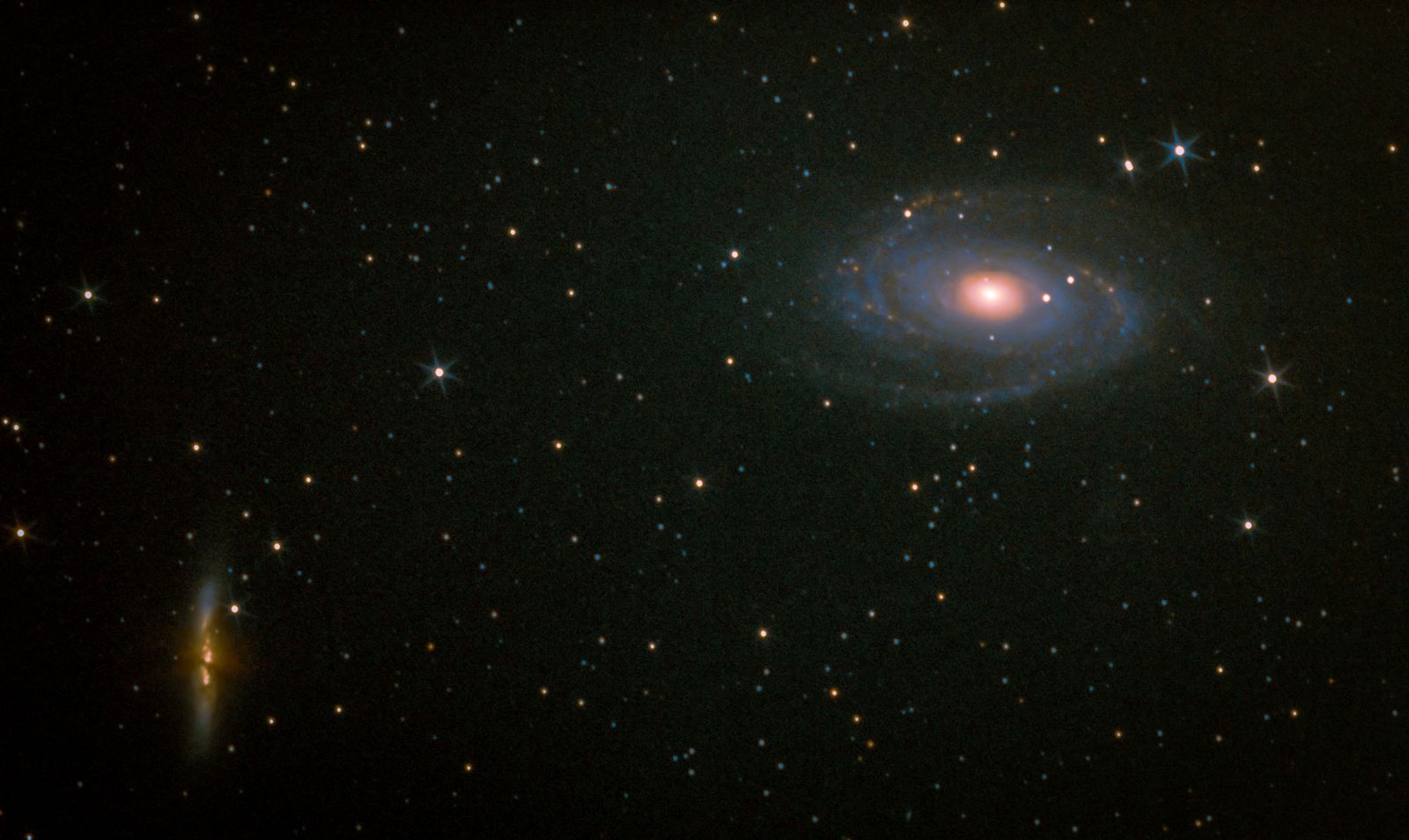
The universe's accelerating expansion will eventually carry every galaxy beyond the Local Group past the cosmic horizon, making them permanently invisible. Future astronomers would see an empty sky with no evidence of the Big Bang—no cosmic microwave background, no redshift-distance relationship, no primordial element abundances. As argued by Krauss and Scherrer, they would reasonably conclude they live in a static, eternal galaxy, unaware of the universe's dynamic origin. This raises profound questions about what cosmological evidence we ourselves may have already lost.
Source
 bskyCosmic expansion will erase all evidence of the Big Bang from future astronomers' viewspacedaily.com
Key quotes
· 3 pulledone by one, every galaxy beyond our own immediate neighbourhood will be carried so far away that its light can no longer reach us
The astronomers of that distant era would look up at an almost empty sky, and they would have no way, from observation alone, to ever discover that the Big Bang happened
future astronomers would reasonably conclude they live in a static, eternal galaxy
You might also wanna read

Why the universe has no center: A physicist explains cosmic expansion
The article explores the common misconception that the universe has a physical center from which it expanded. It explains how Einstein's the
 theconversation.com·5h ago
Scientists edge closer to detecting invisible dark matter that shapes galaxies
This article explores the mystery of dark matter and dark energy — invisible substances that scientists believe make up most of the universe
 universal-sci.com·8d ago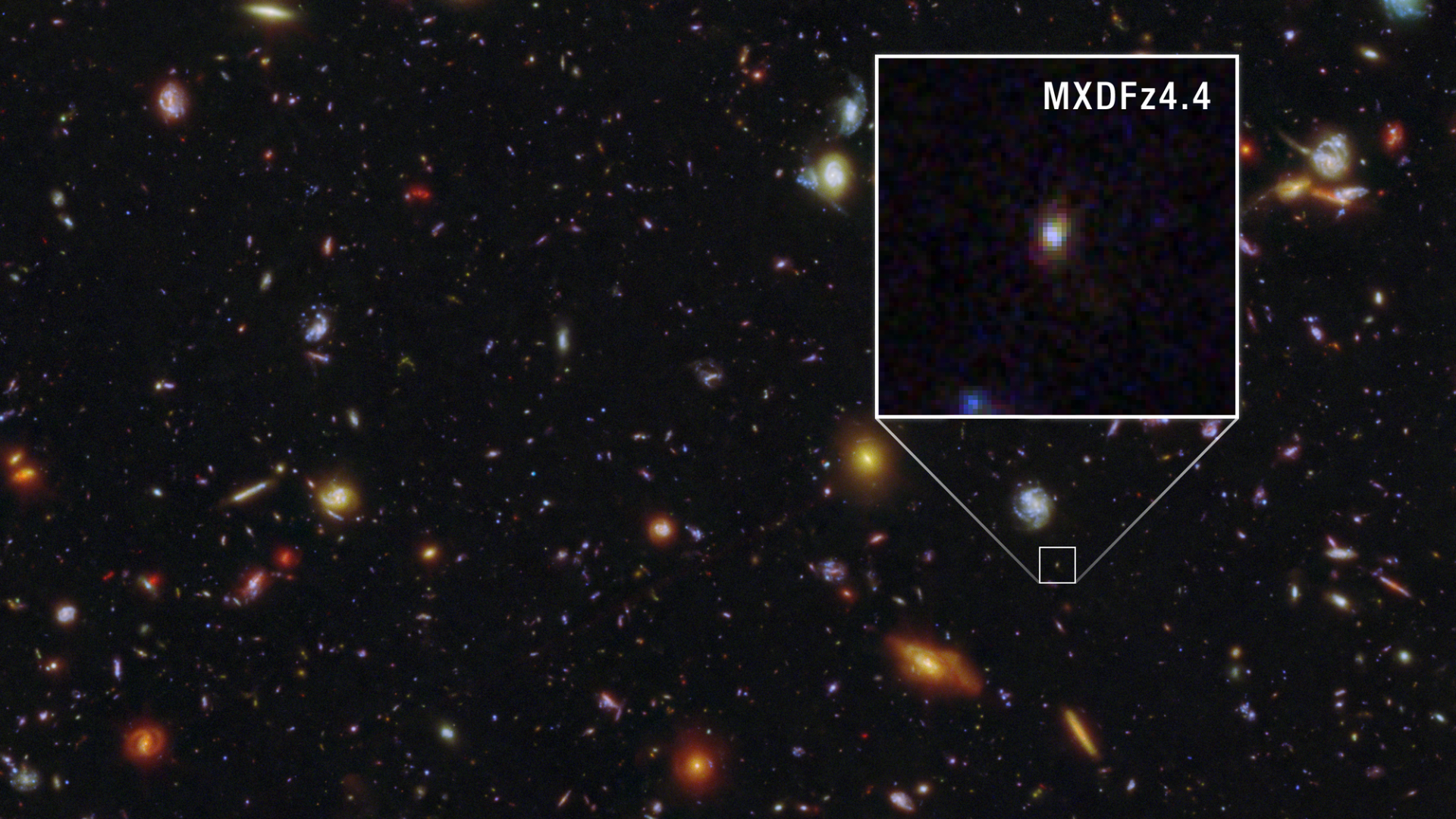
Hubble telescope images distant galaxy that helped clear the early universe's hydrogen fog
The Hubble Space Telescope has imaged a distant galaxy (MXDFz4.4) that existed 1.4 billion years after the Big Bang. This galaxy contains a
 space.com·13d ago
Hubble telescope images distant galaxy that helped clear the early universe's hydrogen fog
The Hubble Space Telescope has imaged a distant galaxy (MXDFz4.4) that existed 1.4 billion years after the Big Bang. This galaxy contains a
space.com·13d ago
New Study Suggests Universe's Expansion May Be Slowing, Not Accelerating
A new astronomical study challenges the long-standing theory that the universe's expansion is accelerating due to dark energy. Instead, the
 ras.ac.uk·8mo ago
Comments
Sign in to join the conversation.
No comments yet. Be the first.