

























Study identifies postnatal fibroblast population that blocks skin regeneration by driving hyperinnervation
By
Ya-Chieh Hsu1,2,5,7 Send email to [email protected]
Summary
This study reveals that late embryonic full-thickness skin injuries in mammals can regenerate diverse cell types across all lineages (epithelial, mesenchymal, neuronal, and vascular tissues) with proper connectivity. However, this regenerative ability is lost soon after birth, leading to failure in restoring most cell types and hyperinnervation within the wound bed. Single-cell sequencing identified a postnatal wound-specific fibroblast (PWF) population that drives excessive innervation, blocking regeneration. Reducing hyperinnervation at the injury site restores regenerative potential across lineages after postnatal wounding.
Source
 bskyStudy identifies postnatal fibroblast population that blocks skin regeneration by driving hyperinnervationcell.com
Key quotes
· 4 pulledLate embryonic full-thickness skin injuries heal by regenerating epithelial, mesenchymal, neuronal, and vascular tissues with proper connectivity.
This ability is lost soon after birth, resulting in failure to restore most cell types and hyperinnervation within the wound bed.
Single-cell sequencing identified a postnatal wound-specific fibroblast (PWF) population absent after embryonic wounding.
Reducing hyperinnervation at the injury site restores regenerative potential across lineages after postnatal wounding.
You might also wanna read

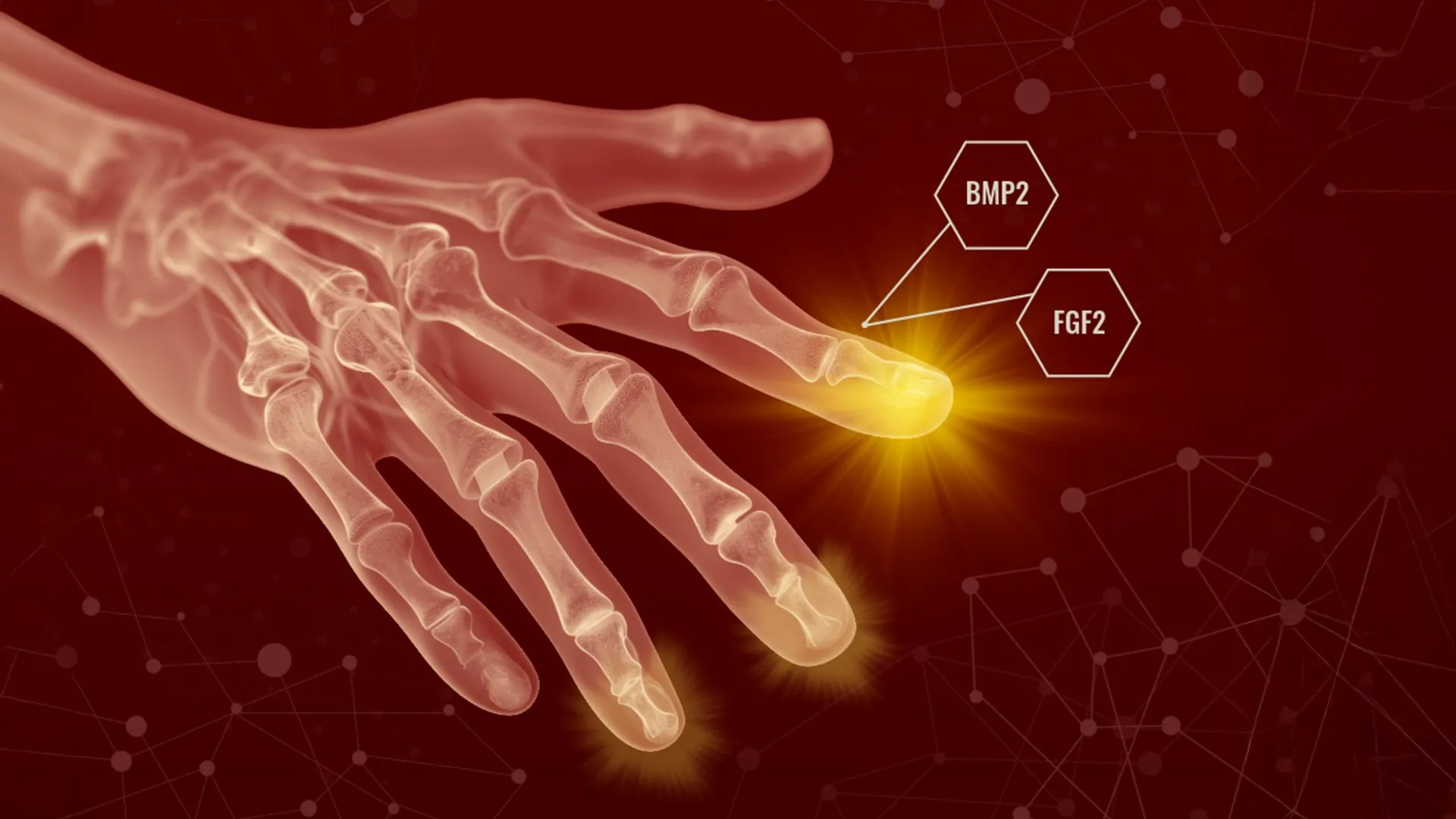
Texas A&M study shows mammals may have hidden regenerative abilities that could be activated
New research from Texas A&M University suggests that mammals, including humans, may possess hidden regenerative abilities that are normally
Scientists Develop Serum That Triggers Digit Regrowth in Mice, Paving Way for Human Limb Regeneration Research
Scientists are researching limb regeneration in mammals, inspired by axolotls and salamanders that can regrow lost limbs in 40-50 days. A ne
 popularmechanics.com·2d ago
Scientists Make Progress Toward Limb Regeneration With Serum That Triggered Digit Regrowth in Mice
Scientists are researching limb regeneration in mammals, inspired by salamanders like axolotls that can regrow lost limbs in 40-50 days. A r
popularmechanics.com·2d ago
New Serum Triggers Digit Regrowth in Mice, Advancing Human Limb Regeneration Research
Scientists are researching limb regeneration in mammals, inspired by axolotls and salamanders that can regrow lost limbs in 40-50 days. A ne
popularmechanics.com·1d ago
Researchers Study Axolotls for Limb Regeneration Insights
Researchers are using gene-edited axolotls to understand limb regeneration, potentially aiding human limb regrowth.
smithsonianmag.com·1y ago
DNA Sugar Gel Shows Promise for Hair Regrowth in Mouse Study
In 2024, researchers at the University of Sheffield and COMSATS University in Pakistan discovered that deoxyribose, a naturally occurring su
 sciencealert.com·3d ago
Comments
Sign in to join the conversation.
No comments yet. Be the first.