
























RNA sequence changes predict cellular activity through conformational ensemble thermodynamics
This article describes a study where researchers systematically altered the HIV-1 TAR RNA sequence to change its propensity to adopt a functional versus inactive secondary structure. Using 1H CEST NMR without isotopic labeling, they quantified these structural propensities and found that minor sequence changes shifted the active-state propensity by approximately 500-fold. These propensities could quantitatively predict changes in protein binding and cellular transactivation, and could be inferred from secondary-structure prediction algorithms within a thermodynamic framework.
Key quotes
Despite advances in structure prediction from sequence, predicting cellular activity requires conformational ensembles that capture propensities to form functionally active states.
Minor sequence changes shift the active-state propensity by ∼500-fold, quantitatively predicting changes in protein binding and cellular transactivation.
These propensities could be inferred from secondary-structure prediction algorithms and incorporated into a thermodynamic framework to quantitatively predict how sequence changes alter protein-binding affinity and RNA cellular activity.
You might also wanna read
Optimizing RNA design with AI and an Ising machine: Encoding matters

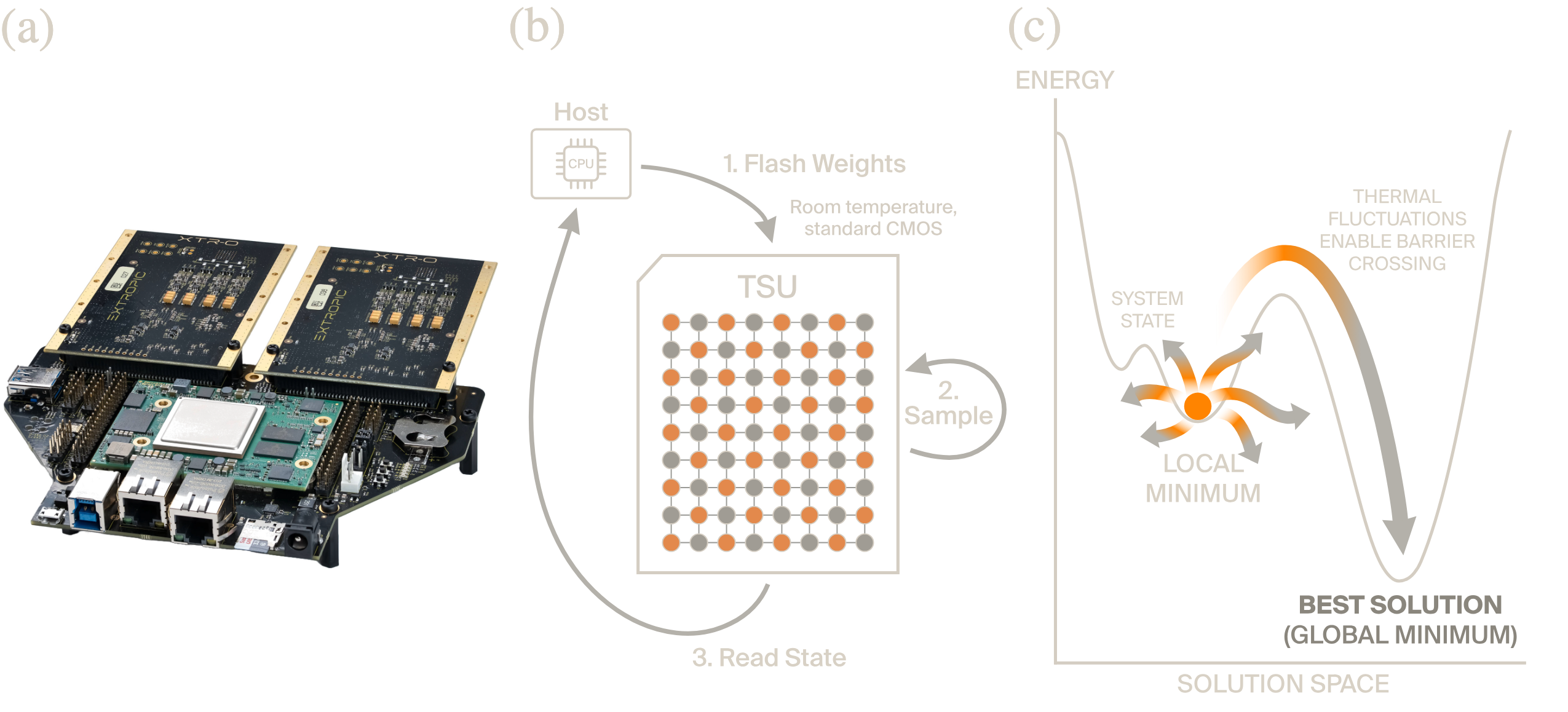
Extropic presents first pharmaceutical application for thermodynamic computing hardware with codon optimization
This paper from Extropic Corp. presents the first concrete pharmaceutical application mapped to thermodynamic hardware, focusing on energy-e

RNA structure prediction is hard. How much does that matter?
 owlposting.com·9mo ago
Nature research paper: Alternate RNA decoding results in stable and abundant proteins in mammals

Analyzing Redundancy in Natural Protein Fold Space and the Role of Generative AI in Biomolecular Modeling
This research note from Ligo explores the concept of redundancy in natural protein fold space, examining how deep neural networks and genera
 research.ligo.bio·1mo ago
Comments
Sign in to join the conversation.
No comments yet. Be the first.