
























What is ultraviolet (UV) radiation: wavelength, sources and atmospheric filtering
Summary
This article provides a brief, basic overview of ultraviolet (UV) radiation, covering its wavelength range (100–400 nm), its natural (sun) and artificial sources, the three UV bands (UVA, UVB, UVC), and how the atmosphere filters UV radiation — with all UVC and ~90% of UVB absorbed by ozone and other atmospheric gases, while UVA is less affected.
Source

 Twitter / XWhat is ultraviolet (UV) radiation: wavelength, sources and atmospheric filteringwho.int
Key quotes
· 4 pulledUltraviolet (UV) radiation covers the wavelength range of 100–400 nm, which is a higher frequency and lower wavelength than visible light.
UV radiation comes naturally from the sun, but it can also be created by artificial sources used in industry, commerce and recreation.
As sunlight passes through the atmosphere, all UVC and approximately 90% of UVB radiation is absorbed by ozone, water vapour, oxygen and carbon dioxide.
UVA radiation is less affected by the atmosphere.
You might also wanna read


UV Radiation: Health Risks, Protection Guidelines, and Sunscreen Recommendations
The article explains UV radiation levels, their associated dangers, and protective measures. It covers WHO-recommended sun protection guidel
 bbc.co.uk·12d ago
Unhealthy Glow: The Dangers of Tanning Beds

New solid-state material converts sunlight into higher-energy UV light
The Science of Why the Sky Appears Blue: Rayleigh Scattering Explained
This article explores the scientific explanation for why the sky appears blue, examining the physics of light scattering in Earth's atmosphe
 explainers.blog·4mo ago
Consumer Council Finds Over 80% of Sunscreens Tested Fall Short of Labelled SPF and UVA Protection Claims
The Consumer Council tested 30 sunscreen models and found that over 80% performed below their labelled efficacy. 4 models had measured SPF b
 consumer.org.hk·10mo ago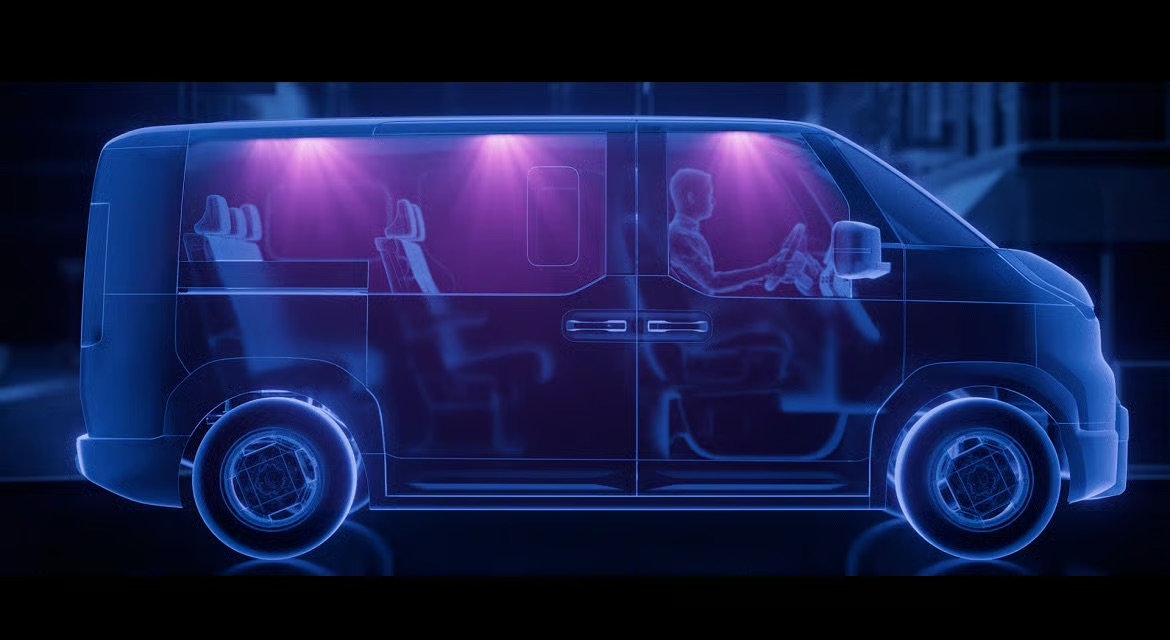
Hyundai and Kia Introduce 'Plasma Care UVC' In-Vehicle Sanitization Technology Using Far-UVC Light
Hyundai Motor Company and Kia Corporation have unveiled 'Plasma Care UVC,' the world's first in-vehicle sanitization technology that uses Fa
 cleantechnica.com·9d ago
Comments
Sign in to join the conversation.
No comments yet. Be the first.