
























Public perspectives on collecting and sharing pharmacogenomic test results for major depressive disorder
This article explores public perspectives on collecting and sharing pharmacogenomic (PGx) test results for major depressive disorder (MDD). It presents findings from focus groups and interviews with informed members of the public, revealing that people view PGx genetic data as similar to routine medical information like blood type. The study examines attitudes toward privacy, data sharing, consent, and the clinical utility of PGx testing in mental health treatment, highlighting that informed participants are generally supportive of using genetic information to guide antidepressant selection while maintaining appropriate privacy safeguards.
Key quotes
It's no different from your blood type
Depression affects more than 300 million people worldwide and is the leading mental health contributor to the global burden of disease
From 2007–2017, the number of years living with disability (YLD) attributed to depression increased by 14.3% globally
From the article
You might also wanna read
A Study of the Value of Trio Genome Sequencing in the Etiological Evaluation of Early-Onset and/or Atypical Psychiatric Disorders Without Intellectual Disability or Congenital Anomalies


Dutch suicide prevention hotline shared visitor data with third parties without consent
The Dutch suicide prevention hotline 113 (Stichting 113 Zelfmoordpreventie) shared data from website visitors with third-party tech companie
 nltimes.nl·1mo ago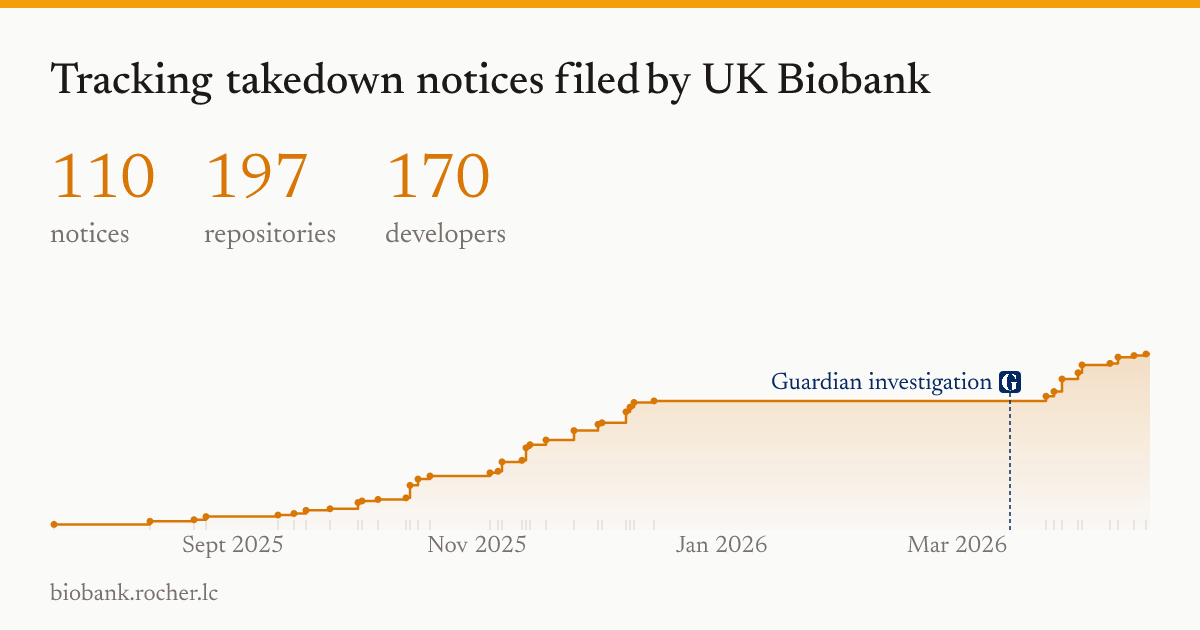
Researchers repeatedly leak UK Biobank participant health data on public GitHub repositories
UK Biobank, which holds genetic and health data on 500,000 British volunteers, has been repeatedly finding that researchers accidentally upl
 biobank.rocher.lc·2mo ago
Medical students use TriNetX health data platform to produce low-quality studies, critics say
This article investigates how medical students and junior researchers are using TriNetX, a platform providing access to anonymized electroni
 science.org·14d ago
Medical students use TriNetX health data platform to produce low-quality studies, critics say
This article investigates how medical students and junior researchers are using TriNetX, a platform providing access to anonymized electroni
science.org·14d agoHarmonizing standards and resources for the medical genome
Critics question consent, clinical utility, and industry influence in UK's Our Future Health programme
The BMJ investigates concerns about the UK's Our Future Health (OFH) programme, the country's largest ever health research initiative with 1
 bmj.com·14d ago
Comments
Sign in to join the conversation.
No comments yet. Be the first.