
























How Ethereum governance works: A decentralized decision-making process
By
ethereum.org
Summary
This article explains Ethereum governance — the decentralized decision-making process for how changes are made to the Ethereum protocol since no single entity owns it. It contrasts traditional governance (executives, boards, shareholders, elected officials) with decentralized governance models, and introduces the core question of how Ethereum manages protocol upgrades and changes without central authority.
Source

 Twitter / XHow Ethereum governance works: A decentralized decision-making processethereum.org
Key quotes
· 3 pulledIf no one owns Ethereum, how are decisions about past and future changes to Ethereum made?
Governance is the systems in place that allow decisions to be made.
In a typical organizational structure, the executive team or a board of directors may have the final say in decision-making.
You might also wanna read


Ethereum governance proposal would redirect up to 10% of staking rewards to fund ecosystem projects
A new Ethereum governance proposal suggests allowing validators to redirect up to 10% of their staking rewards to fund ecosystem projects li
 coindesk.com·1d ago
Ethereum governance proposal would redirect up to 10% of staking rewards to fund ecosystem projects
A new Ethereum governance proposal suggests allowing validators to redirect up to 10% of their staking rewards to fund ecosystem projects li
coindesk.com·1d ago
Deterministic Governance Mechanism for Software Systems: Ensuring Bit-Identical Outputs
The article describes a deterministic governance mechanism for software systems that ensures bit-identical outputs given identical inputs, c
 github.com·4mo ago
Smart Contracts Explained: How Self-Executing Blockchain Programs Work
Smart contracts are self-executing programs stored on a blockchain that automatically run when predefined conditions are met. They power dec
 bitcoin.com·15d ago
Web3's Evolution: From Decentralized Internet Vision to Cryptocurrency Dominance
The article explores Web3's evolution from Gavin Wood's original vision of a decentralized, peer-to-peer internet based on blockchain techno
 spectrum.ieee.org·9mo ago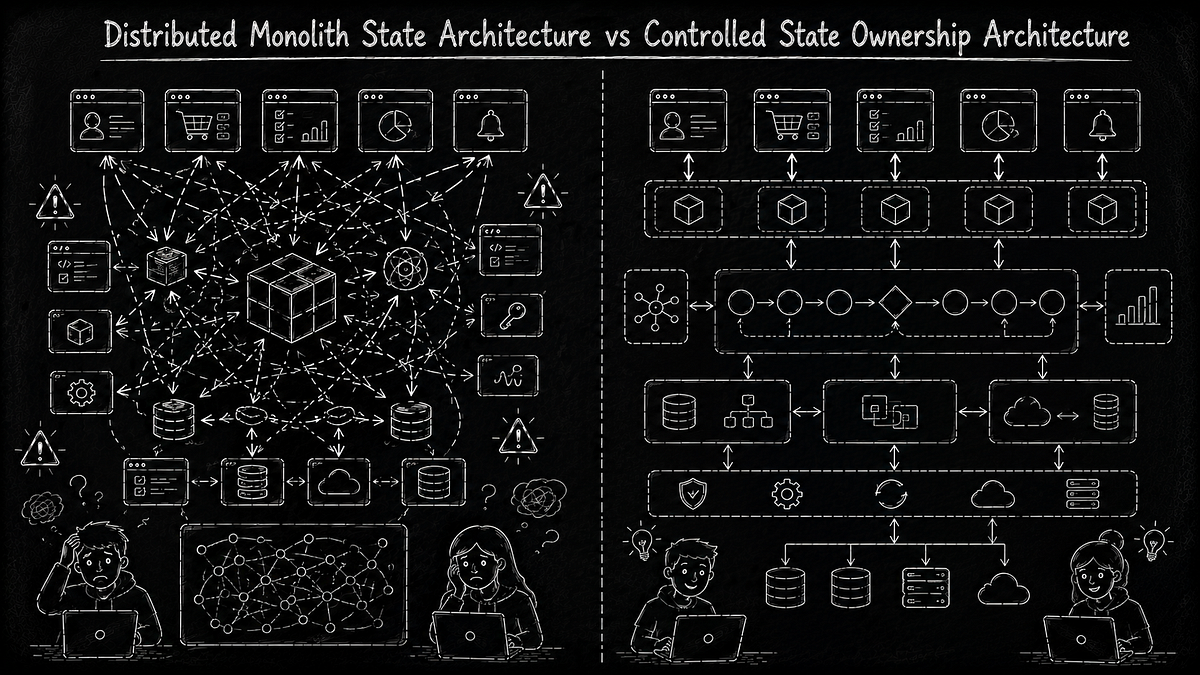
How Frontend State Management Becomes a Distributed Monolith as Apps Scale
This article discusses how frontend state management in growing applications can evolve into a "distributed monolith" — where state becomes
 medium.com·26d ago
Governance Primitive for Institutional AI Deployment: Addressing Authority Constraints in High-Stakes Systems
The article discusses the institutional trust problem in AI deployment, particularly why AI agents fail to gain adoption in high-stakes inst
Comments
Sign in to join the conversation.
No comments yet. Be the first.