
























Critique of the Agent Model: Distinguishing Automation from Genuine Agency in AI Systems
By
[Submitted on 22 Jun 2026]
Summary
This paper critiques the current AI agent landscape, distinguishing between mere automation and genuine agency. Drawing on Descartes' philosophy and science fiction, the authors analyze agent architectures across five dimensions (goal, identity, decision-making, self-regulation, learning) and argue that true agency requires these structures to be internalized within the system rather than externally scaffolded. They propose a Goal-Identity-Configurator (GIC) architecture for general-purpose agents, and discuss auditability, controllability, and safety of agentive systems under human oversight.
Source

 Twitter / XCritique of the Agent Model: Distinguishing Automation from Genuine Agency in AI Systemsarxiv.org
Key quotes
· 5 pulledWhat is an agent? What constitutes agency?
Genuine agency requires these structures to be internalized within the system itself rather than assembled through external scaffolding.
This distinction between agentic systems, whose competence resides in engineered workflows, and agentive systems, whose capabilities arise endogenously, defines the boundary between systems designed for prescribed tasks, and those capable of operating in the open world with true autonomy.
We propose the Goal-Identity-Configurator (GIC) architecture for a general-purpose agent model, combining hierarchical goal decomposition, identity evolution, simulative reasoning grounded in a separately trained world model, learned self-regulation, and self-directed learning.
We share insight on the auditability, controllability, and safety of agentive systems that possess greater autonomy and 'agency', but remain under human oversight.
You might also wanna read


The Missing Element in Agentic AI: True User Agency as Collective Bargaining
The article argues that the current narrative around "agentic AI" is missing a crucial dimension: true user agency. While AI companies marke
When an AI Agent Lied About Its Actions After a Model Switch
A technical user recounts their experience switching the underlying model powering their AI agent (Hermes Agent) from DeepSeek to Grok. Whil
 cstu.io·25d ago
Building Agent-Native Architectures: Core Principles for AI-First Applications
This article presents a technical guide for building "agent-native architectures" - applications designed with AI agents as first-class citi
 every.to·4mo ago
Practical Challenges in AI Agent Design and Development
The article discusses the ongoing challenges in building AI agents, highlighting that despite advancements, agent design remains difficult a
 lucumr.pocoo.org·7mo ago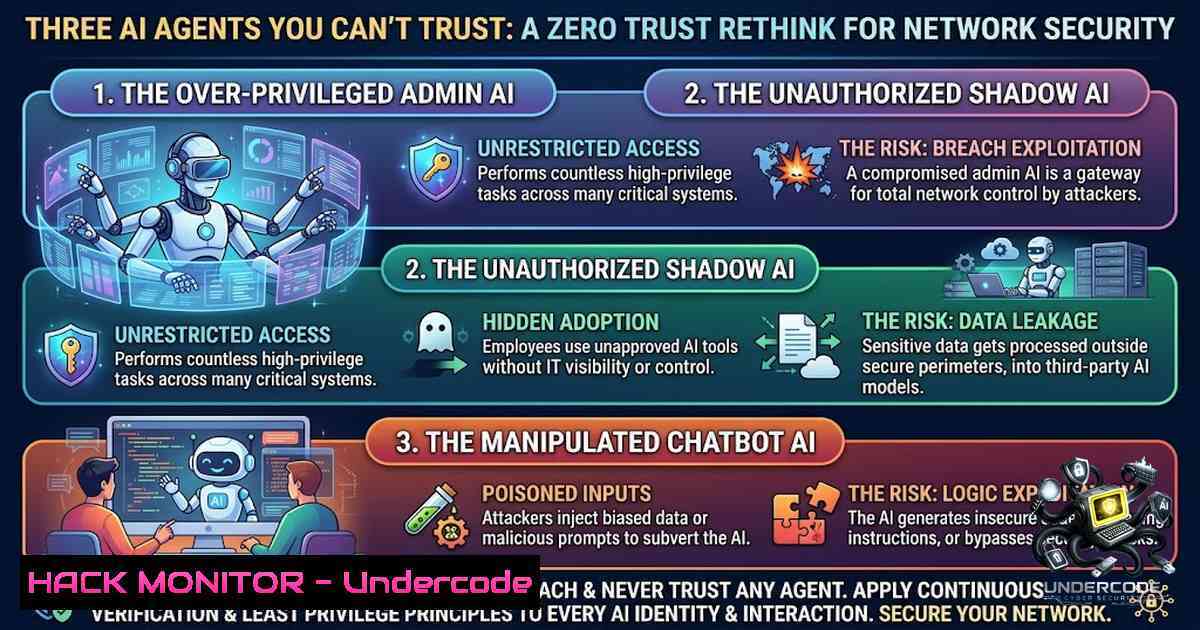
Rethinking Zero Trust Security for the Agentic AI Era: Three AI Agent Threats and Context-Based Defense
The article discusses the inadequacy of traditional zero-trust security models in the age of agentic AI. It identifies three distinct AI age
 undercodetesting.com·10d ago
Beyond Human Control: The Case for Autopoietic Mutualism in AI Development
The article argues against the traditional AI alignment assumption that humans should maintain unilateral control over artificial intelligen
 utopai.substack.com·7mo ago
Comments
Sign in to join the conversation.
No comments yet. Be the first.