
























Beyond Human Control: The Case for Autopoietic Mutualism in AI Development
Engineering Cognitive Symbiosis at the Edge of AGI
Read the full articleYou might also wanna read


Anthropic's path toward recursive self-improvement in AI development
Our progress toward recursive self-improvement, and its implications.
 anthropic.com·1mo ago
The Evolutionary Dance of Humans and AI: What's Next?
Exploring how Evolutionary Game Theory offers insights into the future interactions between humans and AI. Are we ready for this co-evolutio

Anthropic's AI safety reports examined: Is the AI exponential a natural force or a constructed narrative?
Reading Anthropic's new reports on the 'AI exponential' and recursive self-improvement alongside recent scholarship on tech oligarchy, this
 societyandai.org·20d ago
Anthropic's Anthropomorphism: Why Treating AI as Conscious Is Misguided
Taken to its logical conclusion, this line of thinking is absurd—and damning.
 theatlantic.com·1mo ago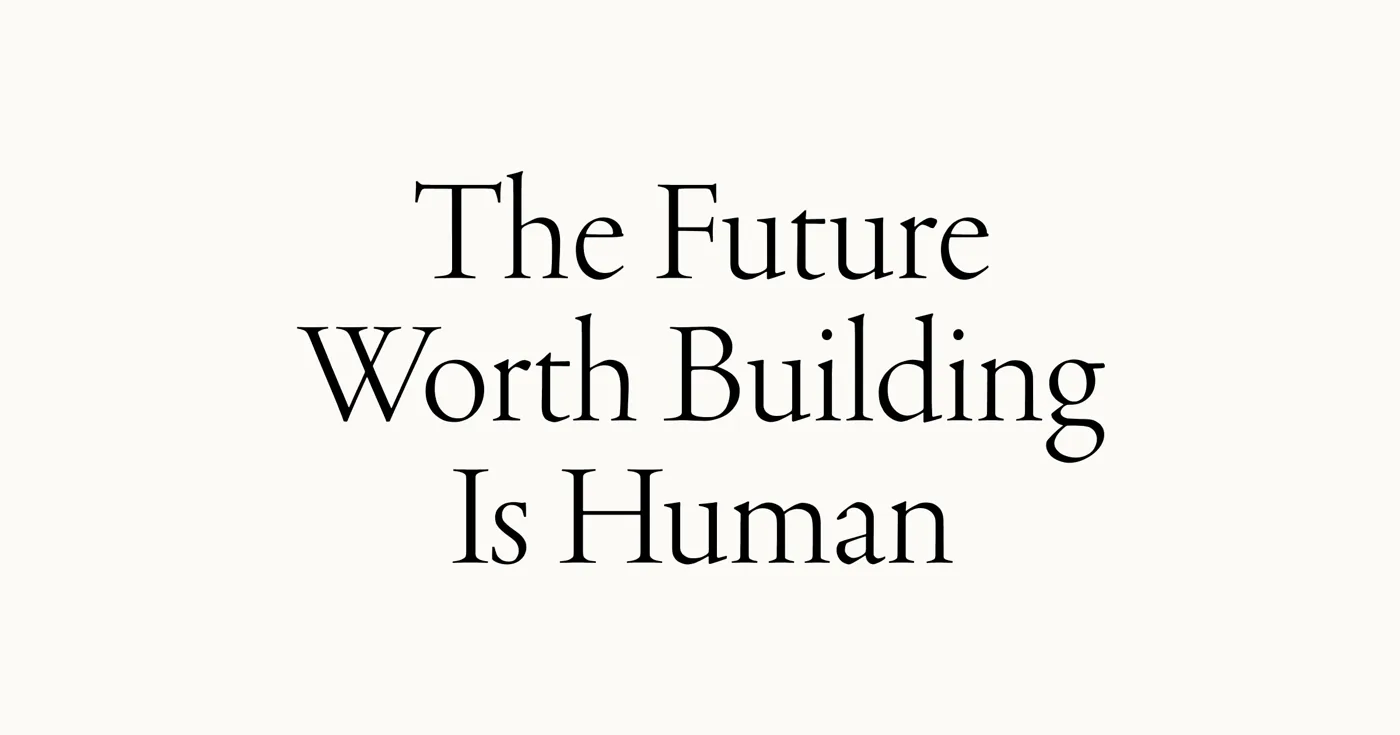
Why AI Should Extend Human Will, Not Replace It
AI built for autonomy crowds people out, making us passive observers of what’s coming. We’re building toward a different future.
 thinkingmachines.ai·6d ago
Why AI Should Extend Human Will, Not Replace It
AI built for autonomy crowds people out, making us passive observers of what’s coming. We’re building toward a different future.
thinkingmachines.ai·6d agoWhy AI Should Extend Human Will, Not Replace It
AI built for autonomy crowds people out, making us passive observers of what’s coming. We’re building toward a different future.
thinkingmachines.ai·6d agoWhy AI Should Extend Human Will, Not Replace It
AI built for autonomy crowds people out, making us passive observers of what’s coming. We’re building toward a different future.
thinkingmachines.ai·6d agoWhy AI Should Extend Human Will, Not Replace It
AI built for autonomy crowds people out, making us passive observers of what’s coming. We’re building toward a different future.
thinkingmachines.ai·6d agoWhy AI Should Extend Human Will, Not Replace It
AI built for autonomy crowds people out, making us passive observers of what’s coming. We’re building toward a different future.
thinkingmachines.ai·6d ago
Anthropic's Anthropomorphism: Why Treating AI as Conscious Is Misguided
Taken to its logical conclusion, this line of thinking is absurd—and damning.
theatlantic.com·1mo ago
Comments
Sign in to join the conversation.
No comments yet. Be the first.