
























Muon detectors become accessible to citizen scientists and students
By
Jenessa Duncombe
Summary
The article discusses how muon detectors, once specialized and expensive scientific instruments, are becoming more accessible to the public through DIY kits, open-source designs, and educational programs. It highlights the democratization of cosmic-ray experimentation, enabling students, hobbyists, and citizen scientists to detect muons — high-energy particles from space — using affordable, portable detectors. The piece covers the technology behind modern muon detectors, their applications in education and research, and profiles several initiatives making these devices widely available.
Source

 bskyMuon detectors become accessible to citizen scientists and studentsphysicstoday.aip.org
Key quotes
· 3 pulledThe specialized devices are democratizing access to cosmic-ray experiments.
Muon detectors, once confined to particle physics labs, are now within reach of classrooms and living rooms.
Citizen scientists are contributing real data to ongoing research, turning cosmic-ray detection into a participatory science.
You might also wanna read

Antarctica's Cosmic Particle Detector Detects Strange Radio Pulses
A cosmic particle detector in Antarctica has detected strange radio pulses at steep angles below the ice surface, challenging current partic
psu.edu·1y ago
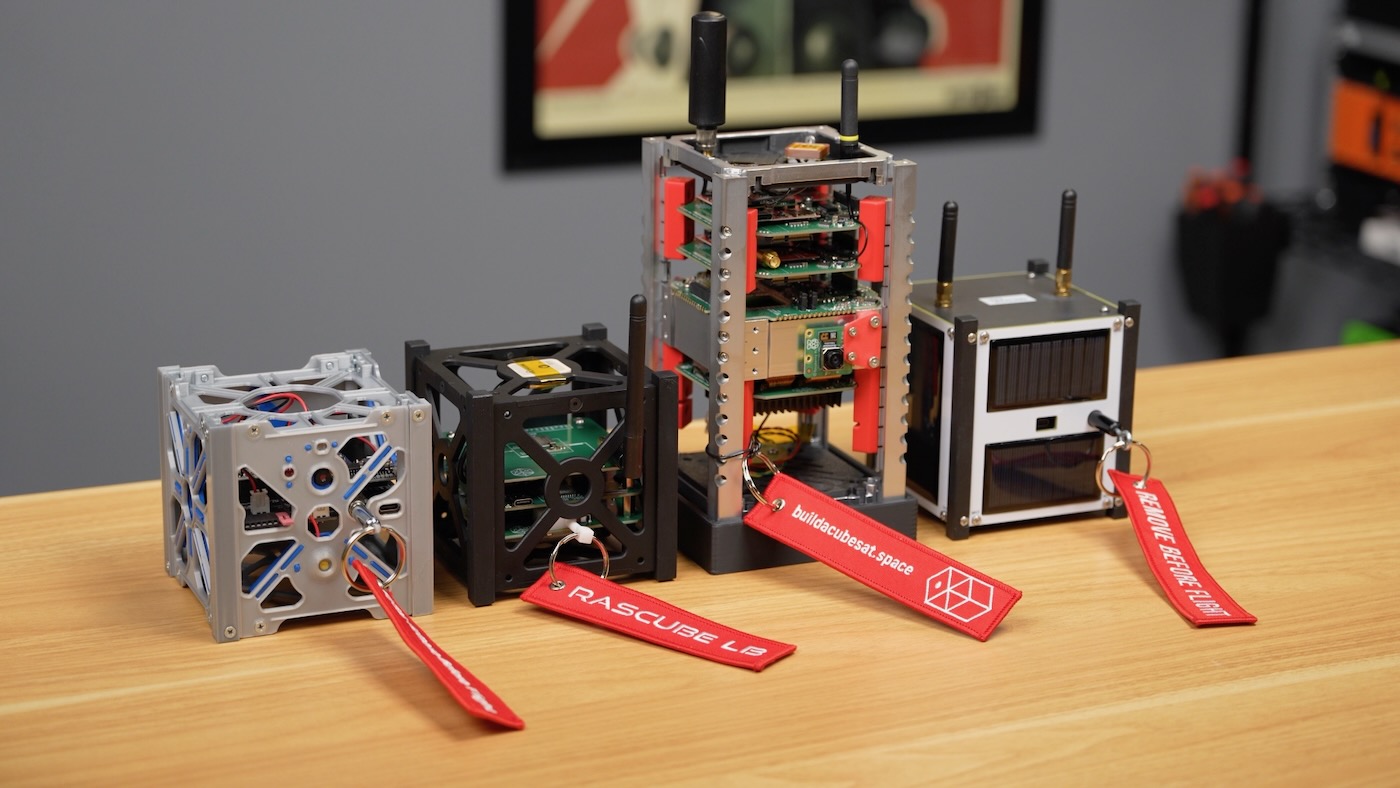
Raspberry Pi and Microcontrollers Powering Educational CubeSat Space Missions
This article explores the use of Raspberry Pi computers and microcontrollers in CubeSats (small satellites), highlighting how these affordab
 jeffgeerling.com·9mo ago
Physicists Uncover New Particle in Old Cupboard
Physicists at Boston University discovered a never-before-seen elementary particle in the back of an old cupboard, marking a significant adv
The Onion·1y ago
Open Access Book Features 99 Best Physics Demonstrations with Educational Strategies
This article introduces an open access book that presents 99 of the best physics demonstrations from the Dutch "ShowdeFysica" series, transl
 interactivetextbooks.tudelft.nl·9mo ago
Physicists Develop Open-Source Quantum Computer with Hardware and Software
A group of physicists is developing an entirely open-source quantum computer, including both hardware and software components. This initiati
 physics.aps.org·4mo ago
Machine Learning Validates Unrecognized Transient Astronomical Phenomena in Historical Observatory Images
This research paper uses machine learning to validate the existence of previously unrecognized transient astronomical phenomena in historica
 arxiv.org·2mo ago
Comments
Sign in to join the conversation.
No comments yet. Be the first.