
























Raspberry Pi and Microcontrollers Powering Educational CubeSat Space Missions
Article URL: Comments URL: Points: 22 # Comments: 2
Read the full articleYou might also wanna read


RISC-V Gains Traction in Space Industry as Open-Standard Processor for Missions
Open-standard RISC-V processors accelerate innovation across commercial space, scientific missions, and communications networks.
 eetimes.com·25d ago
Raspberry Pi Sense HAT
I recently acquired a Sense HAT for the Raspberry Pi. This is the same hardware that will be sent in to space as part of the Astro Pi missio
unop.uk·11y ago
Exploring 6 Raspberry Pi Handheld Projects for Portable Linux Computing
These are pocket-sized Linux machines that go beyond just being an SBC on your desk.
 itsfoss.com·23d ago
Raspberry Pi Projects: Storage and Other Uses
a couple of recent articles
Tux Machines·9d ago
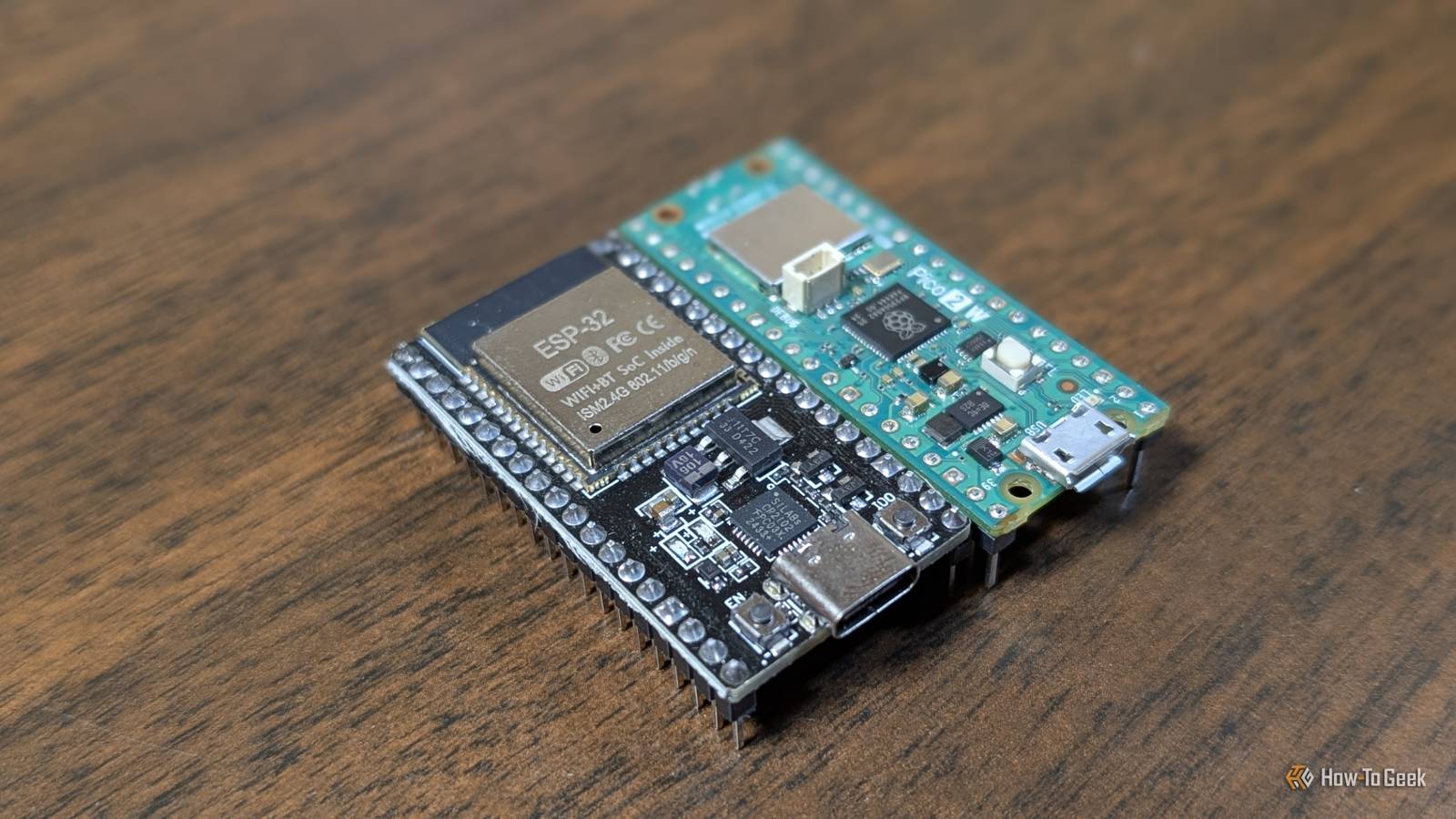
ESP32 boards increasingly replace Raspberry Pi for wireless IoT projects
ESP32 boards are tiny, but don't let that deceive you—they're incredible.
 howtogeek.com·1mo ago
RISC-V Gains Ground as Preferred Computing Architecture for Space Missions
Space agencies and semiconductor developers are adopting RISC-V to modernize space computing while preserving legacy software compatibility.
EE Times Asia·4d ago
Comments
Sign in to join the conversation.
No comments yet. Be the first.