vak427 Thu, 06/25/2026 - 12:09 June 25, 2026 Research is rarely advanced in isolation. It grows through collaboration, constructive feedback, and the opportunity to engage with diverse perspectives. At the Harvard Center for International Development (CID), the Visiting Researcher Program creates exactly this kind of environment, bringing together promising scholars from around the world to strengthen their research and build lasting professional networks. This year, thanks to the generous support of the UniCredit Foundation , four visiting fellows—Jessica Mancuso, Ornella Darova, Luca Parisotto , and Giulia Ferrero—spent time at CID during pivotal moments in their academic careers. Their experiences demonstrate how investing in early-career researchers can accelerate impactful scholarship while fostering collaborations that extend well beyond a single fellowship. Below are takeaways from Jessica, Ornella, and Guilia’s time at CID during the 2025-2026 academic year. Strengthening research through collaboration Jessica Mancuso arrived at CID in January 2026 during the final year of her PhD, with a promising job market paper examining how a public health insurance program in India's Rajasthan state influenced fertility decisions and sex selection among low-income households. While her findings were compelling, she knew an important piece of the story was still missing. "When I arrived at CID, my job market paper was in an early, incomplete state," she reflected. Jessica Mancuso at the Harvard Natural History Museum. Over the course of her fellowship, presentations at Harvard Kennedy School and the New England Economics PhD Conference, along with conversations with faculty from Harvard, MIT, and Boston University, helped her strengthen the paper's methodological foundations and uncover the mechanisms driving her results. "The time I spent at CID was extremely valuable and allowed me to advance significantly with the project that has now become my Job Market Paper," Jessica said. She credits both formal presentations and informal interactions with shaping the evolution of her work. "Beyond the formal presentations, the fellowship has given me the chance to talk through the project with a wide range of economists working on India, health, gender, and fertility," she wrote. "These conversations have been disproportionately valuable; almost every refinement to the mechanism section traces back to a hallway conversation or office-hours visit that the fellowship made possible." By the end of her fellowship, Jessica's paper had transformed from one with promising empirical findings into a comprehensive study supported by a robust explanation of why the policy affected fertility, healthcare utilization, and child outcomes. "The two original empirical results are now supported by a solid mechanism section," she concluded. An environment where ideas and collaborations grow For Ornella Darova, the fellowship offered something equally valuable: an interdisciplinary community that challenged her thinking and connected her with scholars working across education, economics, and public policy. An applied microeconomist studying education in multilingual and multiethnic societies, Ornella examines how schools can promote both learning and social cohesion. At CID, presenting her work across Harvard exposed her to new perspectives that reshaped how she approached her research. "Presenting my work across the Kennedy School and the Graduate School of Education... pushed me to connect findings across settings that I had been studying separately," she explained. "These interactions have inspired me to think both more rigorously and creatively about how to 'make the data talk,' helping me extract much deeper and more precise insights from my research." The fellowship also created opportunities that could not have been planned in advance. "One of my current projects on partner choice in Singapore exists only because I met my coauthor Naila Shofia as another visiting fellow at CID, and the project grew directly out of conversations the fellowship made possible." Even Cambridge itself became part of the experience. Ornella found that some of her best ideas emerged outside formal meetings. "I've loved how walkable the city is; some of my best ideas and unexpected collaborations have come simply from crossing paths with other fellows while walking around campus or navigating a Boston winter together." Joining a vibrant intellectual community Giulia Ferrero outside Harvard Kennedy School. For Giulia Ferrero, a PhD student from the University of Turin, the opportunity to spend her final doctoral year at CID represented a chance to immerse herself in one of the world's leading research communities. "I decided to apply—it felt like an exceptional opportunity to connect with and learn from top-level researchers," she said. Her research explores how governments and institutions shape social and gender norms through media narratives and public communication. During her fellowship, she found an environment where researchers actively engaged with one another's work, providing both intellectual feedback and practical resources. "What surprised me most was how connected and intellectually alive it felt, with an extraordinary concentration of researchers who are genuinely curious to discuss ideas and engage with each other's work." The experience had a direct impact on her scholarship. "I received invaluable feedback on my work and gained access to archival data that proved directly relevant to my research." Investing in future leaders in development research Although Jessica, Ornella, and Giulia pursue different research questions—from health and gender to education policy to social norms—their experiences reveal a common theme: transformative research depends on community. Each fellow arrived at CID with ambitious ideas. Each leaves with stronger research, broader professional networks, and new collaborations that will continue long after returning to their home institutions. Jessica summarized this impact: “By broadening my professional network, the fellowship enabled both significant advances in my ongoing research and sparked new collaborations.” For Ornella, the fellowship provided "the time and the community to build a research program on education in diverse societies." And for Giulia, it offered the opportunity to engage with a uniquely collaborative academic environment while strengthening the evidence behind her work. These stories reflect the enduring value of the UniCredit Foundation's investment in CID's Visiting Researcher Program. By supporting talented early-career scholars at pivotal moments in their careers, the fellowship not only advances individual research projects but also builds an international network of researchers committed to improving lives through evidence-based policy. The collaborations launched, ideas refined, and connections formed during these fellowships will continue shaping research long after the fellows leave Cambridge—creating a lasting impact that extends far beyond a single academic year. CID Fellowships Interested in joining our community of researchers dedicated to building a world where all can thrive? Fellows at CID Building Better Research Through Community: How CID's Visiting Researcher Program Strengthens Global Scholarship Image Credits Ornella Darova, Jessica Mancuso, Giulia Ferrero Contact CID Visiting Researchers



























 hhmi.org·14d ago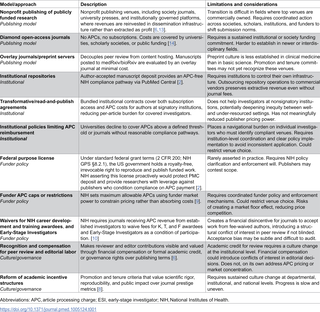
 plos.io·1mo ago
 genengnews.com·25d ago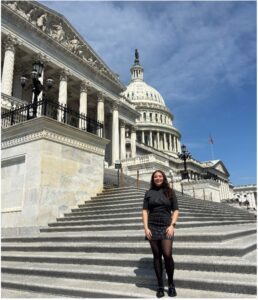
 thebridge.agu.org·15d ago
Comments
Sign in to join the conversation.
No comments yet. Be the first.