





















NIH 2025 Public Access Policy: Expanding readership while creating new publishing cost barriers
By
Caitlin R. Ryus ,

Sesame, salt, and substance. A flagship bake.
Summary
This Perspective article by Caitlin Ryus and colleagues examines the NIH 2025 Public Access Policy, which mandates immediate public access to NIH-funded research. While the policy successfully expands who can read scientific publications, the authors argue it creates new financial barriers that disproportionately affect researchers with fewer resources. The policy shifts costs from readers to authors through article processing charges (APCs), potentially exacerbating inequities in who can afford to publish scientific research. The article critically analyzes the unintended consequences of open-access mandates without accompanying funding or structural support for researchers at under-resourced institutions.
Key quotes
· 3 pulledWhile expanding who can read science, the policy risks creating new barriers to who can afford to perform and publish their science.
The NIH 2025 Public Access Policy represents a significant shift in how federally funded research is disseminated, but its implementation raises critical questions about equity in scientific publishing.
By mandating immediate access without addressing the underlying costs of publication, the policy may inadvertently reinforce existing disparities in the scientific community.
You might also wanna read


NIH and NASA impose new restrictions on international research collaborations, causing confusion among scientists
U.S. government research funders, including the NIH and NASA, have imposed unprecedented restrictions on U.S. scientists collaborating and p
 science.org·15d ago
NIH and NASA impose new restrictions on international research collaborations, causing confusion among scientists
U.S. government research funders, including the NIH and NASA, have imposed unprecedented restrictions on U.S. scientists collaborating and p
science.org·15d ago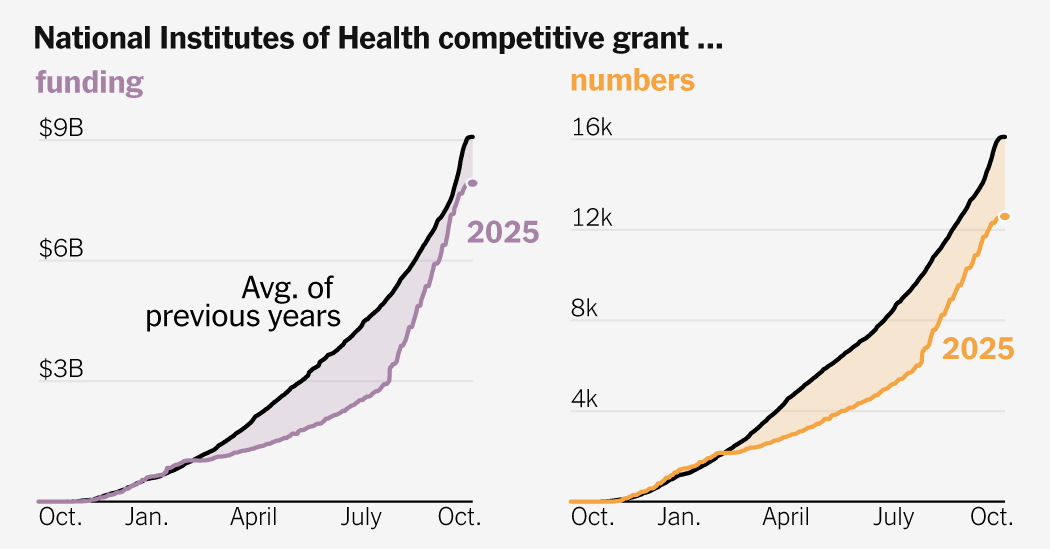
NIH Policy Shift Reduces Number of Science Grants While Increasing Individual Award Amounts
The article reveals a significant but quiet policy shift at the National Institutes of Health (NIH) where the agency has been making fewer b
 nytimes.com·5mo ago
ACM Transitions All Publications to Open Access Starting January 2026
The Association for Computing Machinery (ACM) has transitioned all its publications and related artifacts in the ACM Digital Library to open
 acm.org·5mo ago
ACM Announces Transition to Full Open Access by 2025
ACM is transitioning to a fully Open Access (OA) publishing model by the end of 2025, making all its computing research content freely avail
acm.org·10mo ago
arXiv Launches HTML Format for Research Papers to Improve Accessibility
arXiv, the popular preprint repository, has launched HTML versions of research papers alongside existing PDFs to improve accessibility. The
 info.arxiv.org·6mo ago