
























Non-surgical brain-computer interfaces match surgical performance while transforming risk-benefit calculus
This article examines the strategic distinction between surgical and non-surgical brain-computer interfaces (BCIs). While surgical implants like the Utah Array (used in BrainGate trials) have demonstrated remarkable clinical results — enabling tetraplegic patients to control robotic arms and type with neural signals — the piece argues that non-surgical implantable BCIs (such as endovascular stents or minimally invasive approaches) are increasingly matching surgical performance while dramatically improving the risk-benefit equation. The author contends that non-surgical approaches now represent the most credible path forward across clinical efficacy, safety, and scalability simultaneously, making this distinction strategically important for the field's future direction.
Key quotes
The popular imagination of brain-computer interfaces tends toward the dramatic: a surgeon opening the skull, an electrode array positioned against cortical tissue, a patient gaining capabilities that medicine has never before been able to restore.
The Utah Array, implanted in participants in the BrainGate consortium trials, allowed individuals with tetraplegia to control robotic arms and type using neural signals alone – outcomes published in Nature and The Lancet.
Non-surgical implantable BCI is increasingly capable of matching surgical performance while transforming the risk-benefit equation, and it is now the most credible path along all three dimensions simultaneously.
From the article
You might also wanna read


DARPA's N3 Program: Developing Nonsurgical Brain-Machine Interfaces for Military Applications
DARPA's Next-Generation Nonsurgical Neurotechnology (N3) program aims to develop high-performance, bi-directional brain-machine interfaces t
 darpa.mil·20d ago
DARPA's N3 Program: Developing Nonsurgical Brain-Machine Interfaces for Military Applications
DARPA's Next-Generation Nonsurgical Neurotechnology (N3) program aims to develop high-performance, bi-directional brain-machine interfaces t
darpa.mil·20d ago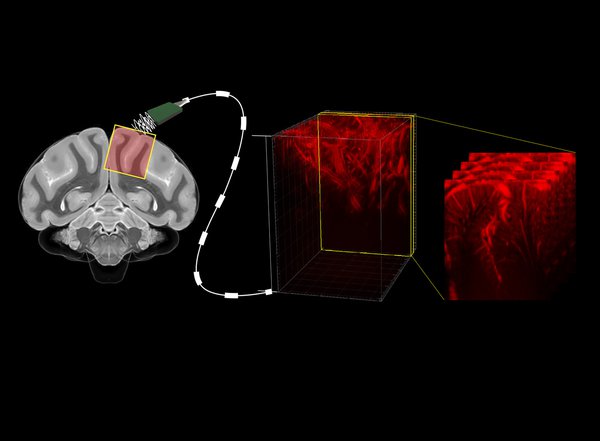
Caltech researchers develop ultrasound-based brain-machine interface to decode intended movements
Caltech researchers have developed a brain-machine interface (BMI) that uses functional ultrasound (fUS) imaging to decode brain activity an
 caltech.edu·4d ago
New therapeutic brain implants defy the need for surgery
Brain Implant Decodes Internal Speech with Password Protection
A brain implant, or brain-computer interface (BCI), can decode a person's internal speech with 74% accuracy, but only when the user thinks o
 nature.com·10mo ago
Dr. Brian Lundstrom's Vision for Noninvasive Neuromodulation at BIONIC
Dr. Brian Lundstrom, an associate professor of neurology, brings a quietly radical perspective to BIONIC focused on noninvasive neuromodulat
 mayocl.in·10d ago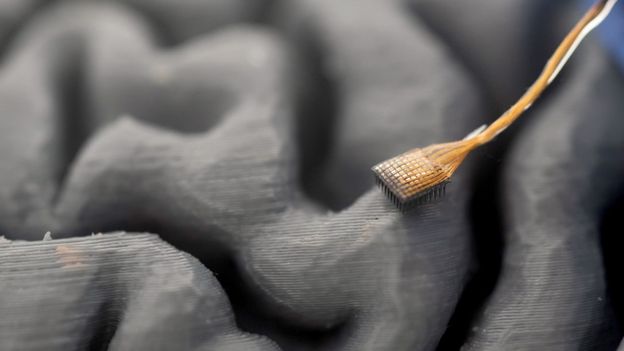
AI Decodes Brain Activity to Help Paralyzed Patients Communicate
Researchers at University of California, Davis are using artificial intelligence to decode brain activity and translate it into speech, part
 bbc.com·4mo ago
Comments
Sign in to join the conversation.
No comments yet. Be the first.