

























DARPA's N3 Program: Developing Nonsurgical Brain-Machine Interfaces for Military Applications
Summary
DARPA's Next-Generation Nonsurgical Neurotechnology (N3) program aims to develop high-performance, bi-directional brain-machine interfaces that do not require surgery, for use by able-bodied service members. The technology would enable national security applications such as controlling unmanned aerial vehicles, active cyber defense, and multitasking during complex military missions, replacing current state-of-the-art neural interfaces that require surgical electrode implantation.
Source

 Twitter / XDARPA's N3 Program: Developing Nonsurgical Brain-Machine Interfaces for Military Applicationsdarpa.mil
Key quotes
· 3 pulledThe Next-Generation Nonsurgical Neurotechnology (N3) program aims to develop high-performance, bi-directional brain-machine interfaces for able-bodied service members.
Such interfaces would be enabling technology for diverse national security applications such as control of unmanned aerial vehicles and active cyber defense systems or teaming with computer systems to successfully multitask during complex military missions.
Whereas the most effective, state-of-the-art neural interfaces require surgery to implant electrodes into the brain, N3 technology would not require surgery and would be man-p
You might also wanna read


China's NEO Brain Chip Advances Toward Commercial Use and Health Insurance Coverage
China's NEO brain-computer interface (BCI) developed by Neuracle is advancing toward commercial availability and potential inclusion in heal
 bgr.com·7d ago
Physical AI's Next Frontier: Smarter Human-Machine Interfaces Over Smarter Robots
This sponsored article discusses the emerging field of Physical AI, arguing that the next major breakthrough isn't about building smarter ro
 spectrum.ieee.org·26d ago
DARPA's Generative Optogenetics Program Aims to Revolutionize DNA/RNA Synthesis Using Light
DARPA's Generative Optogenetics (GO) program aims to revolutionize DNA and RNA synthesis by using light to direct their creation directly wi
darpa.mil·6mo ago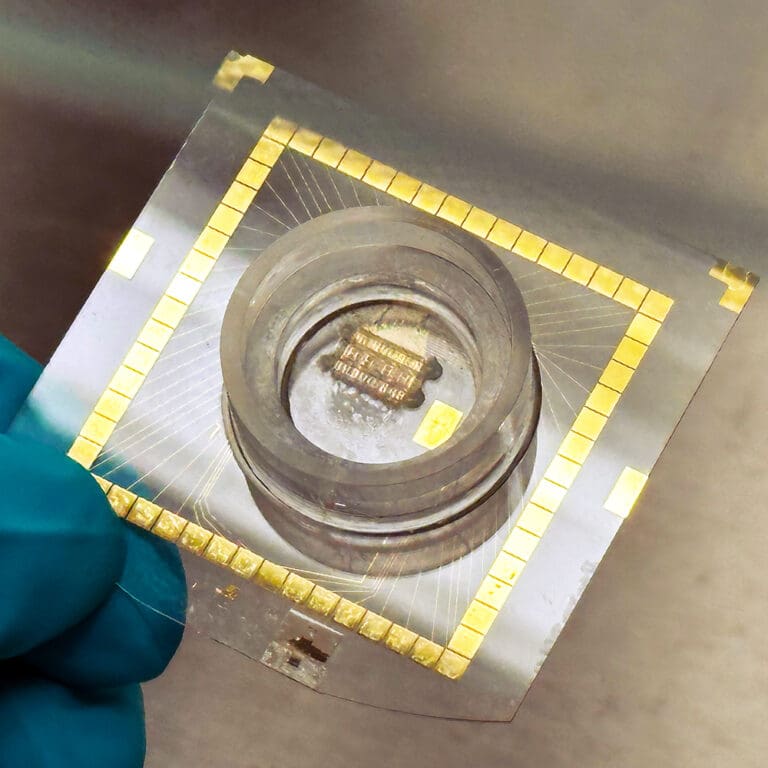
Princeton researchers create 3D brain-computer hybrid device with 70,000 living neurons
Princeton University researchers have developed a 3D device that integrates roughly 70,000 living biological neurons with electronics to per
 ethicalpsychology.com·6d ago
Yale researchers develop brain-computer interface that aligns with natural neural pathways for rapid learning
Yale researchers developed a brain-computer interface (BCI) that works with the brain's natural activity patterns rather than against them.
 news.yale.edu·8d ago
Neuromorphic Computing: The Future of AI
Comments
Sign in to join the conversation.
No comments yet. Be the first.