
























Double-slice routing method improves fault-tolerant quantum computing compilation efficiency by up to 7.5x
By
[Submitted on 19 Jun 2026]
Summary
This paper introduces double-slice routing, a constant-depth spacetime-routing method for fault-tolerant quantum computing based on lattice surgery. The method uses two consecutive time slices with guaranteed kink-parity correction termination under both planar and stacked architectures. Numerical benchmarks on Hamiltonian-simulation workloads show double-slice routing reduces compilation cost by up to 2.4x over single-slice baselines, and combined with cultivation-compatible mapping optimization achieves up to 7.5-fold improvement. The method resolves the tension between path conflict suppression and ancilla-efficient spacetime routing while maintaining compatibility with inner factory layouts.
Source

 bskyDouble-slice routing method improves fault-tolerant quantum computing compilation efficiency by up to 7.5xarxiv.org
Key quotes
· 4 pulledHere we introduce double-slice routing, a constant-depth spacetime-routing method that uses two consecutive time slices with a guarantee that its kink-parity correction terminates under both planar and stacked architectures.
We numerically benchmark the resulting compiler on Hamiltonian-simulation workloads to show that double-slice routing reduces compilation cost by up to a factor of 2.4 over a single-slice baseline.
Combined with a cultivation-compatible mapping optimization, the overall improvement reaches up to 7.5-fold over a naive single-slice compilation baseline.
These results identify double-slice routing as a practically useful operating point in lattice-surgery compilation and show the substantial benefit in joint optimization of mapping and routing.
You might also wanna read

Demonstration of Algorithmic Quantum Speedup for an Abelian Hidden Subgroup Problem
journals.aps.org·11mo ago
Generating Gottesman–Kitaev–Preskill Qubit States Using Integrated Photonic Chip
The article discusses the generation of Gottesman–Kitaev–Preskill (GKP) qubit states using an ultra-low-loss integrated photonic chip, pavin
nature.com·11mo ago

Memory-Efficient Two-Pass Lanczos Algorithm Implementation in Rust
This technical article presents a memory-efficient implementation of the Lanczos algorithm in Rust, addressing the significant memory requir
 lukefleed.xyz·7mo ago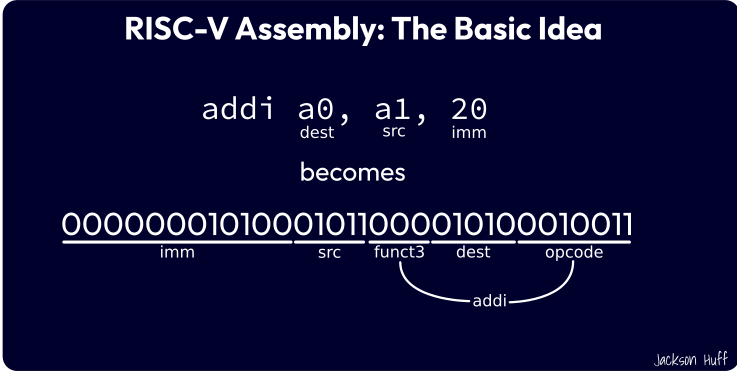
Technical Analysis of Ultrassembler's High-Speed RISC-V Assembly Performance
Ultrassembler is a high-performance RISC-V assembler library developed as part of the Chata signal processing project. The article explains
 jghuff.com·9mo ago
Open-Source RISC-V: Energy Efficiency of Superscalar, Out-of-Order Execution
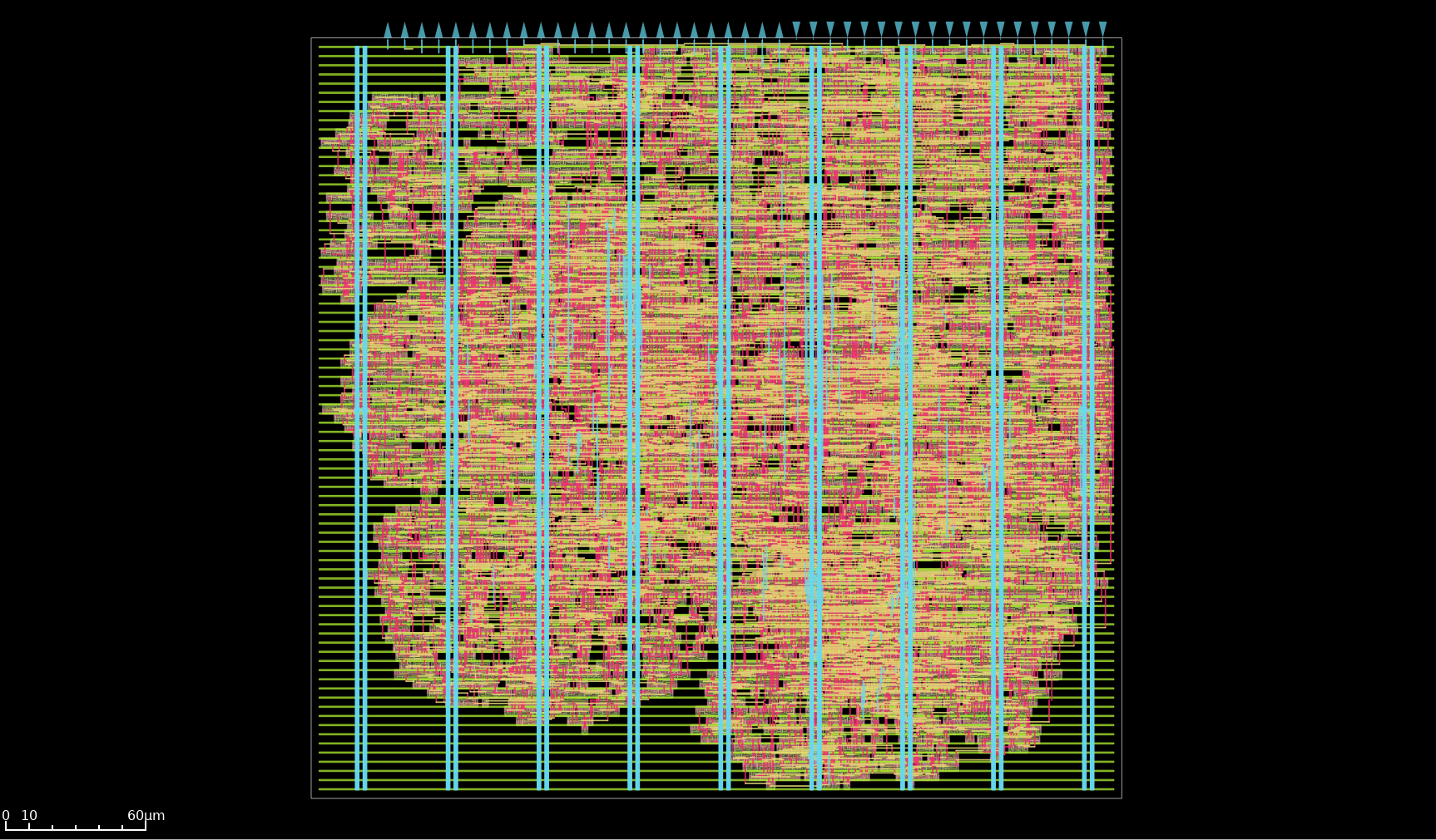
Designing a Systolic Array AI Accelerator in Two Weeks for Global Foundries 180nm Tapeout
The article details the author's ambitious project to design a systolic array AI accelerator with in-silicon debug infrastructure from scrat
 essenceia.github.io·5mo ago
Comments
Sign in to join the conversation.
No comments yet. Be the first.