
























Fossil teeth reveal an ancient thresher shark that hunted like a great white
By
June 24, 2026 / Riley Black
Summary
A paleontological narrative about an ancient thresher shark species discovered through fossilized teeth in Maryland. The article describes how this prehistoric shark, identified by its unique teeth resembling those of modern great whites, likely hunted and fed similarly to great white sharks rather than modern thresher sharks. The piece blends vivid storytelling of the ancient shark's hunting behavior with scientific analysis of the fossil evidence, revealing a previously unknown evolutionary adaptation in thresher sharks.
Source
 bskyFossil teeth reveal an ancient thresher shark that hunted like a great whiterileyblack.net
Key quotes
· 3 pulledThe rot must be nearby. The sticky traces of it are seemingly everywhere, loud in the water flowing through the shark's nasal passages.
She's not even that far down. Hints of something blubbery decaying along the coastal shelf had drawn her in from the more expansive waters off the ancient Maryland coast.
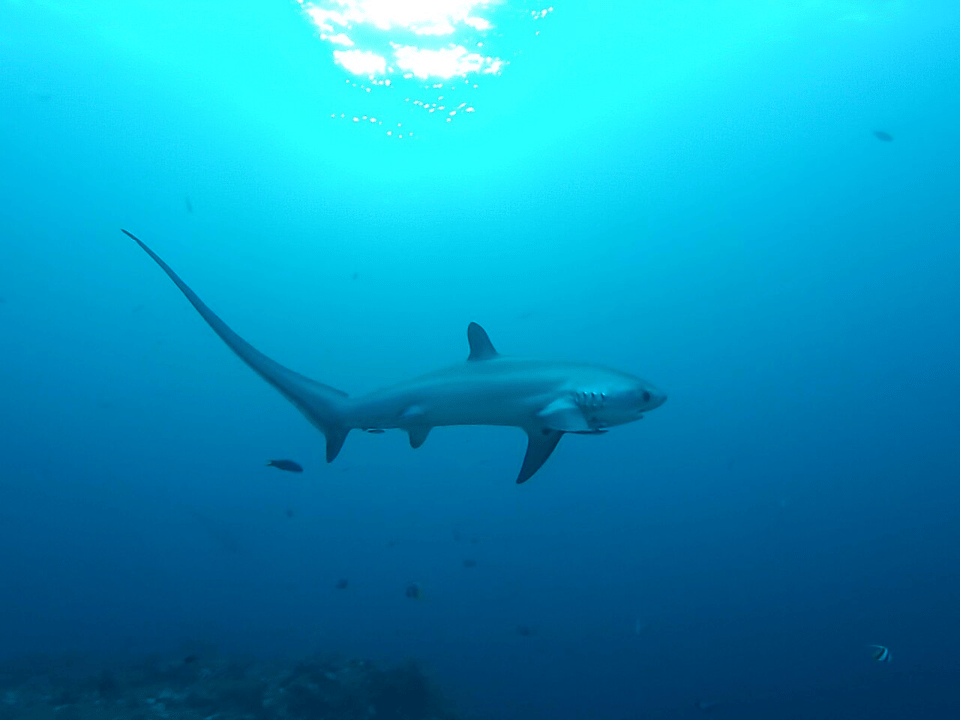
The teeth of the newly-described thresher shark, Alopias grandis, are not the small, curved teeth of modern threshers. They are large, triangular, and serrated — the kind of teeth that are used to bite and tear chunks out of large prey.
You might also wanna read
Video shows "well fed" great white shark eating whale off Rhode Island


Taphonomic study suggests Komodo dragons, not Homo floresiensis, had primary access to large prey at Liang Bua
A systematic taphonomic study of the proboscidean bone assemblage at Liang Bua (Flores, Indonesia) challenges the notion that Homo floresien
 science.org·2d ago
Minnesota's ancient rough fish are vital to the ecosystem, but much remains unknown
Contributing columnist David M. Perry writes about Minnesota's native population of "rough fish" (such as gar, bowfin, and sturgeon) and the
 startribune.com·15d ago
Paleontologists make 'one in a million' discovery of soft tissue preserved in 450-million-year-old fossil
New species of ghost shark may have been found in Costa Rica

Comments
Sign in to join the conversation.
No comments yet. Be the first.