
























How the definition of a planet has changed over 250 years — and why the count may not be final
By
Samantha Mathewson
Summary
This article traces the evolving definition of a planet over the past 250 years, from the six known planets in 1776 to today's eight. It explores how discoveries of asteroids, Pluto, and trans-Neptunian objects forced astronomers to repeatedly revise what counts as a planet, culminating in the 2006 IAU reclassification that demoted Pluto to dwarf planet status. The piece examines whether the current tally is final or if future discoveries could change it again, reflecting on how scientific classification systems evolve with new knowledge.
Source
 Twitter / XHow the definition of a planet has changed over 250 years — and why the count may not be finalspace.com
Key quotes
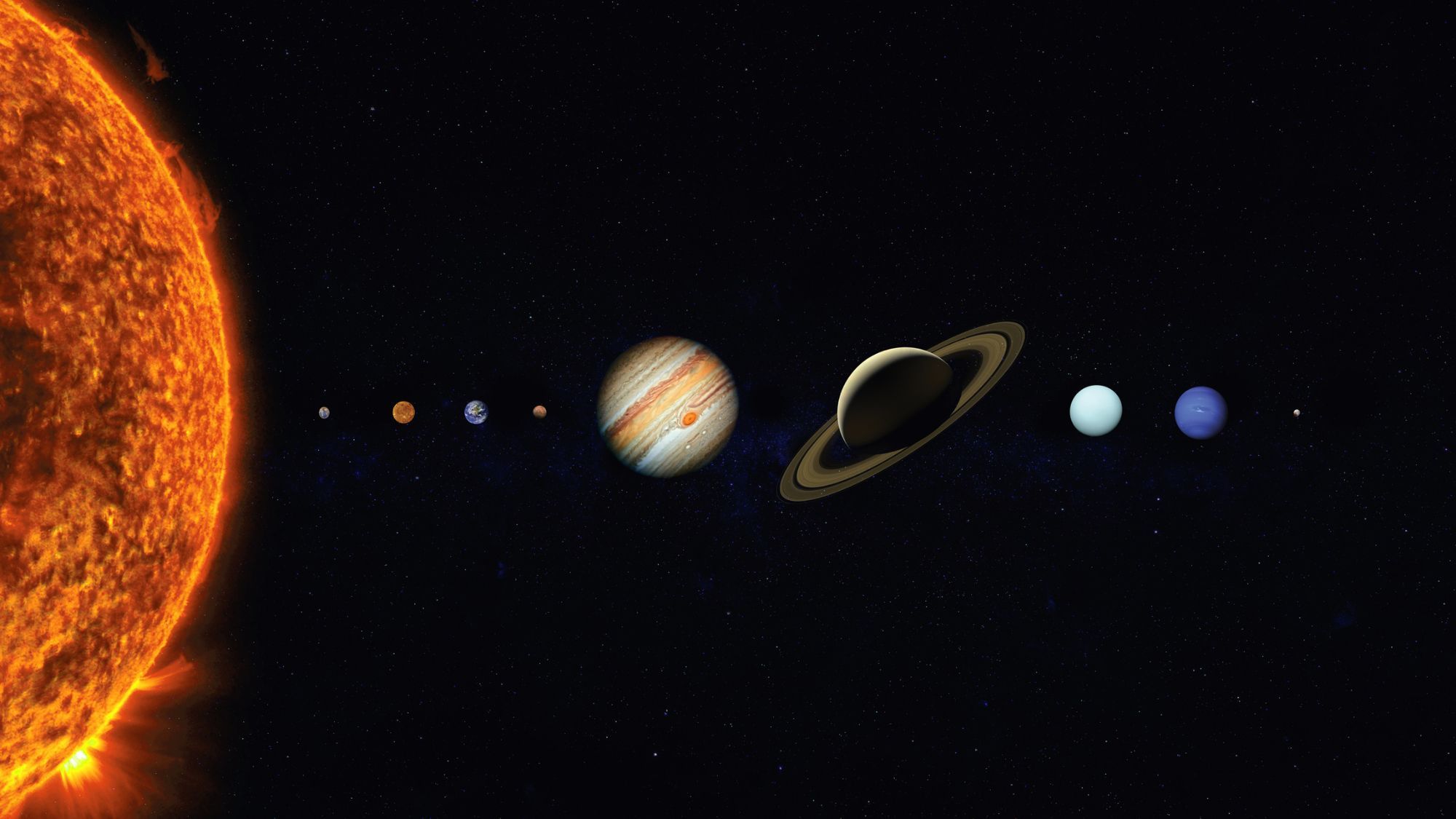
· 3 pulledOver the past 250 years, the number of 'planets' in our solar system has ranged from six to nine — and, briefly, even 11 — depending on what astronomers knew at the time and how they defined a planet.
As the United States prepares to celebrate its 250th anniversary, that changing tally offers a unique lens on humanity's evolving understanding of the cosmos since 1776.
The 2006 reclassification of Pluto from planet to dwarf planet remains one of the most controversial decisions in modern astronomy.
You might also wanna read

A speculative look at humanity's space future 250 years from now
A speculative and in-depth look at humanity's potential future in space over the next 250 years, from the U.S. semiquincentennial in 2276. T
 space.com·22h ago
A speculative look at humanity's space future 250 years from now
A speculative and in-depth look at humanity's potential future in space over the next 250 years, from the U.S. semiquincentennial in 2276. T
space.com·22h ago
Study suggests two giant 'super Earths' may have existed in early solar system before being ejected
A new study based on over 100 simulations suggests that the early solar system may have contained up to six giant planets, including two ext
 livescience.com·23d ago
New discoveries challenge Planet Nine theory, suggest hidden planet may be farther than thought
Astronomers have been investigating the possibility of a hidden giant planet (Planet Nine) far beyond Neptune, based on unusual orbits of Ku
 worldnewsguru.us·25d ago
Isotopic evidence for a cold and distant origin of 3I/ATLAS - Nature

Interstellar comet 3I/ATLAS formed 12 billion years ago, JWST data reveals
Astronomers have determined that interstellar comet 3I/ATLAS, detected nearly a year ago racing through the Solar System at 221,000 km/h, li
 science.org·10d ago
Study challenges volcano classification: 'Extinct' volcanoes may erupt after 100,000-year dormancy
Emerging research suggests that some volcanoes classified as "extinct" may simply be dormant for extremely long periods—over 100,000 years—b
livescience.com·23d ago
Comments
Sign in to join the conversation.
No comments yet. Be the first.