
























How ticks evolved into stealthy parasites and why climate change is making them a growing threat
A personal and scientific exploration of ticks — their stealthy bites, evolution as blood-feeding parasites, and the growing threat they pose due to climate change expanding their habitats and disease range. The article blends the author's own tick encounter with expert insights from tick researchers, covering tick biology, the anesthetic properties of their saliva, the rise of tick-borne illnesses like Lyme disease and alpha-gal syndrome, and the challenges of prevention and public awareness.
Key quotes
As a kid, I would have hundreds of ticks on me, at least several of which would bite, and yet she would never notice until her aunt would pick them off her skin
Their saliva is a secret weapon.
The ticks are winning.
From the article
You might also wanna read


Tick-borne Alpha Gal Syndrome leaves some New Yorkers unable to eat red meat

The Lone-Star Tick and the Rise of Alpha-Gal Syndrome: A Hunt for Answers
A richly reported longform narrative from Martha's Vineyard and Missouri about the lone-star tick and the emergence of alpha-gal syndrome (A
 newyorker.com·2d ago
Diseases, Climate Change, and Vector Ecology — Impacts on Public Health

Climate change threatens one-third of parasite species with extinction, study finds
Colin Carlson's research explores how climate change threatens parasite biodiversity. Inspired by a conversation with a parasitologist frien
 scientificamerican.com·23d ago
How Climate Change Is Spreading Dangerous Microbes and Pathogens
This article examines how climate change is accelerating the spread of dangerous pathogens, including "flesh-eating" bacteria and emerging i
newyorker.com·1mo ago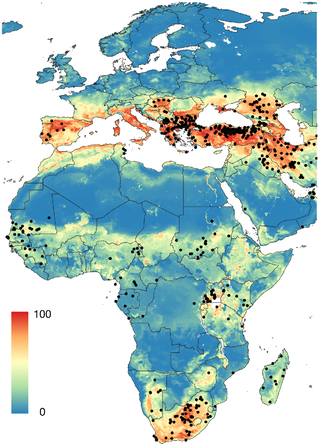
Ecological modeling reveals Crimean-Congo hemorrhagic fever virus circulates through broad networks of ticks and vertebrates
This study presents an ecological modeling approach to predict the distribution of Crimean-Congo hemorrhagic fever virus (CCHFV), a tick-bor
 journals.plos.org·1mo ago
Comments
Sign in to join the conversation.
No comments yet. Be the first.