





















Ecological modeling reveals Crimean-Congo hemorrhagic fever virus circulates through broad networks of ticks and vertebrates
By
Agustín Estrada-Peña ,

An everything bagel for the brain. Substantive, layered, well-seasoned.
Summary
This study presents an ecological modeling approach to predict the distribution of Crimean-Congo hemorrhagic fever virus (CCHFV), a tick-borne pathogen causing severe disease in humans across Africa, Asia, and Europe. Unlike previous climate-based models that often overestimate risk, the researchers combined climatic data with ecological information on ticks, livestock, and wildlife to create more realistic predictions. By incorporating host-vector interactions and vertebrate communities, their models accurately captured known occurrences and revealed that CCHFV persists within broad networks of tick and vertebrate species rather than relying on a single vector. The integrated approach offers a framework to identify emerging risk areas and improve understanding of ecological drivers of tick-borne viral diseases.
Key quotes
· 5 pulledUnderstanding where the virus may circulate is crucial for anticipating outbreaks and guiding surveillance.
Previous studies have mostly relied on climate-based models, assuming that temperature and humidity determine where infected ticks can prevail. However, such models often overestimate risk, predicting virus presence in regions where no cases or vectors exist.
By incorporating host–vector interactions and vertebrate communities, our models accurately captured most known occurrences and revealed the ecological patterns underlying virus transmission.
Our results suggest that CCHFV persists within broad networks of tick and vertebrate species rather than a single vector.
This integrated approach offers a powerful framework to identify emerging risk areas and forms a good starting point to further improve our understanding of the ecological drivers of tick-borne viral diseases.
You might also wanna read


Cryo-EM reveals 2.35 Å structure of Andes hantavirus glycoprotein tetramers on virus-like particles
This article presents a high-resolution cryo-electron microscopy study of Andes hantavirus (ANDV) glycoprotein tetramers, achieving a 2.35 Å
Experimental daraxonrasib pill extends survival for advanced pancreatic cancer patients, study finds
An experimental pill called daraxonrasib has shown promise in helping patients with advanced pancreatic cancer live longer. The drug blocks
 bit.ly·9h ago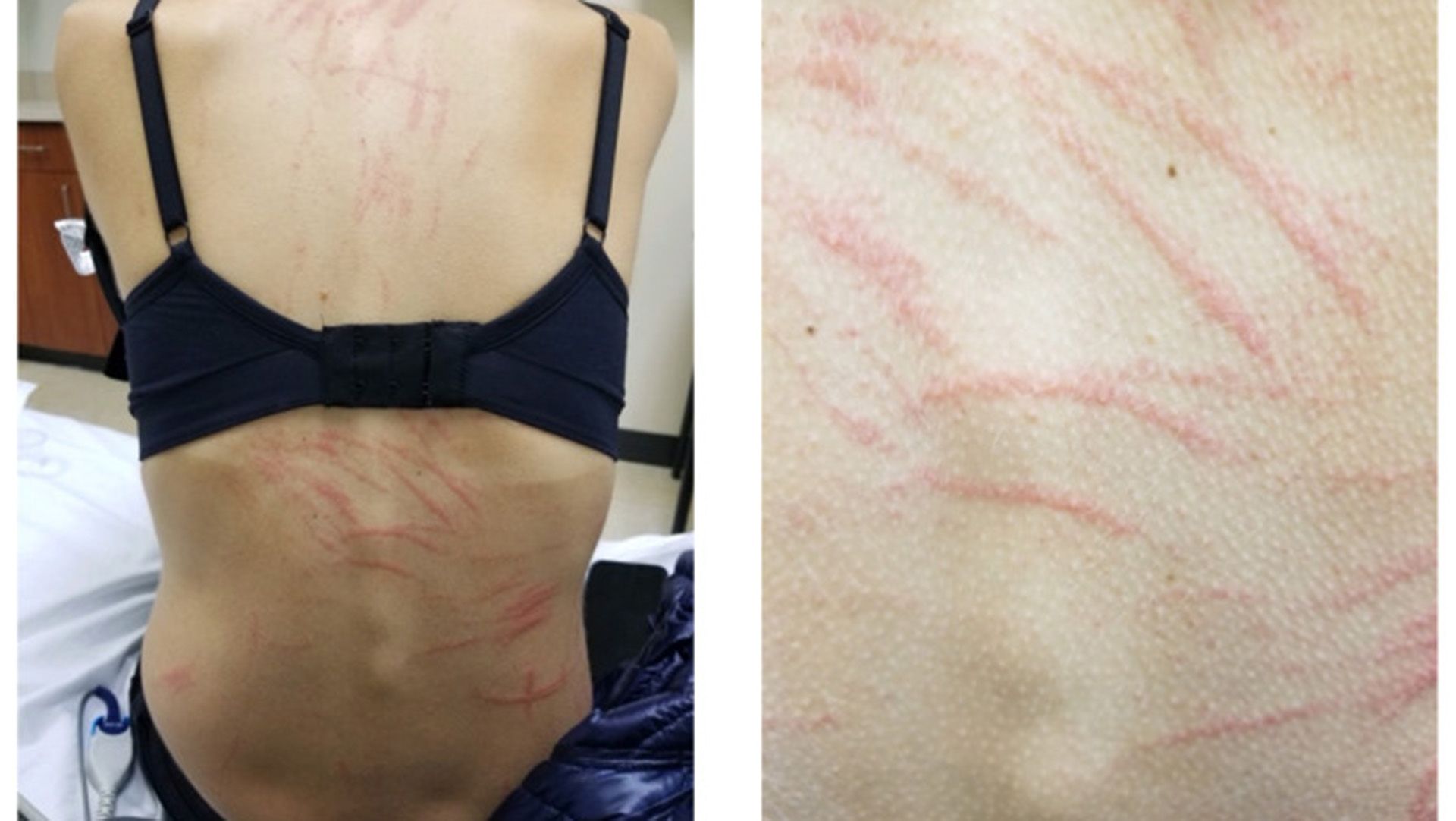
Woman develops whiplike rash on back after eating shiitake mushrooms
A woman developed bright-red, whiplike rashes on her back after eating shiitake mushrooms, a condition known as shiitake dermatitis. The cas
 livescience.com·10h ago
Molecular glue approach doubles survival time for pancreatic cancer patients in breakthrough trial
Chemical biologist Gregory Verdine developed a novel approach to fighting cancer by using "molecular glues" to bind disease-causing proteins
 pasadenastarnews.com·12h ago
Molecular glue approach doubles survival time for aggressive pancreatic cancer patients
Chemical biologist Gregory Verdine developed a novel approach to fighting cancer by using "molecular glues" to bind disease-causing proteins
pasadenastarnews.com·13h ago
Experimental daraxonrasib pill extends survival for advanced pancreatic cancer patients, study finds
An experimental pill called daraxonrasib has shown promise in helping patients with advanced pancreatic cancer live longer. The drug works b
 bit.ly·13h ago