
























AI and Machine Learning Enable New Molecular-Level Maps of the Brain's Cellular Landscape
By
By Amber Dance February 9, 2026
Summary
This article from Quanta Magazine explores how machine learning is revolutionizing neuroscience by helping researchers map the brain at the cellular level. It focuses on the work of Bosiljka Tasic and other "biological cartographers" who are using AI to analyze vast datasets of single-cell genetic information to create detailed atlases of brain cell types and their spatial organization. The piece explains how this computational approach is transforming our understanding of brain structure, function, and diversity, moving beyond traditional anatomical maps to molecular-level classifications of neurons and glial cells.
Source
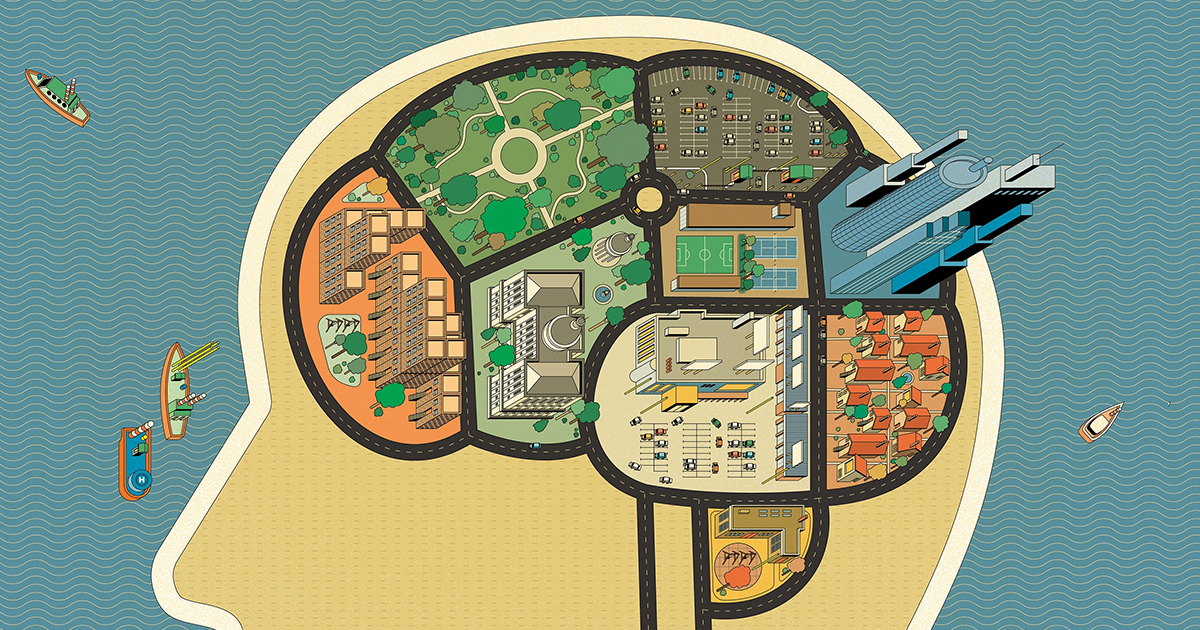
 Twitter / XAI and Machine Learning Enable New Molecular-Level Maps of the Brain's Cellular Landscapequantamagazine.org
Key quotes
· 3 pulledLocation is everything in the brain.
We are trying to understand the brain by understanding its building blocks.
The diversity of cell types in the brain is far greater than we ever imagined.
You might also wanna read


University of Michigan researchers develop technique to map cell-to-cell communication using spatial transcriptomics
A new University of Michigan study published in Nature Genetics introduces a computational technique that uses spatial transcriptomics to in
 michiganmedicine.org·14d ago
Spatial Intelligence: The Next Frontier in AI Development Beyond Language Models
The article discusses the evolution of AI from basic computation to spatial intelligence, tracing the author's journey from creating ImageNe
 drfeifei.substack.com·7mo ago
How AI models are being repurposed as tools to study the human brain
The article discusses how pretrained AI models, originally designed as engineering tools for practical tasks like predicting text, are incre
 thetransmitter.org·3d ago
TranscriptFormer: Generative AI model maps cellular evolution across 1.5 billion years
Researchers developed TranscriptFormer, a generative AI model that creates a cell atlas spanning 1.5 billion years of evolution by analyzing
 doi.org·14d ago
A mosaic of whole-body representations on the human precentral gyrus

Comments
Sign in to join the conversation.
No comments yet. Be the first.