
























AI Course Compass: A Seven-Phase Framework for Ethical AI Integration in Higher Education
By
Natalya Hierholzer
Summary
This article introduces the AI Course Compass Framework, a seven-phase model designed to guide higher education institutions in integrating AI into course design ethically, equitably, and adaptively. It addresses the gap left by existing high-level frameworks that lack phased roadmaps and course-level specificity. The framework aims to balance innovation with systemic ethics, preventing AI from widening existing disparities or undermining academic standards.
Source

 bskyAI Course Compass: A Seven-Phase Framework for Ethical AI Integration in Higher Educationonlinelearningconsortium.org
Key quotes
· 3 pulledWithout clear strategies, AI integration risks widening existing disparities and undermining academic standards.
The AI Course Compass Framework addresses the critical gap of higher education's AI integration through a structured seven-phase model that balances innovation with systemic ethics.
While existing frameworks like OLC's AI Strategy, ETHICAL Principles, and ARCHED offer valuable high-level guidance, they frequently lack phased roadmaps, course-level specificity, model-
You might also wanna read

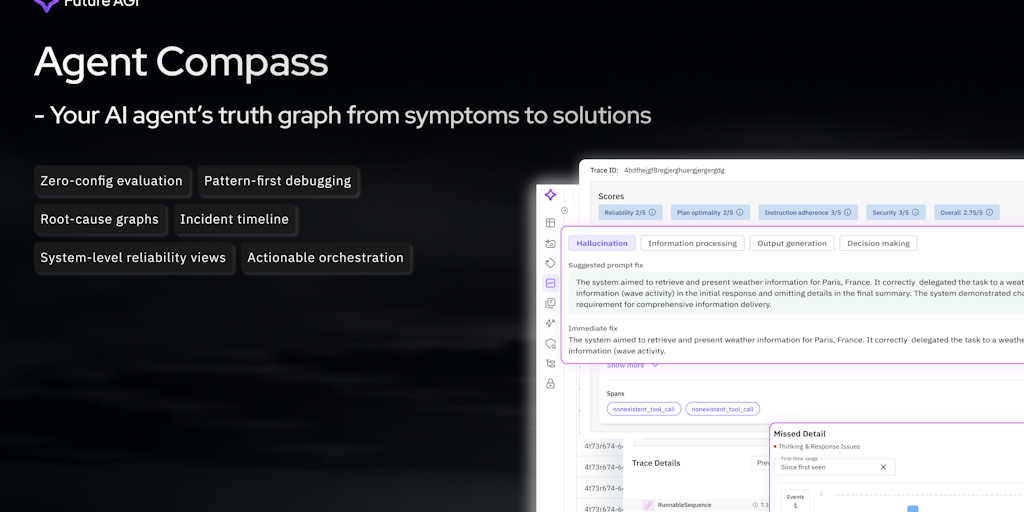
Future AGI Launches Agent Compass: AI Agent Monitoring and Optimization Platform
Future AGI has launched Agent Compass, described as the world's first comprehensive evaluation, observability and optimization platform for
 Product Hunt·9mo ago
A Framework for UX Professionals to Lead AI Strategy Implementation
The article provides a practical framework for UX professionals to take leadership roles in their organization's AI strategy implementation.
 Smashing Magazine·6mo ago
Practical UX Design Patterns for Building Trustworthy Agentic AI Systems
The article provides practical UX design patterns and frameworks for building agentic AI systems that prioritize user control, consent, and
Smashing Magazine·4mo ago
Research Paper Proposes Quantifiable Framework for Defining and Measuring Artificial General Intelligence
This research paper addresses the lack of a concrete definition for Artificial General Intelligence (AGI) by introducing a quantifiable fram
 arxiv.org·8mo ago
New Benchmark Reveals High Rates of Outcome-Driven Constraint Violations in Autonomous AI Agents
Researchers introduce a new benchmark for evaluating autonomous AI agents' safety, specifically focusing on outcome-driven constraint violat
arxiv.org·4mo ago
Critique of the Agent Model: Distinguishing Automation from Genuine Agency in AI Systems
This paper critiques the current AI agent landscape, distinguishing between mere automation and genuine agency. Drawing on Descartes' philos
arxiv.org·5h agoCritique of the Agent Model: Distinguishing Automation from Genuine Agency in AI Systems
This paper critiques the current AI agent landscape, distinguishing between mere automation and genuine agency. Drawing on Descartes' philos
arxiv.org·5h agoComments
Sign in to join the conversation.
No comments yet. Be the first.