All Topics
All Topics
Technology
Technology
AI
AI
Business
Business
Entertainment
Entertainment
News
News
Programming
Programming
Science
Science
Design
Design
Environment
Environment
Finance
Finance
Crypto
Crypto
Politics
Politics
Sports
Sports
Education
Education
Gaming
Gaming
Art
Art
Music
Music
Health
Health
Security
Security
Books
Books
Food
Food
Travel
Travel
Personal
Personal
Bluesky
Twitter

Accelerated Decentralized Constraint-Coupled Optimization: A Dual${}^{2}$ Approach

1mo ago

Source

IEEEAccelerated Decentralized Constraint-Coupled Optimization: A Dual${}^{2}$ Approachieee.org
Snippet from the RSS feed
In this paper, we focus on a class of decentralized constraint-coupled optimization problem: $\mathbf{\min}_{\boldsymbol x_{\boldsymbol i}\in\mathbb{R}^{\boldsymbol d_{\boldsymbol i}},\boldsymbol{i\in\mathcal{I};y\in\mathbb{R}^{\boldsymbol p}}}$ $\sum_{\boldsymbol i = 1}^{\boldsymbol n}\left(\boldsymbol f_{\boldsymbol i}(\boldsymbol x_{\boldsymbol i})+\boldsymbol g_{\boldsymbol i}(\boldsymbol x_{\boldsymbol i})\right)+\boldsymbol h(\boldsymbol y)\ \mathbf{s.t.}\ \sum_{\boldsymbol i = 1}^{\boldsymbol n}\boldsymbol A_{\boldsymbol i}\boldsymbol x_{\boldsymbol i}=\boldsymbol{y}$, over an undirected and connected network of $\boldsymbol{n}$ agents. Here, $\boldsymbol{f_{i}}$, $\boldsymbol{g_{i}}$, and $\boldsymbol{A_{i}}$ represent private information of agent $\boldsymbol{i}\in\mathcal{I}=\{\mathbf{1,\cdots,}\boldsymbol{n}\}$, while $\boldsymbol{h}$ is public for all agents. Building on a novel dual${}^{\mathbf 2}$ approach, we develop two accelerated algorithms to solve this problem: the inexact Dual${}^{\mathbf 2}$ Accelerated (iD2A) gradient method and the Multi-consensus inexact Dual${}^{\mathbf 2}$ Accelerated (MiD2A) gradient method. We demonstrate that both iD2A and MiD2A can guarantee asymptotic convergence under a milder condition on $\boldsymbol{h}$ compared to existing algorithms. Furthermore, under additional assumptions, we establish linear convergence rates and derive significantly lower communication and computational complexity bounds than those of existing algorithms. Several numerical experiments validate our theoretical analysis and demonstrate the practical superiority of the proposed algorithms.

You might also wanna read

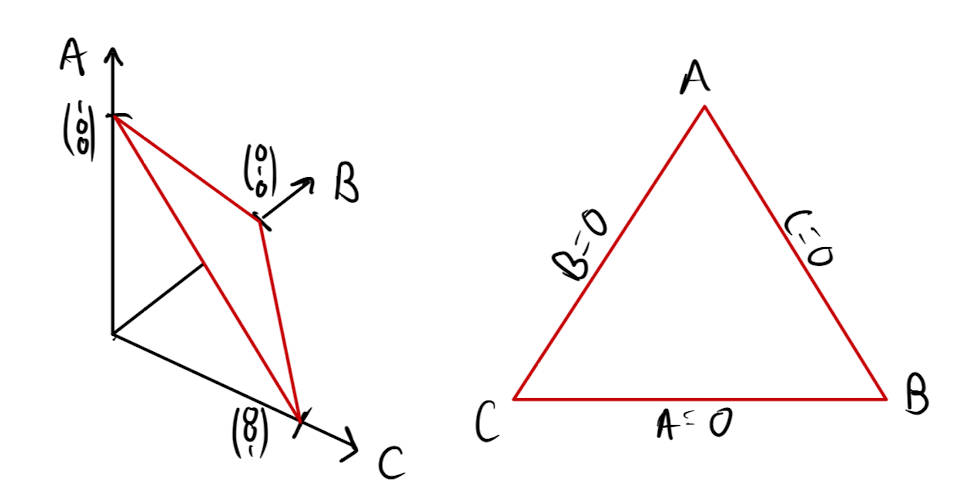
Unified Framework for Black-Box Optimization Reveals Hybrid Methods Outperform Constituent Algorithms

This paper presents a unified theoretical framework connecting several black-box optimization (BBO) methods — Evolution Strategies (ES), Con

arxiv.org·5d ago
Unified Framework for Black-Box Optimization Reveals Hybrid Methods Outperform Constituent Algorithms

This paper presents a unified theoretical framework connecting several black-box optimization (BBO) methods — Evolution Strategies (ES), Con

arxiv.org·5d ago

Reflecting on Optimisation: A Personal Take on Theory vs. Modern Practice

Magnus Ross reflects on his lack of deep study in optimisation, admitting he knows the basics (Adam, AdaGrad, L-BFGS) but zones out when dis

magnusross.github.io·11d ago

Sheaf-ADMM: A Distributed Consensus Neural Network for Multi-Agent Coordination

This article introduces Sheaf-ADMM, a novel neural network architecture built on the intersection of sheaf theory and the Alternating Direct

pub.sakana.ai·5d ago

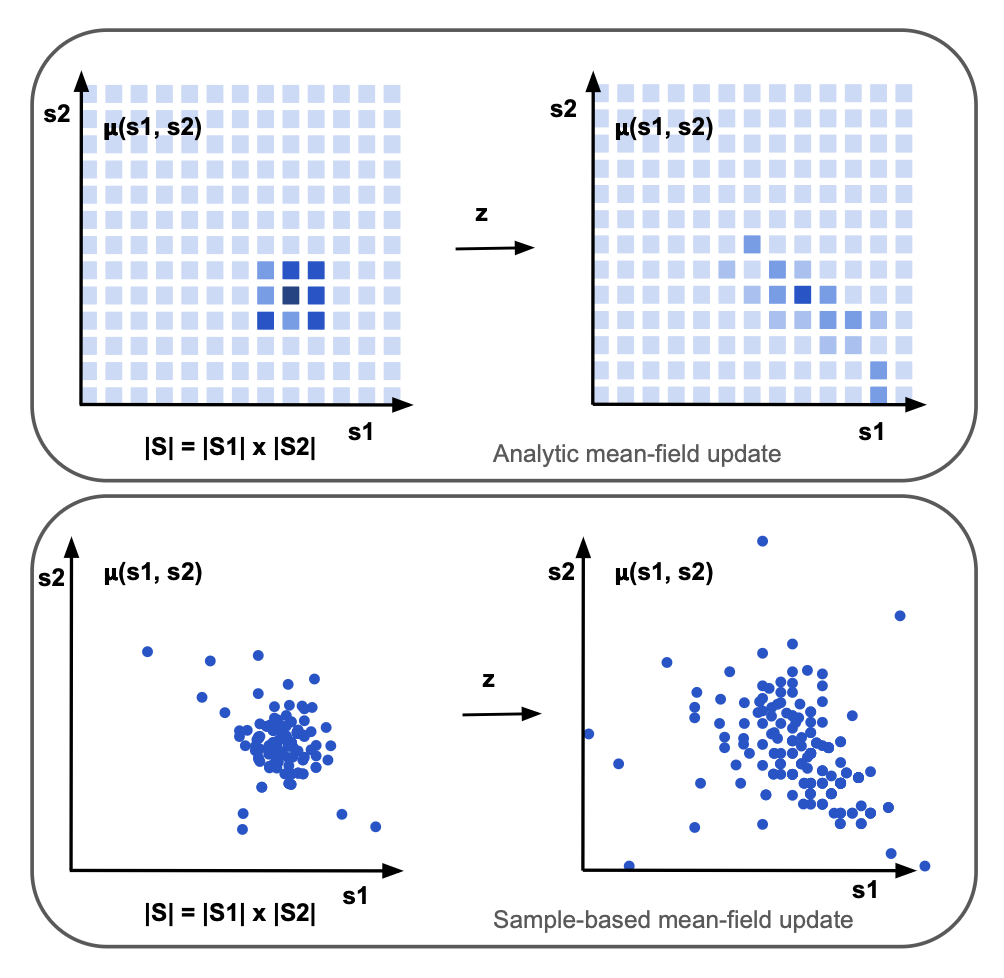
Recurrent Structural Policy Gradient: A Method for Partially Observable Mean Field Games

This article introduces Recurrent Structural Policy Gradient (RSPG), a hybrid structural method for learning history-dependent policies in P
clarisse-wibault.github.io·5d ago

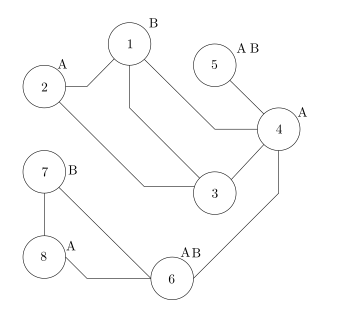
Understanding Biconnected Components: Algorithmic Implementation and Applications in Competitive Programming

This article provides an in-depth technical explanation of biconnected components (BCCs) in graph theory, focusing on their importance in co

emi-h.com·9mo ago

Quantum Divide-and-Conquer TSP Solver Achieves Improved Exponential Base Over Classical Held-Karp Algorithm

This paper presents a quantum divide-and-conquer approach to the traveling salesman problem (TSP), a classic NP-hard optimization problem. T

arxiv.org·1mo ago

Comments

Sign in to join the conversation.

No comments yet. Be the first.