
























Researchers Find Overlap Between Vision and Touch Restoration Technologies
By
Norway to restrict primary school pupils’ use of AI due to declining school results
Summary
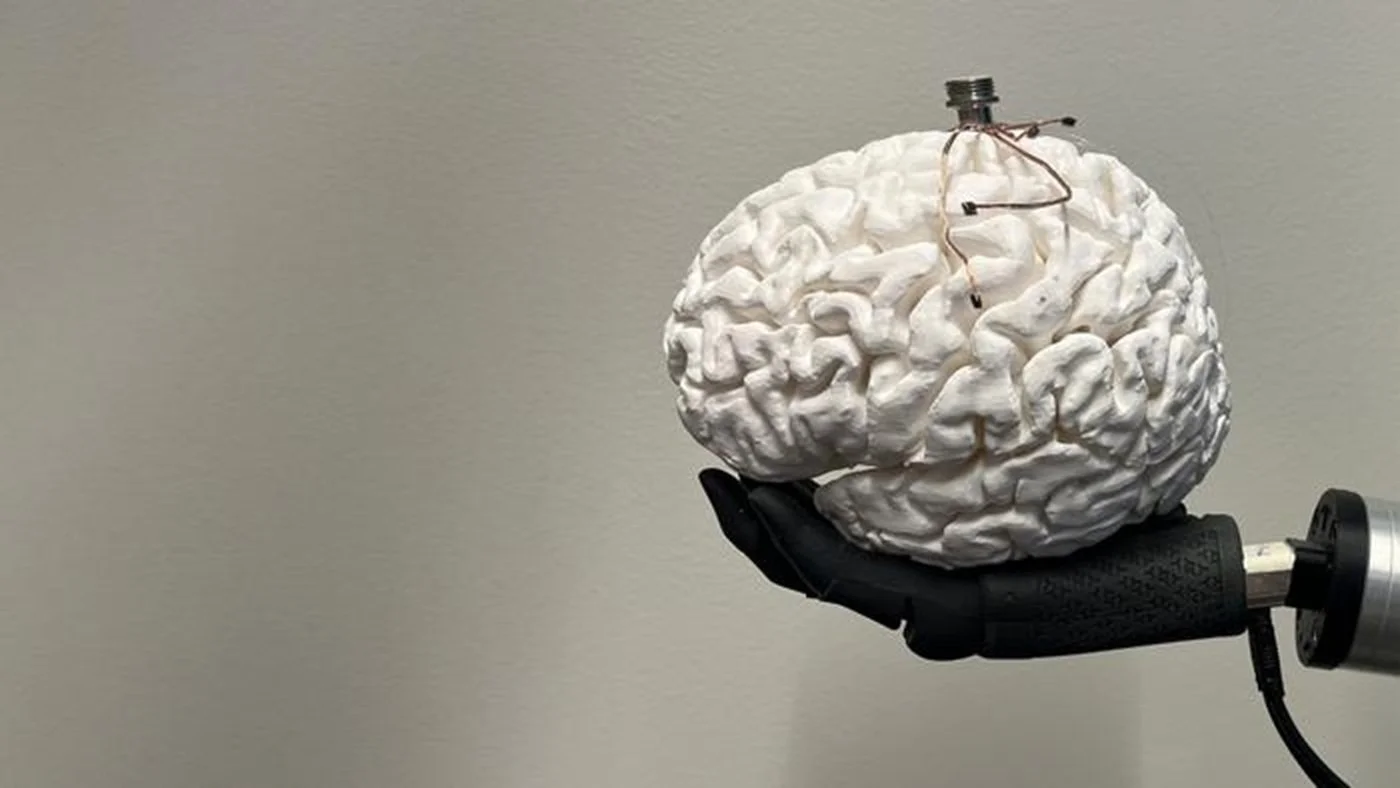
Researchers in vision restoration and touch restoration have historically worked separately, but have discovered that their technologies are remarkably similar. This overlap could lead to a unified approach for treating severe sight loss and paralysis, as both fields face the same fundamental technical challenge of interfacing with the nervous system to restore sensory function.
Source
 Twitter / XResearchers Find Overlap Between Vision and Touch Restoration Technologiesuniversal-sci.com
Key quotes
· 4 pulledFor more than half a century, researchers trying to restore vision and those working to recreate the sense of touch have largely followed separate paths.
Yet the technologies emerging from those two paths have turned out to be remarkably similar.
That overlap could matter for people living with conditions that currently have few or no treatment options, including severe sight loss and paralysis.
By recognising vision and touch restoration as versions of the same technical challenge
You might also wanna read

Electrical Current Technique Offers Non-Surgical Alternative to LASIK Vision Correction
Scientists have developed a non-surgical vision correction technique using electrical currents and custom contact lenses to reshape corneas.

Scientists Develop Contact Lenses That Enable Infrared Vision Without Power Source
Researchers at the University of Science and Technology of China have developed contact lenses that enable wearers to see infrared light wit
 theguardian.com·10mo ago
Electric Stimulation Method Accelerates Wound Healing Threefold
Researchers from Chalmers University of Technology and University of Freiburg have developed a method using electric stimulation to accelera
 chalmers.se·8mo ago
Dual brain-machine interfaces restore natural movement sense for prosthetic limb users
Researchers have developed dual brain-machine interfaces that restore kinesthesia—the sense of muscle movement and joint position—for prosth
 neurosciencenews.com·6d ago
Neuroscientist challenges decades-old model of how vision and thinking work in the brain
Neuroscientist Nuttida Rungratsameetaweemana is challenging the long-held conventional view that vision is a passive, feed-forward process w
 engineering.columbia.edu·1d ago
Neuroscientist challenges decades-old model of how vision and thinking work in the brain
Neuroscientist Nuttida Rungratsameetaweemana is challenging the long-held conventional view that vision is a passive, feed-forward process w
engineering.columbia.edu·1d ago
Electromechanical Reshaping: A Safer Alternative to Laser Eye Surgery
Electromechanical reshaping (EMR) is a new surgical technique that uses electricity instead of lasers to reshape the cornea for vision corre
 spectrum.ieee.org·10mo ago
Comments
Sign in to join the conversation.
No comments yet. Be the first.