
























Dual brain-machine interfaces restore natural movement sense for prosthetic limb users
By
Neuroscience News
Summary
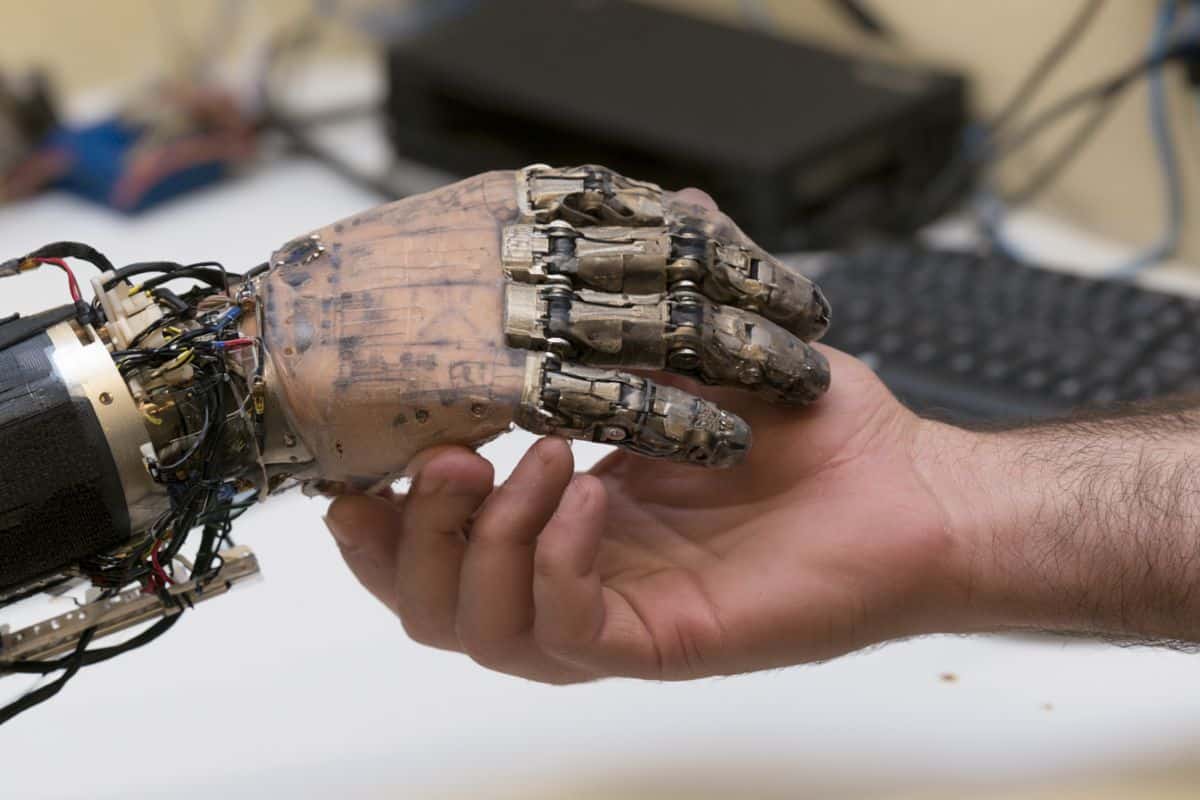
Researchers have developed dual brain-machine interfaces that restore kinesthesia—the sense of muscle movement and joint position—for prosthetic limb users. By unifying data from two distinct BMI systems, the team discovered how the brain subconsciously organizes prosthetic movement, moving beyond standard vibration-based sensory feedback that often creates conflicting tactile signals. This breakthrough enables more natural, intuitive motor control for amputees by recreating the sensory feedback loop that is severed during limb amputation.
Source
 bskyDual brain-machine interfaces restore natural movement sense for prosthetic limb usersneurosciencenews.com
Key quotes
· 4 pulledKinesthesia, the sense of muscle movement and joint position—is the foundational feedback loop required for natural, intuitive motor control.
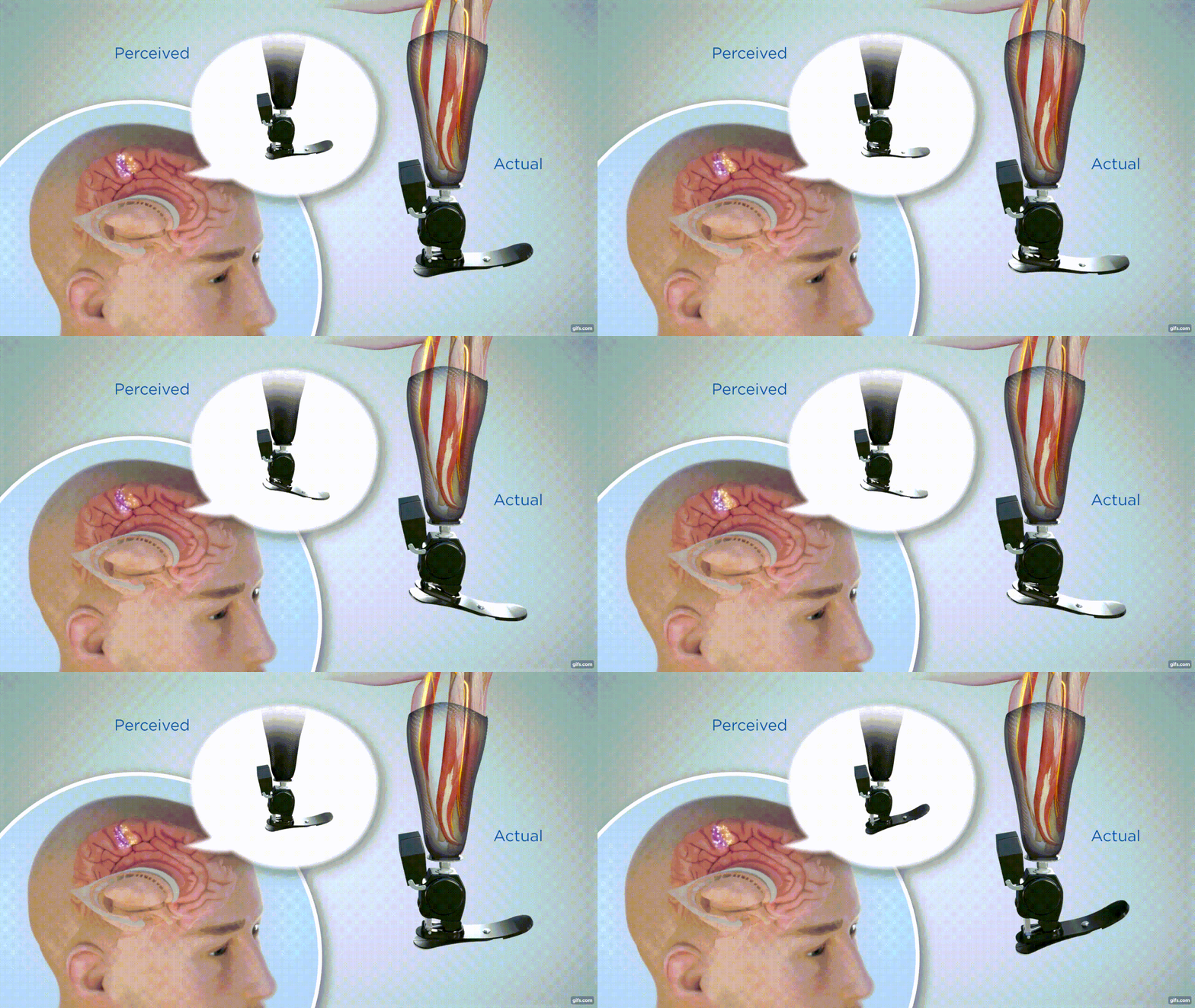
When a patient undergoes a limb amputation, this vital sensory loop is severed, forcing users of standard prosthetic devices to rely entirely on visual tracking to guide their movements.
While bioengineers can use mechanical vibration to stimulate residual muscle fibers and recreate a phantom sense of motion, these vibrations typically bleed into the skin, sending conflicting tactical signals that overwhelm and confuse the brain's sensory mapping.
Researchers unify data from two unique brain-machine interfaces to discover how the brain subconsciously organizes prosthetic movement.
You might also wanna read

MIT Media Lab's AMI Project: Restoring Proprioception in Prosthetic Limbs
The article describes the Agonist-antagonist Myoneural Interface (AMI) project from MIT Media Lab, which aims to restore proprioception in p
 media.mit.edu·5mo ago
AI Decodes Brain Activity to Help Paralyzed Patients Communicate
Researchers at University of California, Davis are using artificial intelligence to decode brain activity and translate it into speech, part
 bbc.com·4mo ago
Scientists Identify Brain Waves Linked to Sense of Body Ownership
Researchers have identified specific brain waves associated with the sense of body ownership by studying participants experiencing the rubbe
 sciencealert.com·5mo ago
Robotic exoskeletons in post-stroke gait rehabilitation: therapist-exoskeleton-patient interaction
This article examines the use of robotic exoskeletons in post-stroke gait rehabilitation. It highlights how traditional therapist-led physic
 scim.ag·12d ago
A surprising brain discovery is forcing scientists to rethink movement disorders

Dr. Brian Lundstrom's Vision for Noninvasive Neuromodulation at BIONIC
Dr. Brian Lundstrom, an associate professor of neurology, brings a quietly radical perspective to BIONIC focused on noninvasive neuromodulat
 mayocl.in·5d ago
Comments
Sign in to join the conversation.
No comments yet. Be the first.