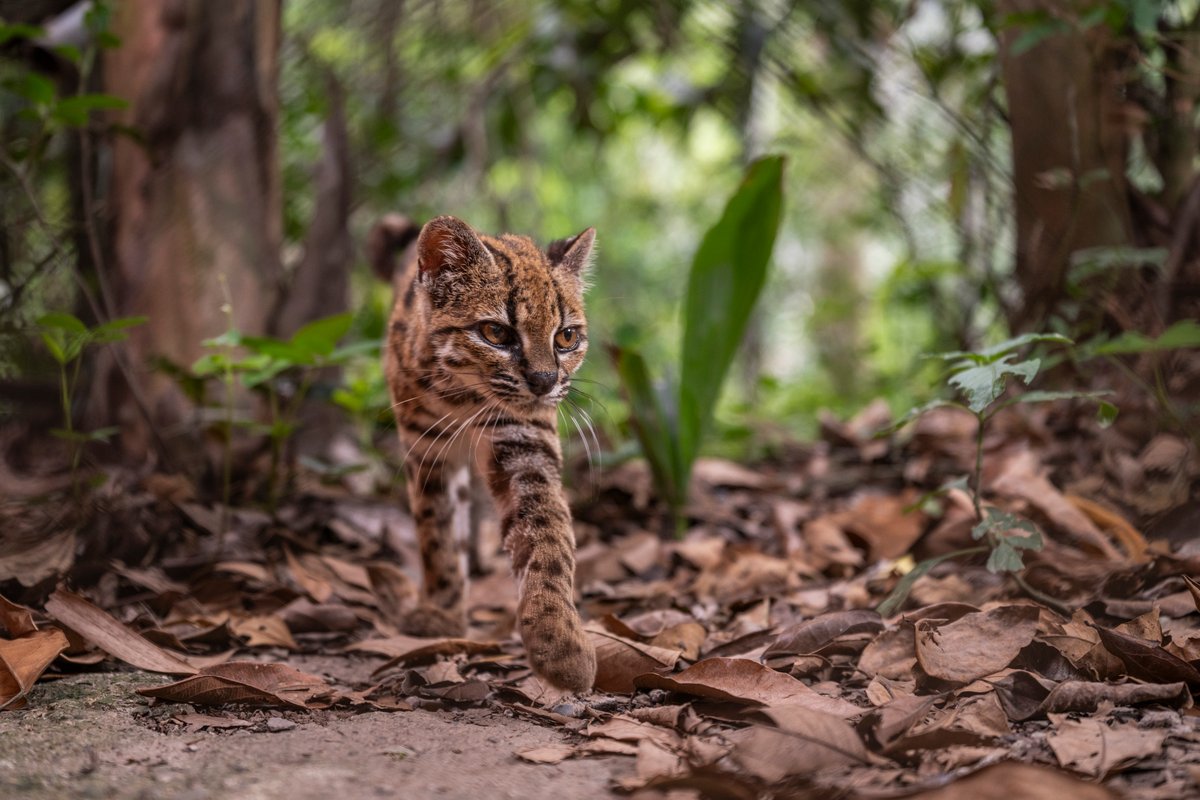
The tilcayo, a three-pound leopard-spotted wildcat from Bolivia's Yungas forest, is the first new cat species formally described in over a century. Multiple outlets cover the discovery, which began when a biologist spotted a 'weird cat' at a wildlife sanctuary.
scienceFriday, September 18, 2026
A new wildcat species and a $4 million gene therapy
Today in science, a tiny spotted cat from Bolivia steals the spotlight as the first new feline species described in over a century. Meanwhile, the FDA approved a record-priced gene therapy for a rare childhood disease, and Australia's grid hit a stunning renewable energy milestone that comes with a painful caveat.
New species and new therapies
Two genuinely novel developments broke through the noise today: a zoological first and a regulatory milestone.
Ultragenyx's gene therapy for Sanfilippo syndrome Type A won FDA approval at a list price of $3.95 million, making it one of the most expensive drugs ever. It's the first treatment for this fatal childhood brain disorder.
Astronomers found two consecutive profile changes in the nearest millisecond pulsar, PSR J0437-4715, a behavior never seen before in this class of star. The discovery came from seven years of Parkes radio telescope data after correcting for receiver calibration errors.
Grid reality check
Australia's renewable energy story is a tale of two headlines: a record high share of clean power, and a bottleneck that's stopping businesses from plugging in.
Renewables hit nearly 80 percent of generation on Australia's main grid, with rooftop solar alone supplying almost half. It's a new record, driven by a sunny spring afternoon.
Two outlets cover the same frustration: Australian businesses calculate that electrification saves money, then hit grid connection delays and costs that kill the project. The grid can't keep up with demand for clean power.
Also today15
What Policymakers and the Public Need to Know About the Cult of AIwww.techpolicy.press
Simulations Plus expands FDA partnership with ADMET predictor software deal | Seeking Alphaseekingalpha.com
New cat species identified for first time in 100 years — it's 3 pounds and looks like a mini leopardnypost.com
Spotted wildcat from Bolivian forest revealed as new specieswww.bbc.co.uk
APOD: 2026 September 18 – Messier 33: The Triangulum Galaxyscience.nasa.gov
Lake Powell Drops to Record-Low Levelsscience.nasa.gov
Q&A: Dakotah Tyler on fashioning a science communication businessphysicstoday.aip.org
After an injury forced him to pivot away from football, Tyler had a chance encounter that ignited his curiosity about exoplanets.
As tigers spill beyond reserves, India rethinks conservationindia.mongabay.com
Forty-five-year-old Mahadeva Gowda was tending to his cotton farm in the village of Badagalapura in the southern Indian state of Karnataka when a tiger lunged at him from behind. He was caught unaware: He says he wasn’t aware that the forest department was trying to capture a tig
New wildcat species identified for the first time in more than a centurywww.independent.co.uk
Known to local communities as the Tilcayo, the cat was found in Bolivia's lush Yungas forest
Ads right after turning on the TV. The new 2026 trend and what to do about it.chiptron.eu
Smart TVs in 2026 will start showing ads right after powering on. Who’s doing it, why Pi-hole isn’t enough, and what you can realistically do about it. 📖 Read full article →
SpaceX postpones Starship Flight 14, now eyes September 28 for first orbital missionstarlust.org
The launch timing hasn’t changed, and liftoff is still targeted within a 75-minute launch window.
When to Trust Clinical Artificial Intelligenceyesilscience.com
The medical world is flooded with AI tools that work in theory, but the industry still cannot agree on when they are safe enough to use on real patients.
Schneider Shorts 18.09.2026 – Go where the data takes youforbetterscience.com
Schneider Shorts 18.09.2026 - nobody is answering in Edinburgh and in Leeds, with a naughty professor in West Virginia, a retirement party in Paris, a lost paper in Strasbourg, some more retractions, and a sexual harasser who ran a Scottish university in Bahrain.
The real AI threat to humanity is a super-virus created in a garageinews.co.uk
It's highly unlikely AI could be used to create an 'extinction-level event' – but chances are not zero, experts say
Kyocera and Tohoku University Build the World’s First Laser-Etched Optical Isolator on a Chipscientificinquirer.com
A new laser-annealing technique lets Kyocera and Tohoku University integrate optical isolators directly onto silicon photonics chips, a key step toward more efficient AI data centers.