All Topics
All Topics
Technology
Technology
Design
Design
Programming
Programming
Science
Science
News
News
Gaming
Gaming
Entertainment
Entertainment
Business
Business
Finance
Finance
Sports
Sports
Health
Health
Food
Food
Travel
Travel
Art
Art
Music
Music
Books
Books
Education
Education
Politics
Politics
Personal
Personal
Bluesky
Twitter
No algorithm. No AI slop. No ads. Just RSS. Pro-human. Indie writers. Real journalism. Open web. Chronological. Hand toasted.

scienceWednesday, June 17, 2026

NSF cuts key ocean observatory, stuns scientists

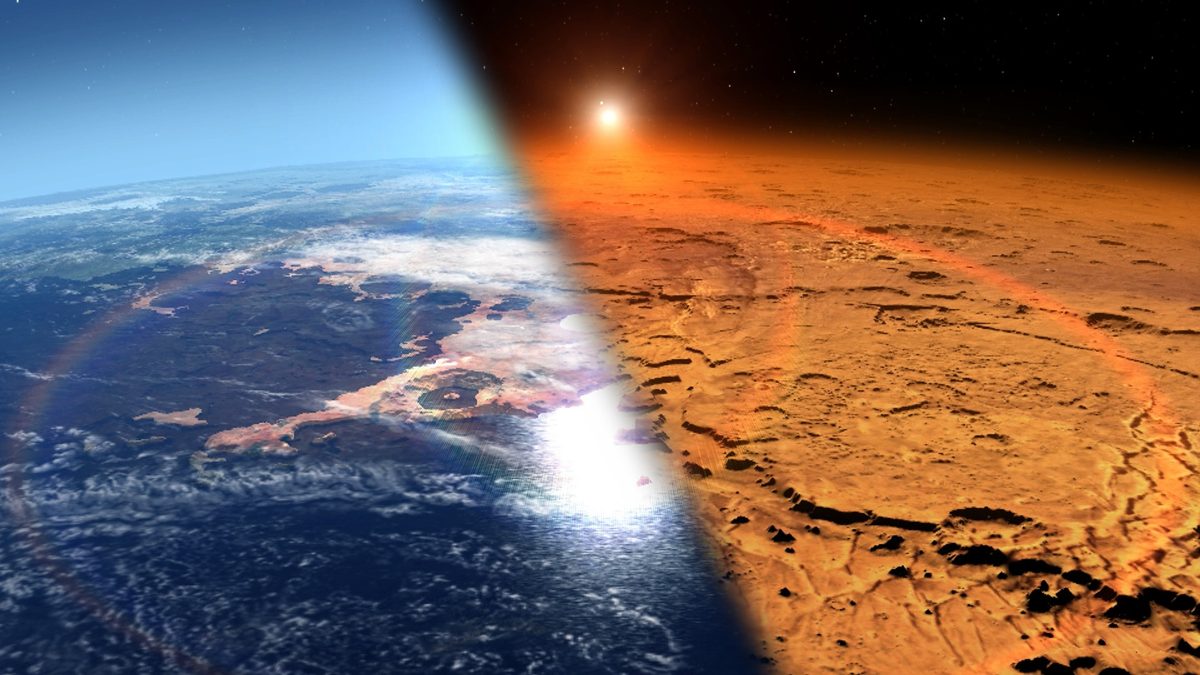
The biggest science news today is the abrupt dismantling of a major ocean monitoring network by the NSF, raising alarms about U.S. commitment to marine research. Meanwhile, a photo of humpback whales mating reveals same-sex behavior for the first time, and a study offers a new explanation for Mars's missing atmosphere. A few papers also advance materials science and quantum computing.

Sources
+10

Also today14

  • Dateline geophysics lights up Californian rare earths huntwww.smh.com.au

    Dateline Resources has identified three high-priority heavy rare earth element (HREE) targets at its Music Valley project in California, following analysis of airborne magnetic and radiometric survey data. The geophysical interpretation revealed structurally complex zones with po

  • Tensor network compression using fluid dynamics as a testbed: Analytical foundations in one dimensionarxiv.org

    This paper presents a tensor network compression method (using matrix product states/tensor trains) for extreme-scale scientific data, using fluid dynamics as a testbed. The method is demonstrated for one-dimensional compression, showing lossless compression for random Fourier se

  • Speaking the Language of Science: Toward a General-Purpose Generative Foundation Model for the Natural Sciencesarxiv.org

    This report introduces LOGOS (Language Of Generative Objects in Science), a scientific generative language model that unifies diverse tasks across the natural sciences within a single autoregressive framework. LOGOS encodes scientific objects and their spatial interactions as tok

  • AI’s environmental costs threaten water, land and climatenews.un.org

    AI's growing environmental footprint extends beyond carbon emissions to include massive water and land consumption. Data centres powering AI could consume 945 terawatt-hours of electricity annually by 2030 — nearly triple the combined electricity use of Pakistan, Bangladesh, and

  • Ask HN: What has been bothering you lately?news.ycombinator.com

    The author reflects on the current state of "Scientific AI," noting that while LLMs accelerate digital process development—debugging, stitching together pipelines, and improving code for scientific tools—there is a lingering doubt about whether this truly advances science or just

  • Why eldest siblings are brainierecon.st

    A new study suggests that the reason first-born children tend to outperform younger siblings in educational achievement and income may be related to germs rather than personality traits. While stereotypes portray eldest children as responsible and younger ones as rebellious, larg

  • Neural Cellular Automata: From Cells to Pixelscells2pixels.github.io

    This article discusses Neural Cellular Automata (NCA), a computational model that operates on a coarse lattice of cells, using mesh vertices as an example. It explains how sampling points inside triangle primitives correspond to NCA cells, with local coordinates expressing positi

  • He’s studied procrastination for 40 years. Here’s what he’s learned.www.washingtonpost.com

    Joseph Ferrari, a psychologist who has studied procrastination for 40 years, explores the psychology behind why people delay tasks. His research began during his PhD when he noticed a gap in experimental psychology literature on the topic. He has since examined procrastination ac

More roundups that day

NSF cuts key ocean observatory, stuns scientists | Science Roundup · 17 Jun