
























POSTECH researchers develop zinc oxide-tellurium transistor that could simplify chip designs by replacing 75% of components
By
Aamir Khollam
Summary
Researchers at POSTECH (Pohang University of Science and Technology) in South Korea have developed a new semiconductor device using zinc oxide and tellurium that can perform multiple circuit operations on its own. This multitasking component could replace up to 75% of traditional semiconductor components, potentially simplifying chip designs while maintaining performance. The innovation addresses the growing challenge chipmakers face in balancing consumer demand for smarter, faster AI features with expectations for compact, cool, and energy-efficient devices.
Source
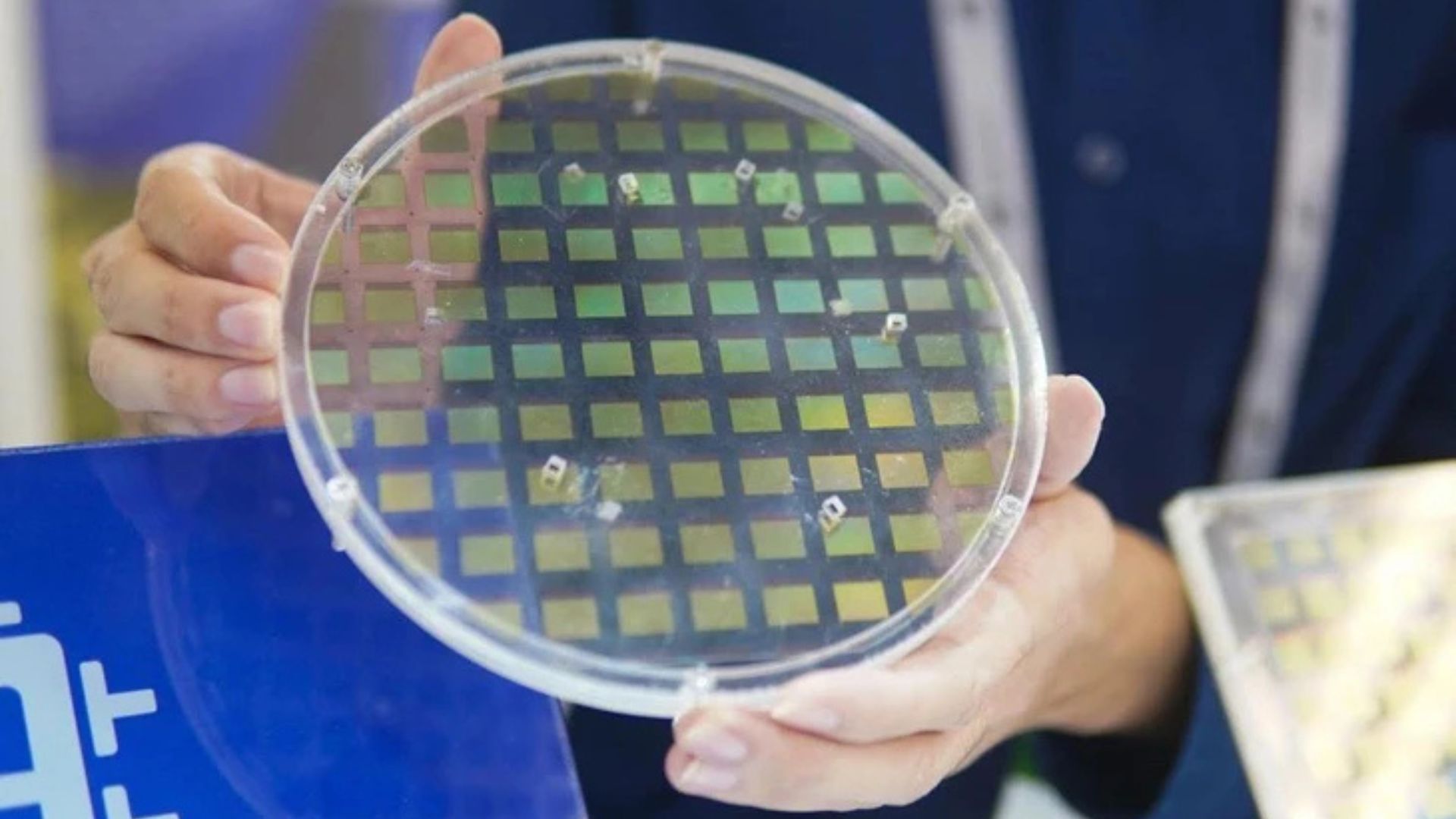
 bskyPOSTECH researchers develop zinc oxide-tellurium transistor that could simplify chip designs by replacing 75% of componentsinterestingengineering.com
Key quotes
· 5 pulledChipmakers face a difficult balancing act. Consumers want smarter devices with faster AI features, but they also expect gadgets to stay small, cool, and energy-efficient.
Engineers now pack more computing power into watches, earbuds, and compact sensors than entire computers handled decades ago.
A research team in South Korea believes it has found a way to ease that pressure.
Scientists at POSTECH, or Pohang University of Science and Technology, developed a semiconductor device that can perform several circuit operations on its own.
The design could simplify future chips while delivering f
You might also wanna read


Cadmium Zinc Telluride: The Rare Semiconductor Material Transforming Medical Imaging and Security
The article focuses on cadmium zinc telluride (CZT), a rare and powerful semiconductor material that only a handful of companies worldwide c
 bbc.com·6mo ago
Bridging the Semiconductor Talent Gap: Cross-Training CS Students and AI-Assisted Hardware Design
The article discusses innovative approaches to address the talent shortage in the semiconductor industry, including cross-training computer
 semiengineering.com·4mo ago
Shiitake Mushroom Mycelium Used to Create Sustainable Memristors for Neuromorphic Computing
Researchers have developed sustainable memristors using shiitake mushroom mycelium for high-frequency bioelectronics applications. The study
 journals.plos.org·7mo ago
Chinese Researchers Develop Analog Chip Claimed to Be 1,000 Times Faster Than Nvidia GPUs for Specific Applications
Chinese researchers from Peking University have developed a new analog chip using resistive random-access memory (RRAM) technology that repo
 livescience.com·7mo ago
Researchers Develop Materials for Light-Based Computer Chips to Improve Efficiency and Speed
Researchers are developing light-based computers that use photons instead of electricity, which could offer greater energy efficiency and fa

imec's 2T0C IGZO-based DRAM cell could enable high-density 3D DRAM and embedded memory
This article from imec explores a novel DRAM memory cell design using two IGZO (indium-gallium-zinc-oxide)-based transistors (2T0C) as an al
 imec-int.com·9mo ago
Comments
Sign in to join the conversation.
No comments yet. Be the first.