
























Why Database Utilization Remains High Despite Adding a Cache
By
Siddharth Pandey
Summary
This article explains why adding a cache in front of a database doesn't always solve high utilization problems. It argues that cache hit rate is not a configurable setting but emerges from the working set size relative to memory and the skewness of access patterns. The article introduces Paperstack, a free system design simulator that visualizes these dynamics by letting users sketch architectures and watch utilization metrics update live.
Source

 bskyWhy Database Utilization Remains High Despite Adding a Cachecstu.io
Key quotes
· 3 pulledYou deployed a cache in front of your database three weeks ago. The DB is still running at 90% utilization.
Cache hit rate is not something you configure. It emerges from two things: how much of your working set fits in memory, and how skewed your access patterns are.
Paperstack is a free system design simulator that makes this visible. Sketch an architecture, press play, watch utilization numbers and node colors update live.
You might also wanna read

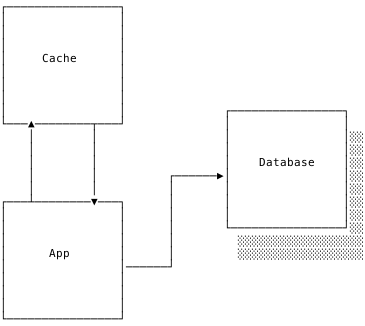
Examining the Feasibility of Replacing Cache Services with Databases
This technical blog post explores the possibility of replacing cache services with databases, examining why caches are used (primarily for l
Rethinking Database Usage: When File-Based Storage Might Be Better Than Traditional Databases
The article challenges conventional wisdom about database usage, arguing that databases are essentially just files on disk and that for many
 dbpro.app·2mo ago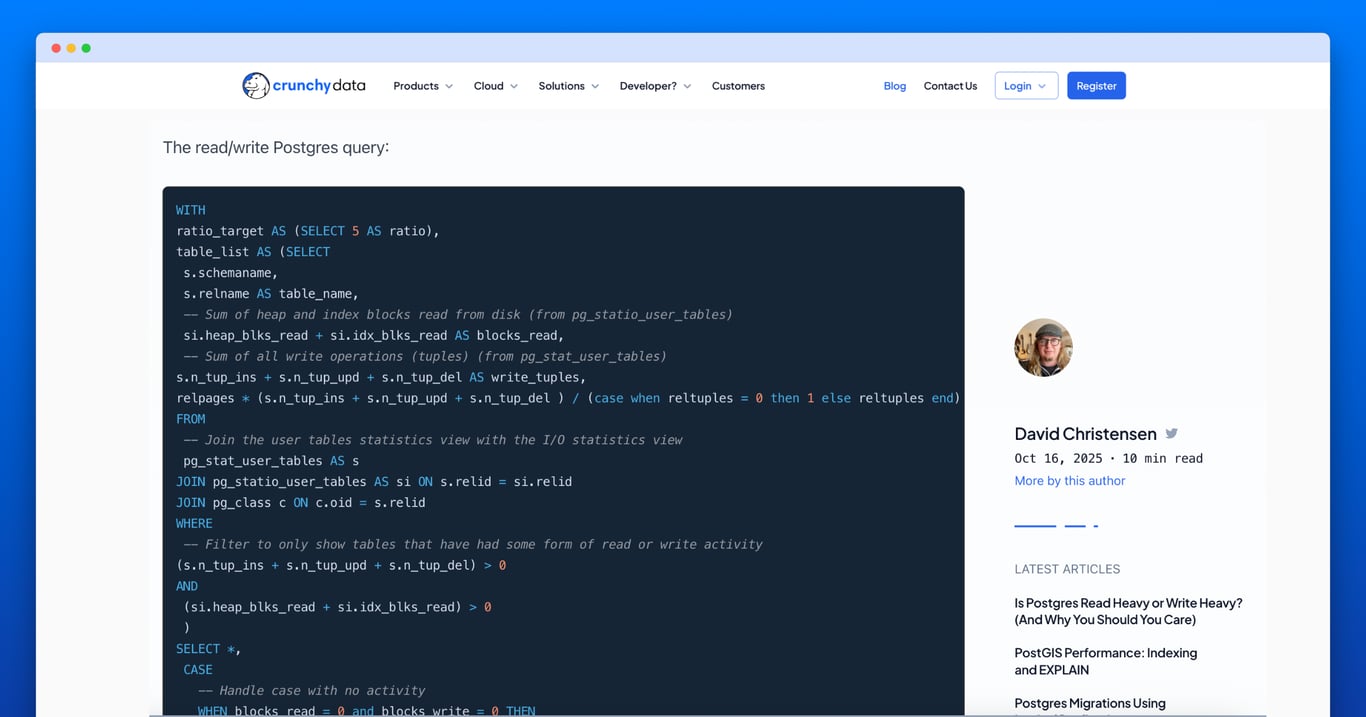
Analyzing PostgreSQL Database Workloads: Read-Heavy vs Write-Heavy Patterns and Optimization Strategies
This technical blog post explains how to determine if a PostgreSQL database is read-heavy or write-heavy and provides optimization strategie

Disk Access Outperforms Memory Caching in Modern Hardware Systems
This technical article challenges conventional computer science wisdom by demonstrating that sourcing data directly from disk can be faster
 bitflux.ai·10mo ago
Rethinking Database Architecture for the SSD Era: Beyond Spinning Disk Constraints
The article explores how traditional relational databases (like Postgres, MySQL, SQLite) were designed for spinning disk era hardware and ex

SQLite's Efficiency with Many Small Queries: Architectural Advantages Over Client/Server Databases
This article addresses criticism about SQLite's use of many small SQL queries (around 200 per dynamic page) by explaining why this approach
Comments
Sign in to join the conversation.
No comments yet. Be the first.