
























Study suggests early germ exposure may explain cognitive advantages in first-born children
By
The Economist
Summary
A brief article discussing research that challenges traditional stereotypes about birth order and personality. While first-born children tend to outperform younger siblings in educational achievement and income, large-scale studies find no meaningful link between birth order and personality traits. New research suggests that exposure to germs and sickness may play a role in explaining the cognitive differences between eldest and younger siblings.
Source
 bskyStudy suggests early germ exposure may explain cognitive advantages in first-born childrenecon.st
Key quotes
· 3 pulledSORRY, YOUNGER siblings.
On standard measures of success, such as educational achievement and income, first-borns do better.
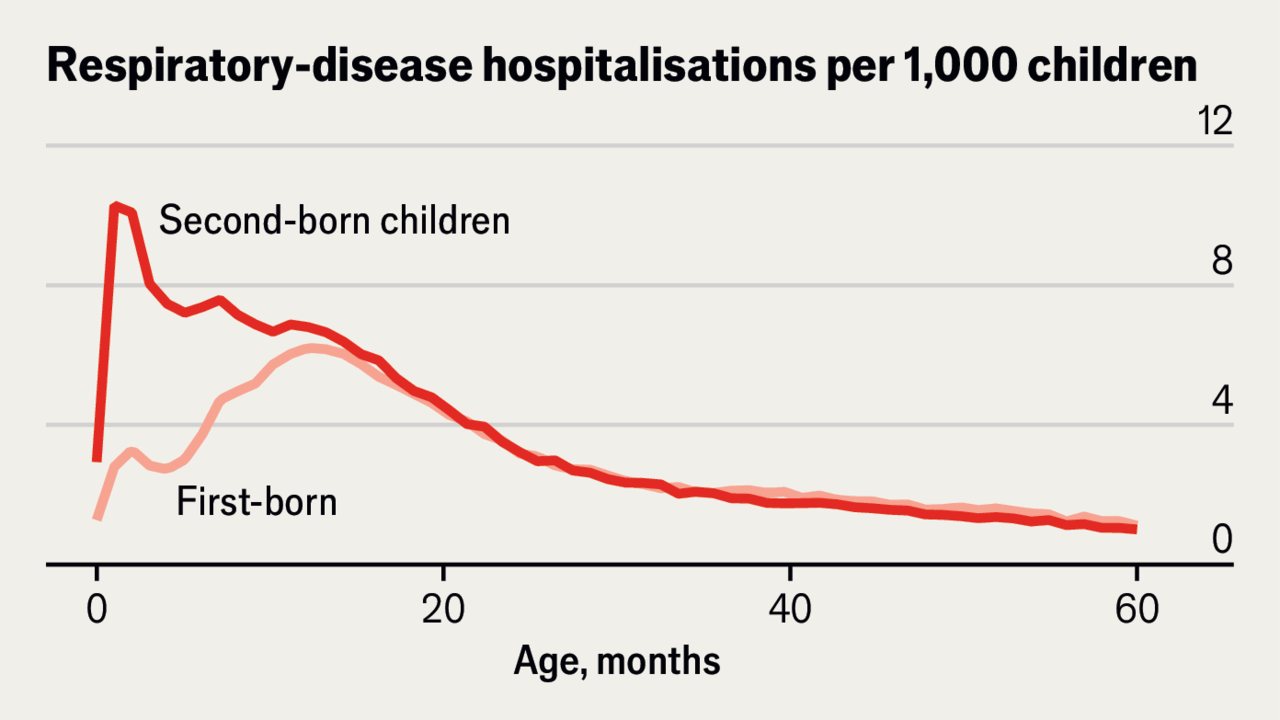
New research points to something rather different: germs.
You might also wanna read
IQ differences of identical twins reared apart are influenced by education


Singapore Study: Heavy Infant Screen Time Linked to Teen Anxiety and Brain Development Changes
A Singapore government study tracking 168 children for over a decade found that infants exposed to high screen time before age two showed br
 bloomberg.com·5mo ago
Transgenerational Epigenetic Inheritance: Evidence for Inherited Pathogen Avoidance in C. elegans
This article discusses transgenerational epigenetic inheritance, specifically focusing on evidence that learned avoidance of pathogenic bact
 elifesciences.org·7mo ago
Study Finds Household Cohabitation, Not Genetics, Drives Transmission of Diabetes- and Cancer-Linked Microbes
Researchers mapped the environmental and physical dynamics of human microbiome transmission, proving that household cohabitation is the prim
 ow.ly·7d ago
Humans peak in midlife: A combined cognitive and personality trait perspective

How Early Independence Shapes Adult Social Patterns and Friendship Dynamics
The article explores how early independence and self-reliance in childhood can shape adult social patterns, particularly the tendency to mai
 bolde.com·3mo ago
Comments
Sign in to join the conversation.
No comments yet. Be the first.