

























Supermarket shopping data reveals menstrual pain prevalence and period poverty disparities across England
By
Victoria Sivill,
Summary
This study explores menstrual pain prevalence across England using an innovative method: analyzing supermarket shopping data for baskets containing both menstrual products and pain-relief medicines. Key findings include: 26.7% of customers bought pain relief together with menstrual products; people who menstruate were four times more likely to buy pain relief when purchasing menstrual items; lower-income regions showed 32% fewer menstrual-pain related purchases than higher-income regions; and a consistent 28-day cycle in purchases was observed, validating the behavioral data approach. The research highlights significant regional and income-based disparities in menstrual pain indicators and period poverty.
Source
 bskySupermarket shopping data reveals menstrual pain prevalence and period poverty disparities across Englandjournals.plos.org
Key quotes
· 5 pulledMenstrual pain is extremely common, affecting more than nine in ten people who menstruate, yet it is rarely measured at a national level.
The results show that menstrual pain is highly prevalent: 26.7% of customers bought pain relief together with menstrual products.
Regions with lower average income showed 32% fewer menstrual-pain related purchases than higher-income regions, suggesting differences in access, need, or purchasing behaviour.
The data showed a consistent 28-day cycle in these purchases, supporting the use of behavioural data as a reliable indicator of menstrual pain.
Overall, the findings highlight meaningful regional differences and point to the need for further research to better understand and address menstrual pain and its impacts.
You might also wanna read

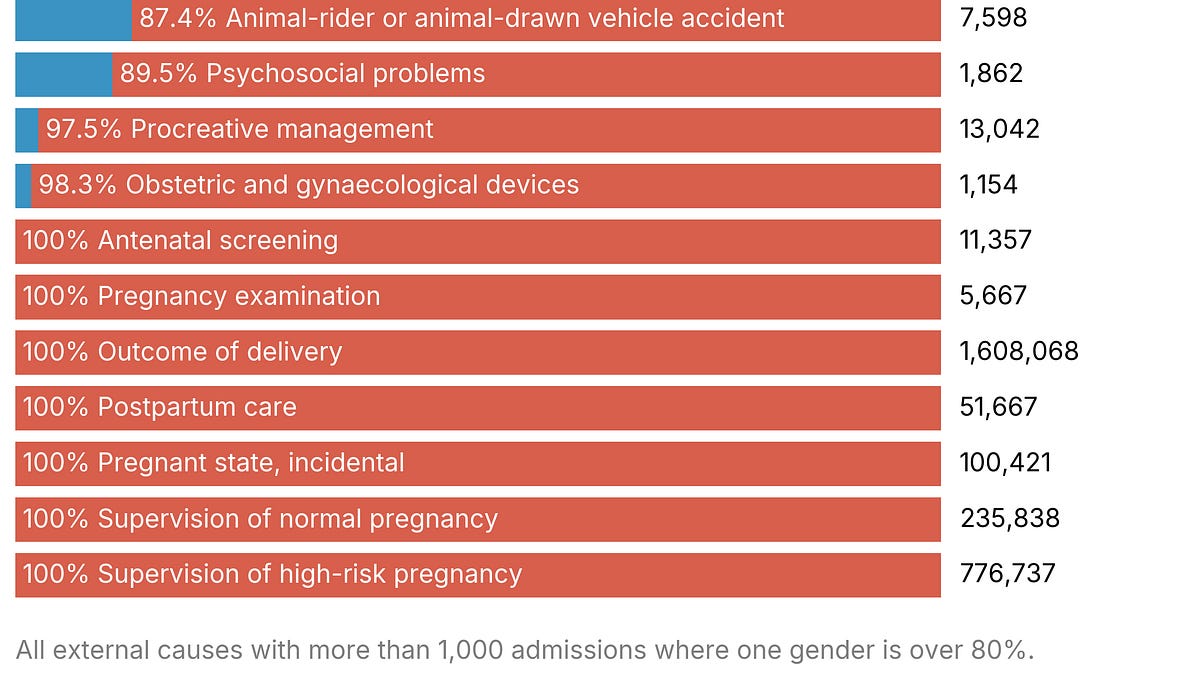
Gender Differences in Hospital Injury Admissions: Analysis of English Health Data
The article analyzes hospital admission data in England to examine gender differences in injury causes, revealing that men are more likely t
 leobenedictus.substack.com·6mo ago
Menstrual tracking app data is gold mine for advertisers that risks women safety

Research on Women's Physiology in Sports: Addressing Menstrual Cycles, Breast Movement, and Injuries
The article discusses how understanding the unique physiological challenges women athletes face - including menstrual cycles, breast tissue
 bbc.com·11mo ago
Period tracking apps share intimate cycle data with Meta, investigation reveals
This article investigates how period tracking apps share sensitive reproductive health data with third parties like Meta (Facebook). The aut
 The Femtech Design Desk·1mo ago
First scientific study of menstruation in microgravity launched by Virgin Galactic and Operation Period
A non-profit called Operation Period, led by Gen-Z researchers, is launching the first-ever scientific study dedicated to researching menstr
 space.com·1d ago
Occupational standing, walking, and forward bending during pregnancy linked to increased miscarriage risk in Danish nationwide study
This nationwide Danish register-based cohort study (2004-2018) examined 803,829 pregnancies among 475,312 women to investigate the associati
 oem.bmj.com·1d ago