
























Surprising Historical Timelines: Oxford Predates the Aztec Empire and Other Chronological Revelations
By
Colin Schultz,Meilan Solly
Summary
This article presents a collection of historical facts designed to challenge readers' conventional understanding of the timeline of world history. It highlights surprising chronological juxtapositions — such as the University of Oxford being older than the Aztec Empire, the Great Pyramid being closer in time to Cleopatra than to today, and the fax machine being invented before the first transcontinental railroad — to illustrate how our mental timelines can be distorted. The piece uses these examples to encourage a more nuanced and accurate perspective on historical chronology.
Source

 Hacker NewsSurprising Historical Timelines: Oxford Predates the Aztec Empire and Other Chronological Revelationssmithsonianmag.com
Key quotes
· 3 pulledTeaching in Oxford, England, began no later than 1096. Tenochtitlán, the capital of the Aztec Empire, was founded in 1325.
The historical timeline you keep in your head might not be as accurate as you think
The Great Pyramid of Giza was built around 2560 BCE — closer in time to Cleopatra (who lived around 30 BCE) than to the present day.
You might also wanna read


Rethinking societal collapse: Historians as reflective guides, not predictors
This article challenges the common use of historical collapse narratives as predictive tools for modern societies. It argues that the histor
 resilience.org·1d ago
Question Time faces backlash over AI-generated historical figures segment
BBC's Question Time faced backlash after opening a special AI-themed episode with a bizarre segment featuring an AI-generated panel of histo
 thelondoneconomic.com·1mo ago
BBC's Question Time uses AI-generated historical figures to introduce debate on artificial intelligence
The BBC's Question Time opened with AI-generated versions of historical figures (Winston Churchill, Frida Kahlo, Mahatma Gandhi, Emmeline Pa
 bbc.co.uk·1mo ago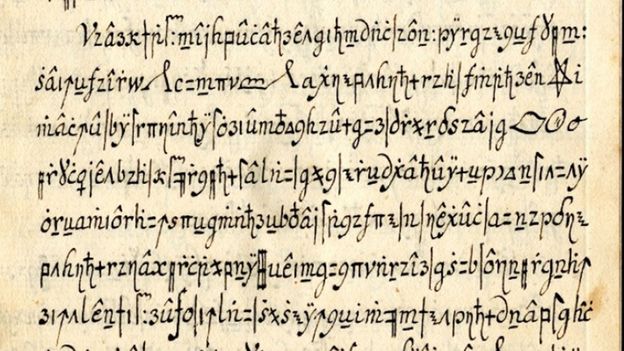
AI helps historians decode centuries-old encrypted manuscripts and secret remedies
Artificial intelligence is helping historians decode centuries-old encrypted manuscripts and ciphers that have remained unread for hundreds
 bbc.co.uk·1mo ago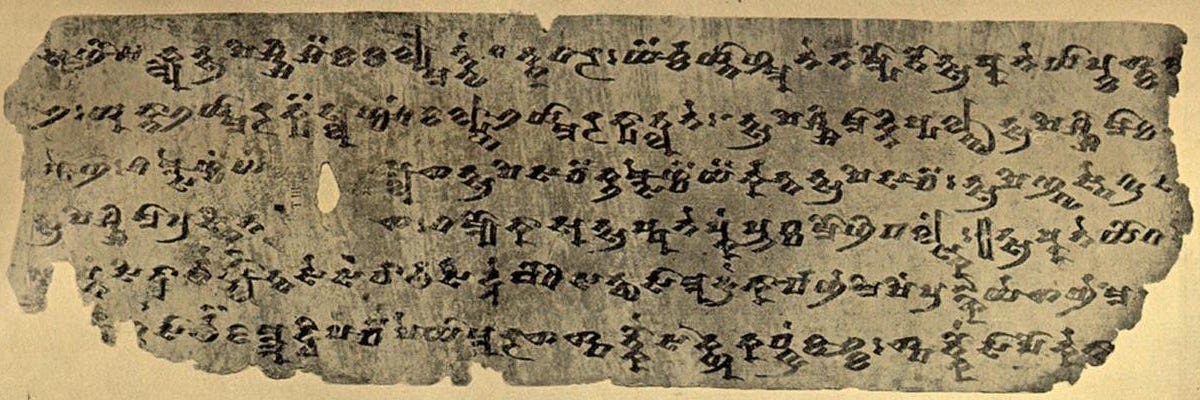
From Proto-Indo-European to machine learning: An unexpected path through linguistics
The author shares their unconventional path into machine learning, starting from their undergraduate studies in comparative Indo-European li
 begus.substack.com·1d ago
Comments
Sign in to join the conversation.
No comments yet. Be the first.