
























Theoretical study examines field amplitude tuning to reduce heat-loss variability in magnetic hyperthermia
By
David Serantes
Summary
This theoretical study investigates how shape-induced anisotropy dispersion and magnetic field amplitude jointly control the magnitude and heterogeneity of heating in magnetite nanoparticle assemblies under AC magnetic fields. Using real-time Landau–Lifshitz–Gilbert simulations with thermal fluctuations, the research explores how tuning field amplitude can minimize heat-loss variability in magnetic hyperthermia applications.
Source

 bskyTheoretical study examines field amplitude tuning to reduce heat-loss variability in magnetic hyperthermiapubs.rsc.org
Key quotes
· 2 pulledIn this work, we theoretically investigate how shape-induced anisotropy dispersion and magnetic field amplitude jointly control both the magnitude and heterogeneity of heating in magnetite nanoparticle assemblies under AC magnetic fields.
Using real-time Landau–Lifshitz–Gilbert simulations with thermal fluctuations
You might also wanna read


Magnetic-field-assisted CO2 electroreduction using precision-engineered Ga–Gd oxide nanodomain interfaces
This article presents original scientific research on a novel approach to CO2 electroreduction using magnetic-field-assisted catalysis at pr
 pubs.acs.org·12h ago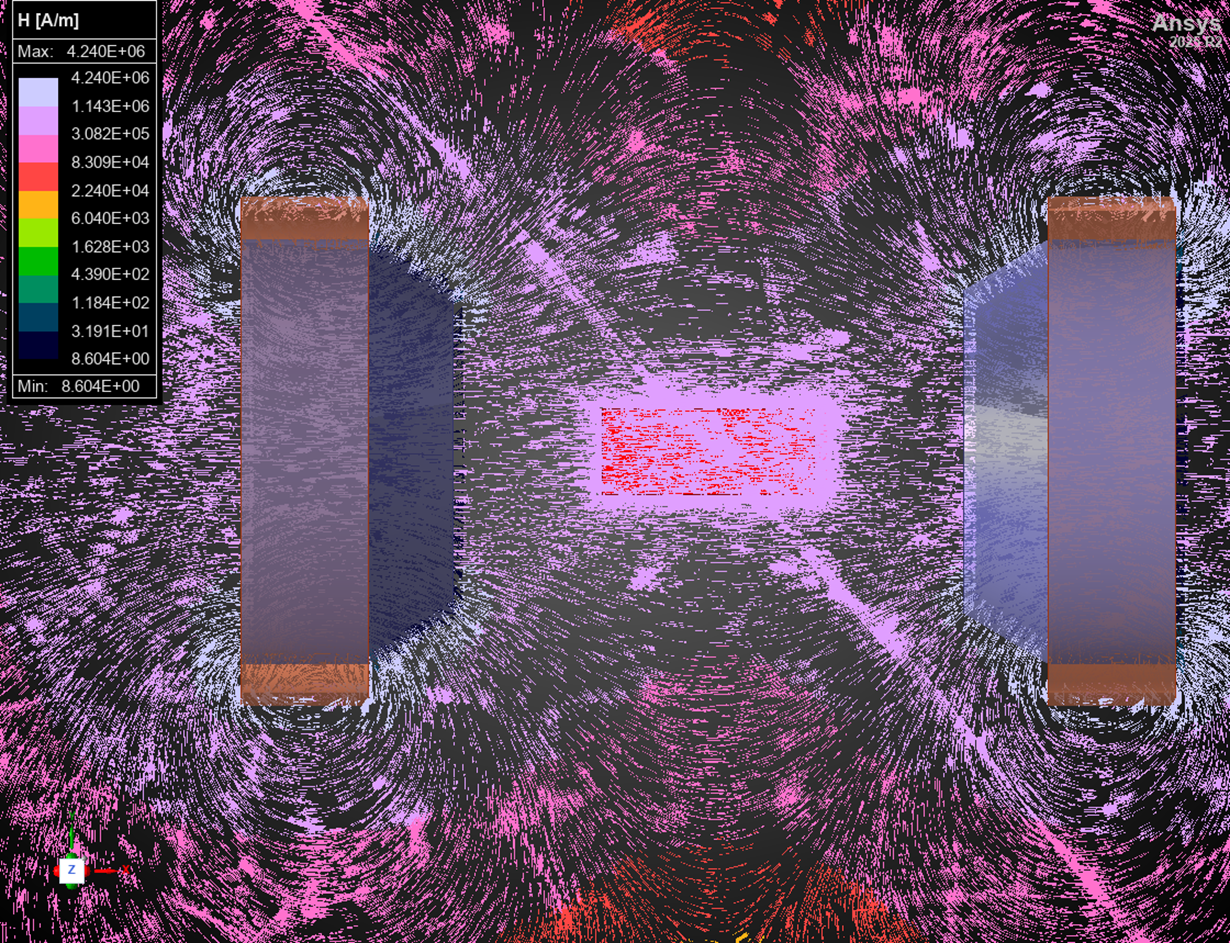
Simulating N48SH Magnet Magnetization in Ansys Maxwell Using Datasheet Data
This technical guide provides a step-by-step workflow for simulating the magnetization of N48SH permanent magnets in Ansys Maxwell using man
.png) blog.ozeninc.com·6mo ago
blog.ozeninc.com·6mo agoExperimental Sampling of LLaMA Language Model at Negative Temperature Yields Bizarre Results
This article explores an experimental approach to sampling language models (specifically LLaMA) at negative temperatures, inspired by statis
Johns Hopkins Researchers Develop Thermoelectric Cooling Technology with Double Efficiency
Researchers at Johns Hopkins Applied Physics Laboratory have developed a new solid-state thermoelectric refrigeration technology using nano-
Multistable thin-shell metastructures for multiresponsive metabots

Manganese perovskite nanocubes convert cold tumors to hot in hepatocellular carcinoma via PANoptosis/STING activation
This article presents a novel nanosystem for treating hepatocellular carcinoma (HCC) by converting immunologically "cold" tumors into "hot"
 scim.ag·4d ago
Comments
Sign in to join the conversation.
No comments yet. Be the first.