





















The Mathematical Mystery Hidden in Quake 3's Source Code
By
DamnInteresting

The kind of bagel that ruins lesser bagels for you.
Summary
The article explores a fascinating mathematical mystery hidden within the source code of the 1999 first-person shooter Quake 3 Arena. It reveals how game developers in the 1990s, working with extremely limited computing power, had to write highly efficient code. The article focuses on an enigmatic number found deep in the game's source code that continues to puzzle and inspire experts to this day, highlighting the clever mathematical optimizations used to handle 3D graphics calculations in a resource-constrained environment.
Key quotes
· 4 pulledGame developers didn't have it easy in the 1990s. Because they had extremely limited computing power, they had to write their code as efficiently as possible.
Consider the first-person shooter Quake III Arena, usually called Quake 3, for example: players navigated a three-dimensional world, so the programmers had to find the cleverest ways to handle 3D graphics and the associated calculations.
Quake 3 released in 1999 and is considered one of the best computer games of its time. It had a lasting impact on the industry.
Deep within the source code of this online multiplayer game lies an enigmatic number that puzzles and inspires experts to this day.
You might also wanna read


Numeric Springing Techniques for Game Animation and Procedural Control
This technical article explains numeric springing, a mathematical technique used in game development for procedural animation. The author di
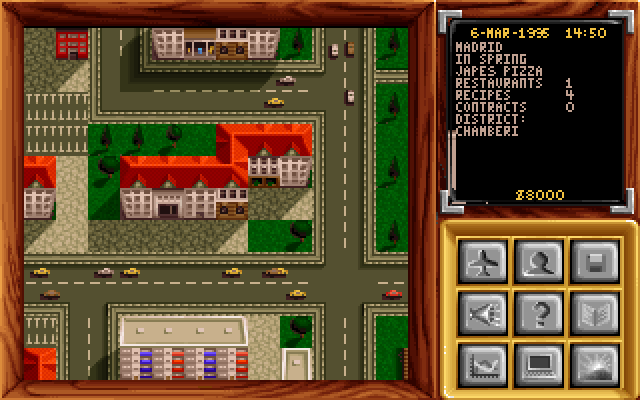
Reverse Engineering Pizza Tycoon's Traffic Simulation: How 1994 Game Simulated Dozens of Cars on 25 MHz CPU
This article explores the technical implementation of the traffic simulation system in the 1994 DOS game Pizza Tycoon. The author, working o

Nintendo DS Programming Manual and Tutorial for libnds 1.3.1
This is a technical manual and tutorial for Nintendo DS programming, covering libnds 1.3.1 and various aspects of game development including
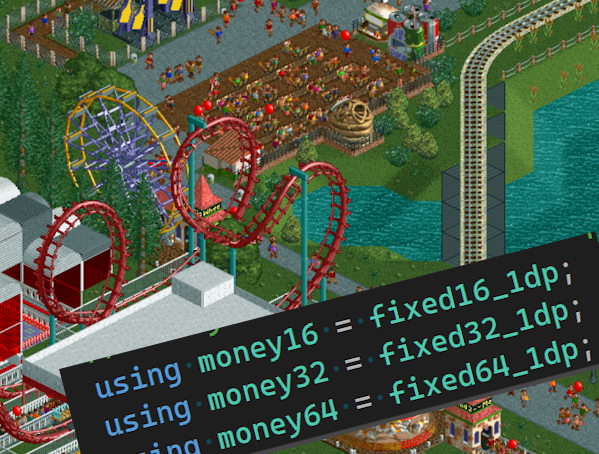
Technical Analysis of RollerCoaster Tycoon's Assembly Language Optimization
This article explores the technical achievements of RollerCoaster Tycoon (1999), focusing on how its creator Chris Sawyer wrote the game alm
 larstofus.com·2mo ago
Termcraft: Terminal-Only 2D Sandbox Survival Game Built in Rust
Termcraft is an unofficial fan project that adapts Minecraft's classic survival gameplay to a terminal-only 2D side-scrolling experience. Bu
 github.com·2mo ago
ECS Survivors Development Update: Parts VII-X Overview and New Features
The article is a developer update for the ECS Survivors project, covering multiple parts (VII-X) of development over approximately 7 months.
 blog.ptidej.net·3mo ago